Продавайте вашата изкуство
Списък с желания Пазарска количка Cart
x
Представи си гоПредстави си го AR прегледAR преглед Купете ръчно рисувана картина Купете ръчно рисувана картинаКупете изображение Купете изображение ИзпратиИзпрати
ДетайлиДетайли Добавяне към любими Добавяне към любими ИзтеглянеИзтегляне ПодобниПодобни Рентгенова снимкаРентгенова снимка СлайдшоуСлайдшоу

Jacobus Blauw

Delve into the elegance of Neoclassicism with Jacques-Louis David’s "Portrait of Jacobus Blauw." This meticulously crafted 1795 oil painting captures a scholar's contemplative gaze and refined intellect.

Жак-Луи Давид (1748-1825): Водещ френски неокласически художник на революцията и Наполеоновите епохи. Известен с "Клятвата на Коралии", неговото изкуство отразява героизъм, драма и класически идеали.

Жикле / Художествен принт

Giclée печат или принт върху платно с музейно качество, бързо производство и гъвкави опции за завършен вид. (Купете ръчно рисувана картина Купете ръчно рисувана картинаКупете изображение Купете изображение)

P118B $10
P118H $10
P118W $10
P438Z $10
P508JH $12
P508YH $12
P805H $10
P805Z $10
P919BZ $10
P919G $10
P919XJ $10
P959ZH $10
P968JZ $12
W106C $8
W218G $10
W218JH $8
W218Y $10
W307PJ $10
W316G $10
W316PJ $8
W316Y $10
W398PJ $8
W4111J $10
W500HY $15
W500JH $15
W692G $12
W849H $8
W940BG $15
W953PJ $8

Standard
custom
CM
INCH

Изберете от предварително зададените размери, които съответстват на оригиналните пропорции на произведението.

ширина
височина

Можете да въведете собствени размери, за да паснат на конкретна рамка или пространство. Ако избраният от Вас размер не съвпада с пропорциите на оригиналното изображение, ние ще изрежем произведението или ще разширим изображението с огледален или едноцветен ръб. Дигитален макет ще бъде изпратен за Ваше одобрение преди започването на производството.
Моля, имайте предвид, че предпрегледът на екрана не отразява реалното изрязване или разширяване. Само макетът ще покаже точно финалната композиция.
Въпреки че са налични персонализирани размери, препоръчваме да изберете размер от предварително дефинирания списък, за да запазите оригиналните пропорции.

Доставка по целия свят () в рамките на 2 седмици вместо стандартните 4/5 седмици. (20 Август)

why_choose_icon
Безплатна експресна доставка по целия свят
why_choose_icon
Висококачествено ленено платно
why_choose_icon
Пълно застраховане при доставка
why_choose_icon
Гаранция за възстановяване на митнически такси
why_choose_icon
Гаранция за цветова точност
why_choose_icon
60-Дневен период за връщане (Само при дефекти)
why_choose_icon
100% Гаранция за връщане на парите
why_choose_icon
Предложение за отстъпка при поръчка на едро

Обща цена

$ 68

reproduction

Jacobus Blauw

Жикле / Художествен принт

Размер на репродукцията

-

Обща цена

$ 68

Бързи факти

  • Influences: Classical Antiquity
  • Artist: Jacques-Louis David
  • Location: National Gallery, London
  • Subject or theme: Portraiture; Dignified figure
  • Artistic style: Formal elegance; Precise rendering
  • Year: 1795
  • Dimensions: 92 x 73 cm

Тест за изкуство

Има само един верен отговор за всеки въпрос.

Въпрос 1:
What artistic movement is Jacques-Louis David’s "Portrait of Jacobus Blauw" primarily associated with?
Въпрос 2:
The painting depicts a man writing on paper. What is the significance of this gesture within the context of Neoclassical art?
Въпрос 3:
What prominent element is visible in the background of "Portrait of Jacobus Blauw", contributing to its overall composition?
Въпрос 4:
David’s early training influenced by Joseph-Marie Vien focused on which artistic genre?
Въпрос 5:
Based on the image description, what stylistic features characterize Jacques-Louis David’s approach to portraiture?

Описание на колекционерския предмет

A Window into Enlightenment Thought: Examining Jacques-Louis David’s “Portrait of Jacobus Blauw”

Jacques-Louis David's "Portrait of Jacobus Blauw," completed in 1795, transcends mere representation; it embodies the spirit of Neoclassicism—a movement striving for moral virtue and rational order amidst the upheaval of the French Revolution. Painted on canvas with meticulous detail, this artwork offers a glimpse into the intellectual landscape of its time, reflecting the burgeoning interest in humanist ideals and philosophical contemplation. The subject himself – Jacobus Blauw – is depicted with quiet dignity, seated at a table and engaged in writing, an activity imbued with significance within the context of Enlightenment thought.
  • Subject Matter: The portrait focuses on a single figure—Jacobus Blauw—a man distinguished by his white hair and contemplative gaze.
  • Style & Technique: David’s masterful brushwork exemplifies Neoclassical style, prioritizing clarity, precision, and idealized form. He employs oil paint on canvas to achieve remarkable tonal depth and textural nuance, capturing the subtle nuances of light and shadow.
The composition is carefully balanced, featuring a restrained palette dominated by blues—a color associated with serenity and intellect—contrasting subtly with warmer tones in the background. Books flank Blauw’s posture, symbolizing knowledge and erudition – core tenets of the Enlightenment. These books aren't merely decorative elements; they represent the intellectual pursuits that defined the era and underscore Blauw’s role as a scholar or thinker. The chair behind him reinforces this sense of stillness and contemplation. Historical Context: Created during the tumultuous years following Louis XVI’s reign, “Portrait of Jacobus Blauw” reflects the broader artistic trends of the period. David deliberately distanced himself from the flamboyant excesses of Rococo art, favoring instead a style rooted in classical antiquity—specifically Roman portraiture—as championed by artists like Raphael and Michelangelo. This stylistic choice served as a deliberate rebuke to the perceived decadence of the monarchy and an affirmation of republican values. Symbolism & Emotional Impact: Beyond its formal qualities, the painting speaks to deeper themes concerning human intellect and moral responsibility. Blauw’s posture conveys seriousness and thoughtfulness, inviting viewers to consider the importance of reasoned judgment and ethical conduct. The serene expression on his face embodies the Enlightenment ideal of composure amidst adversity—a testament to David's ability to convey complex ideas through visual imagery. It is a portrait that lingers in the mind not merely as an image but as an invitation to engage with profound questions about human nature and virtue.
  • Color Palette: Primarily blues, conveying tranquility and intellectual contemplation.
  • Composition: Balanced arrangement emphasizing stillness and focus on the subject’s activity.
David's "Portrait of Jacobus Blauw" remains a compelling example of Neoclassical art—a celebration of reason, virtue, and artistic excellence that continues to inspire admiration centuries later. Its meticulous technique and thoughtful symbolism solidify its place as an enduring icon of the Enlightenment spirit.

Биография на художника

A Brushstroke Across Revolution: The Life and Art of Jacques-Louis David

Jacques-Louis David, born in Paris in 1748, was more than just a painter; he was a visual chronicler of an era defined by upheaval, idealism, and the relentless pursuit of new orders. His life mirrored the dramatic shifts unfolding across France – from the waning opulence of the Rococo to the austere clarity of Neoclassicism, and ultimately, through the tumultuous years of revolution and Napoleonic glory. A childhood marked by the early loss of his father and a facial impediment that initially hindered his speech seemed only to sharpen his observational skills and fuel an unwavering dedication to artistic mastery. Though initially apprenticed to François Boucher, David quickly found himself drawn to the more morally resonant work of Joseph-Marie Vien, whose emphasis on history painting and classical subjects resonated with a burgeoning sense of purpose within the young artist. His early attempts to win the prestigious Prix de Rome were fraught with frustration, yet these repeated setbacks only intensified his resolve, forging a relentless perfectionism that would characterize his entire career.

The Birth of Neoclassical Drama

David’s artistic evolution wasn't merely a stylistic shift; it was a philosophical statement. He rejected the frivolous ornamentation and playful themes of the Rococo, embracing instead the clarity, order, and moral seriousness inherent in classical antiquity. This commitment was profoundly influenced by archaeological discoveries at Pompeii and Herculaneum, which unveiled a world of Roman art and architecture previously lost to time. These unearthed ruins provided him with an idealized vision of republican virtue and civic duty – principles he would later translate into his paintings. His breakthrough came with “Oath of the Horatii” (1784), a painting that transcended mere artistic skill to become an emblem of civic virtue and patriotic sacrifice. The stark composition, dramatic lighting, and precise draftsmanship were revolutionary, signaling a decisive break from the past. It wasn’t simply *what* he painted but *how* – a deliberate construction designed to evoke powerful emotional responses and inspire contemplation on themes of duty, honor, and self-sacrifice. The figures are rendered with an almost sculptural quality, their bodies idealized according to classical proportions, while the scene unfolds with a dramatic intensity that captures the essence of heroic action. This work didn't just announce a new style; it foreshadowed the ideological currents that would soon sweep across France.

Revolution and Remembrance: Art as Political Weapon

As the French Revolution erupted in 1789, David was not merely an observer but an active participant. A fervent supporter of the revolutionary cause and a close associate of Maximilien Robespierre, he saw art as a powerful tool for shaping public opinion and immortalizing the ideals of the new republic. His paintings during this period became potent symbols of revolutionary martyrdom and republican fervor. Perhaps his most iconic work from this era is “The Death of Marat” (1793), a hauntingly realistic depiction of the assassinated journalist, transformed into a secular saint. The painting’s stark simplicity – the pale body, the makeshift desk, the poignant letter clutched in Marat's hand – elevates the scene to a level of profound emotional resonance. David deliberately stripped away any trace of sentimentality or glorification of violence, presenting Marat as a victim of tyranny and a martyr for the cause of liberty. He served on the Committee of Public Safety during the Reign of Terror, even signing Robespierre’s death warrant, demonstrating his deep entanglement with the political machinations of the time. This period saw David shift from depicting idealized classical subjects to capturing the raw realities of revolutionary violence and sacrifice.

From Revolution to Empire: Serving Napoleon

The fall of Robespierre marked another turning point in David's career. With remarkable adaptability, he navigated the shifting political landscape and aligned himself with Napoleon Bonaparte, becoming the First Consul’s official court painter. This new patronage ushered in a period of grand-scale commissions designed to glorify Napoleon’s victories and achievements. “Napoleon Crossing the Alps” (1801-1805) is perhaps the most famous example – a masterful piece of propaganda that presents Napoleon as a heroic, almost mythical figure conquering both nature and adversity. The painting depicts him leading his troops over the formidable Mont Cenis pass, bathed in dramatic light and surrounded by an idealized landscape. The composition is carefully constructed to convey a sense of power, determination, and divine favor. “The Coronation of Napoleon” (1807), an immense canvas capturing the opulence and grandeur of the imperial ceremony, further cemented David’s position as the preeminent artist of the Napoleonic era. During this time, his palette subtly shifted, incorporating warmer Venetian colors while maintaining the precision and clarity that defined his style.

Exile, Legacy, and Enduring Influence

The Bourbon Restoration in 1814 brought renewed peril for David, whose association with the fallen Napoleon made him a target of persecution. He chose exile in Brussels in 1816, where he continued to paint and teach until his death on December 29, 1825. Even in exile, his influence remained profound. He trained numerous pupils, including Jean-Auguste-Dominique Ingres, who would become one of the most important neoclassical painters of the 19th century. David’s emphasis on draftsmanship, composition, and historical accuracy left an indelible mark on French art. *His legacy extends beyond mere imitation*; his expressive distortions of form and space even foreshadowed the innovations of later artists like Henri Matisse and Pablo Picasso. Jacques-Louis David was not simply a painter of his time; he *defined* it, capturing its spirit of revolution, ambition, and enduring ideals on canvas for generations to come.
  • Major Achievements: Established Neoclassicism as the dominant style in French painting.
  • Historical Significance: Created iconic images that captured the spirit of the French Revolution and the Napoleonic era.
  • Influence: Trained a generation of influential artists who carried on his legacy.
Жак-Луи Давид

Жак-Луи Давид

1748 - 1800 , Франция

Бързи факти

  • Artistic Movement Or Style: Неокласицизъм
  • Artists Or Movements Influenced By This Artist:
    • Жан-Аугуст-Доминик Дранж
    • Емпрерианизъм
  • Artists Who Influenced This Artist:
    • Жозеф-Мари Виен
    • Рафаел Ме NGS
  • Date Of Birth: 30 август 1748
  • Date Of Death: 29 декември 1825
  • Full Name: Jacques-Louis David
  • Nationality: Френски
  • Notable Artworks:
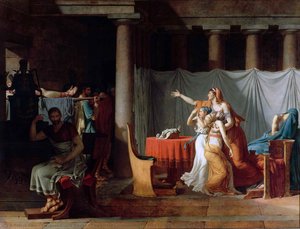
    • Клятвата на Коратите
    • Смъртта на Марат
    • Наполеон прекосява Алпите
  • Place Of Birth: Париж, Франция
Разгледайте произведения на изкуството, организирани по теми, стилове и характеристики.