Продавайте вашата изкуство
Списък с желания Пазарска количка Cart
x
Купете принт Купете принтКупете ръчно рисувана картина Купете ръчно рисувана картина ИзпратиИзпрати
ДетайлиДетайли Добавяне към любими Добавяне към любими ИзтеглянеИзтегляне ПодобниПодобни СлайдшоуСлайдшоу

Fancy

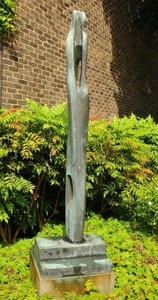
Зашеметяваща скулптура от рециклирани автомобилни части в стила на абстрактен експресионизъм от Джон Ангус Чембърлейн – иновативна работа на нео-дадаизма! Разгледайте произведението на изкуството тук.

Explore the dynamic sculptures of John Angus Chamberlain (1927-2011). Known for transforming crushed automobile parts into abstract expressionist art, his innovative work bridges painting & sculpture. Discover a Neo-Dada master!

Закупете дигитално изображение с висока резолюция и подобрени характеристики, значително по-добро от онлайн прегледа.

Всеки файл е щателно подготвен от нашите специалисти с помощта на съвременни инструменти и експертна ръчна ретуш. Гарантираме, че всяко изображение има изключителна яснота, прецизна цветова точност и фини детайли.

Окончателният файл се доставя по имейл в рамките на 72 часа, оптимизиран за незабавна употреба в професионални, редакционни и печатни среди. Това е същото качество, на което се доверяват водещи дизайнерски студия, издатели и галерии.

Дигитално изображение

Изтеглете файл с висока резолюция за лично показване, принтиране и творчески проекти. (Купете принт Купете принтКупете ръчно рисувана картина Купете ръчно рисувана картина)

Обща цена

$ 24,90

Включено във всяка поръчка за дигитални изображения

Експресна дигитална доставка, гарантирана

Когато изберете Most-Famous-Paintings.com, вие не получавате само изображение – вие получавате професионално подобрена дигитална творба, създадена с прецизност и подкрепена от гаранция за удовлетворение. Ето всичко, което автоматично се включва в вашата поръчка:

shipping_icon
Бърза доставка по имейл

Вашето дигитално изображение с висока резолюция ще ви бъде изпратено по имейл в рамките на 72 часа от поръчката - готово за незабавно използване.

canvas_icon
Дигитален файл с подобрено качество чрез изкуствен интелект

Вашата картина е професионално оптимизирана с помощта на усъвършенствани инструменти за изкуствен интелект и ръчна редакция, осигурявайки максимална детайлност, яснота и точност на цветовете.

insurance_icon
Безплатна доживотна повторна доставка

Изгубили сте или сте премахнали файла си по погрешка? Не се притежнявайте – ще го изпратим отново на Вас по всяко време, безплатно.

tax_icon
Без такки за мито - никога

Всредите си веднага без мита, данъци или такси по доставка - дигителните приложения винаги са без данъчно освободени.

color_icon
Гаранция за точност на цветовете

Гарантираме, че вашето дигитално изображение отразява оригиналните цветове възможно най-точно, използвайки професионални инструменти и управление на цветовете.

return_icon
Гаранция за удовлетвореност от 60 дни

Ако не сте доволни от вашето дигилно изображение, ще го коригираме или ще възмедим 100% в рамките на 60 дни – без никакви въпроси.

guarantee_icon
100% Гаранция за връщане на пари.

Не сте удовлетворени? Получавате пълно възстановяване на сумата в рамките на 60 дни след получаването на вашия цифров файл – без никакви въпроси.

discount_icon
Отстъпки за големи поръчки

Купете 3 изображения, спестете 10% - Купете 5, спестете 15% - Купете 10+, спестете 20%. Отлично за творчески проекти, галерии и агенства.

Бързи факти

  • Artistic style: Abstract Expressionist
  • Medium: Sculpture
  • Movement: Neo-Dada
  • Subject or theme: Automobile sculpture
  • Notable elements or techniques: Welding and crushing automobile parts
  • Influences: Marcel Duchamp

Тест за изкуство

Има само един верен отговор за всеки въпрос.

Въпрос 1:
What artistic movement is John Angus Chamberlain’s work primarily associated with?
Въпрос 2:
The sculpture prominently features materials like wood, metal and fabric. What technique is most notably employed by Chamberlain to transform these materials?
Въпрос 3:
Which artist influenced Chamberlain's approach to sculpture, particularly his use of found objects?
Въпрос 4:
The image depicts a sculpture by John Angus Chamberlain alongside other architectural elements. What is the overall impression conveyed by this composition?
Въпрос 5:
John Angus Chamberlain's sculptures are considered innovative because they challenge conventional notions about artistic creation. What concept did Duchamp introduce that Chamberlain embraced?

Описание на колекционерския предмет

Fancy That – John Angus Chamberlain’s Monumental Assemblage

John Angus Chamberlain (1927–2011) stands as an unparalleled figure in American sculpture, recognized for his revolutionary approach to transforming discarded automobile parts into evocative artworks that embody the spirit of abstract expressionism. Born in Rochester, Indiana, Chamberlain’s artistic journey began with a profound fascination for carving and modelling metal—skills he honed before embracing innovative techniques like welding and crushing to reshape these materials into monumental sculptures. His distinctive style cemented his place as a pivotal innovator within the Neo-Dada movement, challenging conventional notions of artmaking and redefining sculptural form. Early Life and Artistic Foundations Chamberlain’s formative years instilled in him a deep appreciation for craftsmanship and experimentation. He pursued formal training at Pratt Institute, New York City, where he honed his sculptural skills alongside fellow artists exploring new frontiers of artistic expression. This early exposure to diverse materials and techniques would prove crucial in shaping his future creative vision—a vision rooted in embracing the unexpected beauty found within industrial refuse. The influence of Surrealism and Dada is palpable in Chamberlain’s initial explorations, foreshadowing his later embrace of radical experimentation. The Genesis of Assemblage Technique Chamberlain's breakthrough came with his pioneering use of crushed automobile parts as sculptural material. Rejecting traditional modeling methods, he devised a process of crushing metal—often salvaged from wrecked vehicles—to create irregular masses that defied conventional geometric forms. This technique wasn’t merely about repurposing scrap; it was a deliberate act of negation against established artistic conventions. As Chamberlain himself explained, “I wanted to make something that looked like nothing.” He meticulously welded these crushed fragments together, creating sculptures that possessed both structural integrity and an arresting visual dynamism—a testament to his mastery of metal fabrication. Neo-Dada Influence and Abstract Expressionist Legacy Chamberlain’s work is inextricably linked to the Neo-Dada movement, which emerged in the wake of World War II as a reaction against rationalism and formalism. Artists like Marcel Duchamp had already questioned the very definition of art by presenting everyday objects—such as urinal—as artworks, prompting a fundamental rethinking of artistic practice. Chamberlain carried this spirit of rebellion forward, embracing chance and improvisation while simultaneously striving for formal precision. His sculptures resonate with the energy and spontaneity characteristic of abstract expressionism, mirroring artists like Jackson Pollock and Willem de Kooning who sought to capture emotion through gestural painting. The resulting artworks are imbued with a palpable sense of immediacy and vulnerability—a reflection of Chamberlain’s belief that sculpture should be “like a feeling.” Symbolic Resonance and Emotional Impact Beyond its technical innovation, Chamberlain's sculptures possess significant symbolic resonance. The automobile itself represents modernity, progress, and the relentless march of industrialization—themes that Chamberlain confronted with unflinching honesty. By transforming these symbols into monumental forms, he compels viewers to contemplate the relationship between humanity and technology, as well as the ephemeral nature of existence. The fractured surfaces of his sculptures evoke a sense of disorientation and fragmentation—mirroring the anxieties of the postwar era—yet simultaneously convey a profound beauty born from embracing imperfection. Chamberlain’s art invites contemplation on themes of decay, transformation, and the enduring power of form to communicate emotion—a legacy that continues to inspire artists today.

Биография на художника

The Alchemist of Automobilia: The Life and Legacy of John Angus Chamberlain

In the intersection of industrial decay and high art, few figures loom as large or as provocatively as John Angus Chamberlain. Born in 1927 in Rochester, Indiana, Chamberlain did not merely create sculpture; he orchestrated a metamorphosis of the discarded. To look upon his work is to witness a violent yet poetic dialogue between the mechanical past and the abstract present. He possessed a singular vision that allowed him to see not just rusted scrap, but a vocabulary of form, color, and texture. His journey from the son of a saloonkeeper in the American Midwest to a titan of the Neo-Dada movement is a testament to an unyielding creative impulse that sought to find beauty within the crushed and the broken.

Chamberlain’s artistic consciousness was forged through a diverse and rigorous educational odyssey. After serving in the United States Navy during the pivotal years of World War II, he utilized the GI Bill to immerse himself in the burgeoning avant-garde scenes of America. His time at the Art Institute of of Chicago provided him with a foundational mastery of form, but it was his tenure at the legendary Black Mountain College that truly expanded his intellectual horizons. At Black Mountain, he moved beyond the purely visual, studying under influential poets such as Charles Olson and Robert Creeley. This literary immersion profoundly shaped his sculptural language; he famously viewed his collection of automotive fragments as a reservoir of words, where the act of welding was akin to composing a stanza, seeking the perfect placement of one jagged edge against another to achieve a rhythmic, poetic resonance.

A Symphony of Steel and Spontaneity

The hallmark of Chamberlain’s oeuvre lies in his revolutionary technique of assemblage. While many of his contemporaries were exploring the flat planes of Abstract Expressionist painting, Chamberlain sought to bring that same gestural energy into three-dimensional space. He became a master of the "crushed" aesthetic, meticulously dismantling abandoned automobiles and extracting their vibrant, enamel-coated metal components. Through the intense processes of welding, bending, and compressing, he transformed these industrial remnants into monumental forms that pulsed with an almost organic vitality.

His work defies easy categorization, existing in a fluid state between several major movements:

  • Abstract Expressionism: He translated the spontaneous, emotional brushstrokes of painters like Pollock into the physical manipulation of steel and chrome.
  • Neo-Dada: By utilizing found objects and "readymades" from the industrial age, he challenged the sanctity of traditional sculptural materials like marble or bronze.
  • Pop Art: His use of consumerist detritus—the very skin of the American automobile—connected his high-art ambitions to the burgeoning mass culture of the mid-20th century.

There is a palpable tension in his sculptures, a sense of captured motion and compressed energy. The bright flashes of Cadillac red or Chevrolet blue, often peeking through layers of rust and grime, create a chromatic intensity that mirrors the dynamism of urban life. He did not seek to represent the car, but rather to capture the spirit of its movement and the inevitable entropy of its decay.

Historical Significance and the Enduring Pulse of Art

Throughout his prolific career, Chamberlain’s presence was felt across the most significant art hubs of the world, from Manhattan and Los Angeles to Shelter Island and even Belgium. His ability to disrupt the boundaries between sculpture and painting left an indelible mark on the trajectory of modern art. He proved that the debris of the industrial revolution could serve as the medium for a profound spiritual and aesthetic inquiry. Critics often noted that while his materials were cold and hard, the emotional impact of his work was deeply visceral, aiming—as he himself desired—to "make the viewer’s heart beat."

As we reflect on his life, which concluded in 2011, Chamberlain remains a pivotal figure who bridged the gap between the mechanical and the lyrical. He taught us that art is not merely about the creation of something new, but about the radical reimagining of what already exists. His legacy lives on in every artist who looks at the wreckage of the world and sees the potential for a masterpiece, reminding us that even in the crushed and the discarded, there is an eternal, unyielding beauty waiting to be welded back together.

john angus chamberlain

john angus chamberlain

1927 - 2011 , United States of America

Бързи факти

  • Artistic Movement Or Style: Abstract Expressionism
  • Artists Or Movements Influenced By This Artist: ['Neo-Dada']
  • Artists Who Influenced This Artist:
    • Robert Delaunay
    • Jean Dubuffet
  • Date Of Birth: April 16, 1927
  • Date Of Death: December 21, 2011
  • Full Name: John Angus Chamberlain
  • Nationality: American
  • Notable Artworks:
    • Fancy
    • Sleeping Giant
  • Place Of Birth: Rochester, United States