x

 Oil On CanvasWallArtEarly Netherlandish Painting
 1508
1508 73.0 x 53.0 cm
 Kunstmuseum Basel
Giclée печат или принт върху платно с музейно качество, бързо производство и гъвкави опции за завършен вид. ( Купете ръчно рисувана картина Купете изображение)





























Изберете от предварително зададените размери, които съответстват на оригиналните пропорции на произведението.

Можете да въведете собствени размери, за да паснат на конкретна рамка или пространство. Ако избраният от Вас размер не съвпада с пропорциите на оригиналното изображение, ние ще изрежем произведението или ще разширим изображението с огледален или едноцветен ръб. Дигитален макет ще бъде изпратен за Ваше одобрение преди започването на производството.
Моля, имайте предвид, че предпрегледът на екрана не отразява реалното изрязване или разширяване. Само макетът ще покаже точно финалната композиция.
Въпреки че са налични персонализирани размери, препоръчваме да изберете размер от предварително дефинирания списък, за да запазите оригиналните пропорции.
Доставка по целия свят () в рамките на 2 седмици вместо стандартните 4/5 седмици. (20 Август)


Calvary
Размер на репродукцията
Matthias Grünewald's “Calvary,” painted in 1508, isn’t merely a depiction of the crucifixion; it’s a visceral plunge into the heart of human suffering and spiritual torment. Born in Würzburg around 1470, Grünewald stood as a pivotal figure bridging the late medieval artistic traditions of Northern Europe with the nascent fervor of the Renaissance. Unlike his Italian counterparts who embraced humanist ideals, Grünewald remained deeply rooted in the emotional intensity and meticulous observation characteristic of his region, creating an artwork profoundly shaped by religious devotion rather than secular concerns. This painting, now housed at the Kunstmuseum Basel, is a testament to this unique approach – a raw, unflinching portrayal of Christ’s sacrifice that continues to resonate with viewers centuries later.
The composition itself immediately commands attention. Grünewald employs a pyramidal structure, anchoring the scene around the central figure of Christ on the cross. His body, rendered with an almost brutal realism, is contorted in agony, muscles straining under the weight of his torment. The figures surrounding him – Mary weeping, John the Evangelist recoiling in horror, and onlookers expressing disbelief – are not idealized representations but rather embodiments of human emotion: grief, despair, and confusion. The tight arrangement within the frame creates a claustrophobic atmosphere, intensifying the sense of tragedy and drawing the viewer directly into the scene’s unbearable weight.
Grünewald's masterful technique is immediately apparent in the painting’s rich textures and dramatic use of color. He eschewed the smooth, polished surfaces favored by some Renaissance artists, opting instead for a deliberately rough and uneven application of oil paint. This creates a tactile quality, inviting viewers to almost feel the grit beneath their fingertips. The palette is dominated by muted browns, ochres, and deep reds – colors that evoke both the earthiness of the landscape and the blood spilled on Christ’s body. Highlights of white accentuate Christ's flesh, drawing attention to his suffering while simultaneously emphasizing the stark contrast between life and death.
The artist’s layering technique is particularly noteworthy. Grünewald built up form through multiple thin layers of paint, creating a sense of depth and volume that belies the painting’s relatively small scale. The use of linear perspective, though somewhat flattened compared to later Renaissance works, effectively guides the viewer's eye towards Christ at the apex of the composition. The careful rendering of drapery – the heavy folds of Christ’s tunic and the flowing garments of the onlookers – adds another layer of visual complexity, demonstrating Grünewald’s exceptional skill in capturing the nuances of fabric.
“Calvary” is laden with symbolic meaning. The stark landscape, devoid of any comforting details, represents the desolate reality of Christ's abandonment. The instruments of torture – the nails, the beam, the rope – are not merely props but potent symbols of human cruelty and divine suffering. The expressions on the faces of the onlookers range from sorrow to disbelief, reflecting the profound theological implications of Christ’s sacrifice: a rejection of worldly power and an affirmation of faith in the face of unimaginable pain.
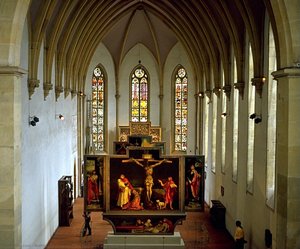
Furthermore, the painting's placement within the Isenheim Altarpiece—a larger work featuring multiple scenes from the life of Christ—contributes to its overall significance. “Calvary” serves as a pivotal moment within this complex narrative, embodying both the physical agony and the spiritual redemption offered by Christ’s death. The altarpiece as a whole was designed to be viewed in different configurations, offering viewers a multifaceted experience of faith and suffering.
Matthias Grünewald's “Calvary” stands as a landmark achievement in Northern Renaissance art. His willingness to embrace emotional intensity and unflinching realism set him apart from his contemporaries, forging a unique artistic voice that continues to captivate viewers today. The painting’s enduring power lies not only in its technical brilliance but also in its profound exploration of human suffering and spiritual longing. It is a work that demands contemplation, inviting us to confront the uncomfortable truths about mortality, faith, and the nature of sacrifice – a timeless masterpiece that transcends its historical context.

Матиас Грюневальд, роден като Матис Готар Неихардт около 1470-1475 г. във Вюрцбург, Германия, е ключова фигура на немския Ренесанс. Въпреки че живее в период, все по-силно повлиян от идеалите на италианския Ренесанс, Грюневало остава дълбоко вкоренен в художествените традиции на късното средновековно Централна Европа. Детайлите за неговия ранен живот са оскъдни, но е известно, че е преминал през обучение като художник, вероятно в местни занаятчийски работилници.
Художественото развитие на Грюневалд е оформено от господстващите северноевропейски традиции на реализма, емоционалната интензивност и детайлното наблюдение. Неговата творба показва влияния от художници като Албрехт Дюрер и Мартин Шонгауер, но той проправя свой собствен уникален път, характеризиращ се с драматична експресия и жива цветова палитра. Той не е бил пряко свързан с хуманистичните кръгове, преобладаващи в Италия; вместо това неговото изкуство е служило основно на религиозни цели, отразявайки духовните тревоги на неговото време.
Стилът на Грюневалд се отличава с:
Творчеството на Грюневалд стои като свидетелство за трайната сила на средновековните художествени традиции в Германия по време на Ренесанса. Той преодолява пропастта между късноготскическия стил и възникващия Ренесанс, създавайки уникален визуален език, който резонира с неговите съвременници. Неговото влияние може да се види в по-късните немски художници, които продължават да изследват теми за религиозния пыл и емоционалната интензивност. Въпреки че е бил пренебрегнат в продължение на векове след смъртта си през 1528 г., Грюневалд преживява възраждане през 19-ти век и днес е признат за един от най-важните художници на немския Ренесанс. Неговото изкуство продължава да очарова зрителите със своята сурова емоция, техническа блясък и дълбока духовна същност.
Открийте повече за живота и творбите на Матиас Грюневалд в: Most-Famous-Paintings

1480 - 1528 , Германия

Explore the profound beauty of the Early Netherlandish Renaissance. Discover how masters like Jan van Eyck revolutionized art through oil painting, light, and symbolism. A definitive guide for history lovers and collectors seeking to understand the Northern Renaissance.

Explore the luminous mastery of Early Netherlandish painting. Discover how Jan van Eyck and the Flemish masters revolutionized art through oil innovation, hyper-realism, and profound symbolism in this expert guide to the Northern Renaissance.


Бъдете информирани за последните новини в света на изкуството, ексклузивни оферти и идеи за декорация.
Разкажете ни за вашия проект и нашите експерти по изкуство ще ви предложат 3 персонализирани предложения за произведения на изкуството.
Нека подберем 3 варианта само за вас – безплатно!


 Представи си го
 Изпрати
 Сподели
 Детайли

 Изтегляне
 Подобни
 Рентгенова снимка
 Слайдшоу
 Прочетете повече







 Стъклото е налично само в размери под 110 см