x

 Preview
 Купи картина Купи изображение
 Изпрати
 Детайли
 Добавяне към любими
 Изтегляне
 Подобни
 Рентгенова снимка
 Слайдшоу
Giclée печат или принт върху платно с музейно качество, бързо производство и гъвкави опции за завършен вид.





























Изберете от предварително зададените размери, които съответстват на оригиналните пропорции на произведението.

Можете да въведете собствени размери, за да паснат на конкретна рамка или пространство. Ако избраният от Вас размер не съвпада с пропорциите на оригиналното изображение, ние ще изрежем произведението или ще разширим изображението с огледален или едноцветен ръб. Дигитален макет ще бъде изпратен за Ваше одобрение преди започването на производството.
Моля, имайте предвид, че предпрегледът на екрана не отразява реалното изрязване или разширяване. Само макетът ще покаже точно финалната композиция.
Въпреки че са налични персонализирани размери, препоръчваме да изберете размер от предварително дефинирания списък, за да запазите оригиналните пропорции.
Доставка по целия свят () в рамките на 2 седмици вместо стандартните 4/5 седмици. (28 Юли)


Fish
Размер на репродукцията
William Merritt Chase's "Fish," painted in 1910, isn’t merely a depiction of aquatic life; it’s a carefully constructed tableau that speaks volumes about the artist’s artistic lineage and his evolving approach to capturing fleeting moments. This captivating still life, rendered in shades of gray with remarkable tonal control, draws heavily from both the dramatic lighting favored by 17th-century Spanish masters and Chase's own training within the vibrant, light-infused atmosphere of Munich. The painting immediately commands attention through its dynamic arrangement – a triangular composition anchored by the imposing striped bass – yet it’s the subtle details, the almost palpable texture of scales and flesh, that truly elevate the work.
Chase's fascination with Spanish still lifes is undeniable. The fluid brushwork, reminiscent of artists like Zurbarán and Murillo, creates a sense of immediacy and vitality within the scene. However, “Fish” isn’t simply a pastiche; it incorporates Chase’s own distinctive style, honed during his time in Munich. This influence manifests in the loose, expressive application of paint, allowing for visible brushstrokes that contribute to the painting's overall texture and dynamism. The dark background, a deliberate choice, serves not as mere backdrop but as a crucial element in highlighting the forms of the fish and creating an atmosphere of quiet contemplation – a stark contrast to the often-brightened interiors of his earlier works.
The artist’s mastery lies in his ability to render texture through subtle variations in tone. The scales of the fish, rendered with meticulous detail, appear rough and reflective, catching the light as if shimmering under an unseen source. Conversely, the flesh is depicted with a smooth, moist quality, conveying a sense of freshness and vitality. This careful manipulation of value – the strategic use of light and shadow – creates a remarkable illusion of three-dimensionality, pulling the viewer into the scene. The painting’s monochromatic palette further emphasizes these tonal shifts, allowing each subtle gradation to carry significant weight.
While “Fish” avoids overt symbolism, it evokes a powerful sense of transience and abundance. The arrangement of the fish – a striped bass, a salmon, and a delicate weakfish – suggests a bounty of nature’s gifts, yet their placement on a simple table hints at their vulnerability and fleeting existence. There's an underlying melancholy woven into the composition, perhaps reflecting the artist’s awareness of mortality or the ephemeral beauty of the natural world. The dark background contributes to this somber mood, creating a space for quiet reflection on the passage of time.
“Fish” stands as a significant example of William Merritt Chase’s contribution to American Impressionism. His ability to capture light and atmosphere with such sensitivity, combined with his deep understanding of artistic tradition – both European and American – solidified his place as one of the movement's leading figures. This painting exemplifies his evolution from earlier, more formally structured works to a looser, more expressive style that prioritized capturing the essence of a moment rather than strict representation. A reproduction of “Fish” offers a beautiful window into Chase’s artistic vision and a testament to the enduring power of still life as a genre.


1849 - 1916 , Съединени американски щати

Създайте уникален натюрморт за вашия хотел с Most-Famous-Paintings! Ръчно рисувани репродукции, експертна консултация и гарантирано качество. Инвестирайте в изкуство, което впечатлява и трае.

Explore the life & art of Alice Pike Barney, a pioneering American Impressionist painter who defied convention and fostered Washington D.C.'s vibrant arts scene. Discover her unique style, portraits, and lasting legacy.
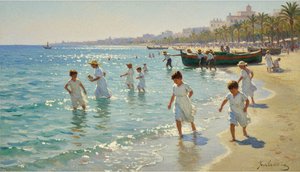
Explore the luminous world of Joaquín Sorolla, Spanish master of Impressionism. Discover his life, techniques & legacy – a guide for art collectors and enthusiasts. Invest in timeless beauty.

Explore the rich history of still life painting with Most-Famous-Paintings. Discover Dutch Masters, decode vanitas symbolism & learn about collecting timeless art. Expert insights and museum-quality reproductions.

Explore the captivating world of Severin Roesen, a major American still life painter influenced by Dutch masters. Discover his lush compositions and the symbolism within his art – a window into 19th-century America.


Бъдете информирани за последните новини в света на изкуството, ексклузивни оферти и идеи за декорация.
Разкажете ни за вашия проект и нашите експерти по изкуство ще ви предложат 3 персонализирани предложения за произведения на изкуството.
Нека подберем 3 варианта само за вас – безплатно!


 Сподели


 Прочетете повече







 Стъклото е налично само в размери под 110 см