The Art of Place: Why Topographical Art is the New Interior Essential
In the modern pursuit of meaningful interior design, we often find ourselves searching for more than just a color palette or a furniture arrangement; we seek a connection to the world beyond our windows. For the discerning decorator, topographical art offers a profound way to anchor a room in both history and geography. Unlike a standard landscape that merely captures a view, topographical works—those that celebrate the very contours, elevations, and structural essence of a location—invite a sense of deep exploration. They transform a flat wall into a window through which we can wander across coastlines, mountains, and urban arteries.
Integrating these pieces into a home allows for a sophisticated layering of narrative. Imagine a quiet study where the walls do not just hold paint, but tell the story of a beloved ancestral city or a rugged mountain range that once inspired a great voyage. This is the magic of the art of place. It provides a focal point that is simultaneously intellectual and aesthetic, offering guests a conversation starter that transcends mere decoration. By choosing works that emphasize terrain and structure, you are not just decorating a space; you and your clients are curating an atmosphere of discovery and grounded elegance.
A Journey Through Time: From Ancient Reliefs to Golden Age Cartography
 Van Langren, H. F., Extra & Accurata Delinerarie World Map
A Window into the Age of Discovery To gaze upon Hendrik Floris van Langren’s Extra & Accurata Delinerarie World Map is to embark on a voyage through the golden age of maritime exploration. Created in 1595, this exquisite piece of cartography serves a...
To truly appreciate the beauty of a topographical masterpiece, one must embark on a visual voyage through the annals of human history. The impulse to map our surroundings is as old as civilization itself, rooted in the primal need to navigate and understand our environment. We see the echoes of this in the ancient world, where even the earliest maps—etched on mammoth tusks or carved into stone—sought to capture the essence of valleys and rivers. This long lineage of cartographic vision reached a breathtaking zenith during the Age of Discovery and the Enlightenment.
Consider the exquisite 1595 world map by Hendrik Floris van Langren, a piece that serves as a breathtaking tapestry of human ambition. To gaze upon his work is to feel the salt spray of the Renaissance era, where every intricate coastline and meticulously placed symbol represents the thrill of the unknown. Similarly, the works of Juan de la Cruz Cano y Olmedilla reflect the scientific rigor of the Enlightenment, bringing a sense of royal precision and clarity to the sprawling territories of the Spanish empire. Even more intimate are the urban snapshots like José Albelda y Albert’s 1920 map of Huelva, which captures a city poised at the cusp of modernity. These historical layers allow us to bring a sense of timelessness into contemporary spaces, blending the scientific precision of the past with the aesthetic warmth of the present.
Texture and Dimension: The Tactile Magic of Raised-Relief and Impasto Styles
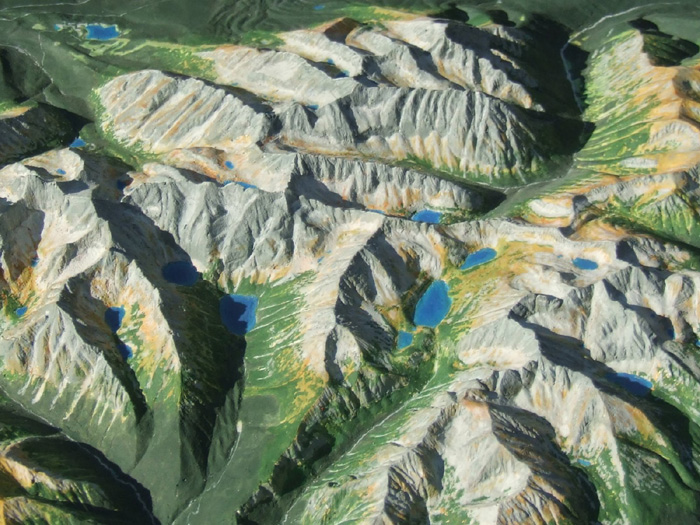 Raised-relief map
A raised-relief map, terrain model or embossed map is a three-dimensional representation, usually of terrain, materialized as a physical artifact. When representing terrain, the vertical dimension is usually exaggerated by a factor between five and t...
While the history of cartography provides the soul, it is the physical texture of the artwork that provides its heartbeat. For a decorator looking to add depth to a minimalist room, the concept of raised-relief or embossed mapping offers an unparalleled opportunity. These three-dimensional representations, where vertical terrain features are often artistically exaggerated, create a play of light and shadow that changes as the sun moves across the room. This tactile dimension turns a map from a flat document into a sculptural artifact, much like the ancient rice-constructed models used in China or the wooden relief maps of the Song dynasty.
In contemporary fine art, this sense of dimension is beautifully achieved through the impasto technique. When an artist applies thick, vigorous layers of oil paint, the canvas ceases to be a mere surface and becomes a landscape in its own right. The visible brushstrokes create ridges and valleys that mimic the very topography they depict. This interplay of heavy texture and tonal range—where deep ochres and siennas meet soft, luminous blues—adds a physical weight to the artwork. It invites the viewer to reach out and feel the "topography" of the paint itself, bridging the gap between the representation of land and the reality of the medium.
Curating Your World: Matching Map Aesthetics to Your Room's Mood and Palette
 Western Canada, including the Five Great Lakes, from 'Atlas de Toutes les Parties Connues du Globe T
Discover Rigobert Bonne’s antique map of Western Canada & the Great Lakes (1795). A detailed, hand-drawn topographical chart in faded colors – a rare glimpse into 18th/19th-century cartography.
The true skill of a freelance decorator lies in the ability to harmonize these complex historical pieces with a modern interior. Selecting topographical art requires a thoughtful analysis of color, mood, and architectural scale. For a room designed for tranquility—perhaps a bedroom or a serene reading nook—one might look toward the faded, nostalgic palettes found in 18th-century charts, such as those by Rigobert Bonne. These works, with their muted tones and soft, hand-drawn lines, provide a sense of calm and historical continuity without overwhelming the senses.
Conversely, for a bold, high-energy space like a grand foyer or a modern dining hall, one might opt for much larger-scale, multi-panel compositions. The multi-panel trend allows a single topographical image to be split across three, four, or even five canvases, creating a sweeping architectural statement that follows the flow of the room. When selecting colors, consider browsing by palette; an ocean-themed map with deep indigos and teals can anchor a coastal-inspired room, while a more terrestrial, sepia-toned piece can complement the warm woods and leathers of a traditional library. The goal is to use the art to define the room's emotional temperature.
From Paper to Canvas: Transforming Historical Charts into Bespoke Masterpieces
The final frontier in modern decorating is the ability to personalize these historical narratives through custom creation. We are no longer limited to what is found in a museum archive; we now have the technology and artistry to remix history. Imagine the profound impact of taking a personal photograph—perhaps of a childhood home or a significant travel destination—and commissioning it to be transformed into a hand-painted oil reproduction. Through professional digital mockups, you can see how a modern memory can be reimagined in the light-drenched style of Monet or the dramatic, textured impasto of Van Gogh.
This process of transformation allows for a truly bespoke approach to decorating. You can request "Period Shifts," where a contemporary scene is rendered with the scientific elegance of an 18th-century cartographer, complete with aged and cracked craquelure finishes that suggest centuries of existence. Whether it is a large-format mural for a hotel lobby or a delicate custom portrait for a first home, the transition from paper to canvas ensures that your space is not just decorated, but deeply, personally mapped. Through this intersection of technology and traditional craftsmanship, we ensure that every wall tells a story that is uniquely yours.