Francesco di Petracco: A Renaissance Scholar’s Vision
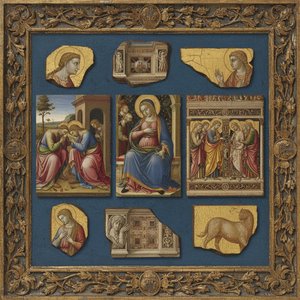
Born in Arezzo, Italy, in 1304 as Francesco Patriarca – later adopting the name Francesco Petrarca – this artist was more than just a painter; he was a pivotal figure in the burgeoning Italian Renaissance. His life intertwined with the intellectual currents of his time, shaping not only his artistic style but also contributing significantly to the revival of classical learning and humanism. Petracco’s work reflects a unique blend of contemporary realism, influenced by the late Gothic tradition, alongside an emerging interest in perspective and atmospheric effects – hallmarks of the evolving Renaissance aesthetic.
Petracco's early life was marked by political upheaval. His family, prominent Florentine notaries, faced exile due to the turbulent power struggles between the White and Black Guelphs. This experience instilled a deep sense of displacement and perhaps contributed to the introspective quality often found in his later works. He received a solid education, mastering grammar, rhetoric, and Latin literature – skills that would prove crucial to his role as a humanist scholar and poet. His father, Ser Parenzo, held positions of considerable authority, including serving as Chancellor of the Commission for Reforms, demonstrating a family legacy rooted in public service and intellectual pursuits.
The Art of Observation: Style and Technique
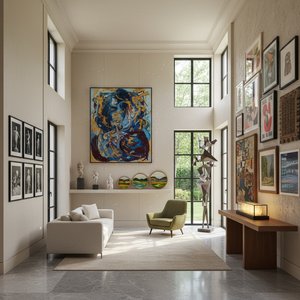
Petracco’s artistic style is characterized by a meticulous attention to detail and a remarkable ability to capture the nuances of everyday life. His paintings often depict scenes from domestic interiors – studios, workshops, and family gatherings – imbued with a sense of quiet serenity. Works like “Backflip” exemplify this approach, presenting a realistic depiction of an artist’s studio complete with a wooden easel and an abstract painting in progress. The use of warm tones and textural details creates a tangible atmosphere, inviting the viewer into the scene.
While firmly rooted in contemporary realism, Petracco demonstrated a nascent understanding of perspective and atmospheric effects – elements that would become increasingly prominent in Renaissance art. His compositions are carefully balanced, utilizing light and shadow to create depth and volume. “Pagoda Table” showcases this skill, with the arrangement of objects and the play of light suggesting a three-dimensional space within a relatively confined setting. It’s important to note that his work predates the fully developed techniques of linear perspective, yet he skillfully employed atmospheric effects to achieve a sense of realism.
A Humanist at Heart: Influences and Legacy
Petracco's life coincided with a period of profound intellectual transformation in Italy. He was deeply influenced by the rediscovery of classical texts – particularly those of Cicero – which fueled the humanist movement’s emphasis on human potential, reason, and civic virtue. His own poetry, notably his sonnets to Laura, exemplifies this humanist sensibility, exploring themes of love, beauty, and mortality with a profound emotional depth.
Furthermore, Petracco's connection to the exiled poet Dante Alighieri – both sharing political exile from Florence – undoubtedly shaped his artistic outlook. The shared experience of displacement fostered a sense of intellectual solidarity and contributed to their mutual admiration for classical learning. Petracco’s work can be seen as a reflection of this broader humanist ethos, seeking to elevate human experience through art and literature.
Later Years and Final Residence
In 1369, Francesco Petracco found a haven in Arquà Petrarca, a small village near Padua, where he spent the remainder of his life. This location, described by him as “rich of green vegetation and full of peace,” provided the ideal setting for contemplation and artistic creation. He oversaw the renovation of his new home, creating a space that mirrored his intellectual and spiritual sensibilities.
Francesco di Petracco passed away in Arquà Petrarca on July 18th or 19th, 1374, at the age of 70. His legacy extends beyond his artistic achievements; he was a key figure in the Italian Renaissance, embodying the spirit of humanism and contributing to the revival of classical learning. His paintings offer a valuable glimpse into the daily life and intellectual pursuits of a remarkable individual who played a significant role in shaping the course of Western art history.