x


 Preview
 Bestil tryk Bestil maleri
 Del
Del
 Detaljer
 Tilføj til favoritter
 Download
 Lignende værker
 Røntgenundersøgelse
 Diasshow
 Oil On CanvasWallArtFauvism
 1905
1905 82.0 x 101.0 cm
 Pushkin State Museum of Fine Arts
Køb et højopløst, forbedret digitalt billede, der er langt bedre end online-forhåndsvisningen.
Hver fil er omhyggeligt forberedt af vores interne specialister ved hjælp af avancerede værktøjer og ekspertmæssig manuel retuschering. Vi sikrer, at hvert billede har enestående klarhed, præcis farvegengivelse og fine detaljer.
Den endelige fil leveres via e-mail inden for 72 timer og er optimeret til øjeblikkelig brug i professionelle, redaktionelle og trykte miljøer. Det er den samme kvalitet, som førende designstudier, forlag og gallerier har tillid til.
Download en højopløselig fil til personlig fremvisning, print og kreative projekter.
Når du vælger Most-Famous-Paintings.com, får du ikke blot et billede – du modtager et professionelt optimeret digitalt kunstværk, skabt med præcision og sikret med en tilfredshedsgaranti. Her er alt, hvad din ordre automatisk indeholder:

Din højkvalitets digitale billedfil vil blive sendt til din e-mail inden for 72 timer efter bestilling – klar til øjeblikkelig brug.

Dit kunstværk optimeres professionelt ved hjælp af avancerede AI-værktøjer og manuel redigering, hvilket sikrer maksimal detaljegrad, klarhed og farvenøjagtighed.

Har du ved en fejl slettet eller mistet din fil? Ingen bekymring – vi sender den igen til enhver tid, helt gratis.

Nyd dit kunstværk med det samme uden told, afgifter eller leveringsgebyrer – digitale downloads er altid skattefrie.

Vi sikrer, at dit digitale billede gengiver de originale farver så præcist som muligt ved hjælp af professionelle værktøjer og farvestyring.

Hvis du ikke er tilfreds med dit digitale billede, vil vi revidere det eller refundere 100% inden for 60 dage – uden spørgsmål.

Ik tilfreds? Få fuld refusion inden for 60 dage efter modtagelse af din digitale fil – uden spørgsmål.

Køb 3 billeder, spar 10% - Køb 5, spar 15% - Køb 10+, spar 20%. Ideelt til kreative projekter, gallerier og bureauer.
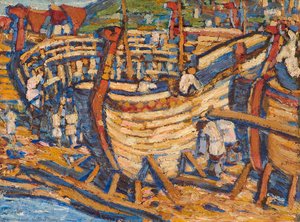
André Derain’s “Drying the Sails,” painted in 1905, isn't merely a depiction of a harbor scene; it’s an explosion of color and emotion—a quintessential embodiment of the Fauvist movement. Born from a confluence of artistic influences and a desire to break free from traditional representation, this painting captures a fleeting moment on the French coast, imbued with a raw energy that continues to resonate with viewers today. Derain, alongside Henri Matisse, spearheaded this revolutionary approach to art, prioritizing the subjective experience of color and light over strict adherence to realism. The work’s genesis lies in the summer of 1905, spent in Collioure, a vibrant port town on the Mediterranean coast – a location that profoundly shaped Derain's artistic vision.
The painting itself presents a bustling waterfront scene dominated by a collection of sailboats. These vessels aren’t rendered with meticulous detail; instead, they are simplified forms, their edges blurred and dissolving into washes of intense blues, greens, yellows, and reds. The sky is a swirling vortex of color, mirroring the energy of the water below. The figures present – fishermen, sailors, and onlookers – are equally abstracted, contributing to the overall sense of movement and dynamism. It’s important to note that Derain deliberately avoided precise observation, opting instead to translate his *feeling* of the scene onto the canvas.
To truly appreciate “Drying the Sails,” it's crucial to understand the context of Fauvism. Emerging at the turn of the 20th century, this movement rejected the muted tones and academic conventions of the past. Artists like Derain, Matisse, and Maurice de Vlaminck embraced bold, non-naturalistic colors – often using them purely for their expressive qualities. They believed that color could evoke emotions and sensations independently of its representation. This radical departure from tradition was initially met with criticism, earning the Fauves (meaning “wild beasts”) their provocative nickname. Derain’s use of vibrant hues in "Drying the Sails" is a prime example of this approach – colors are applied with abandon, creating a dazzling and almost hallucinatory effect.
Technically, Derain employed loose, expressive brushstrokes—a hallmark of Fauvist painting. The paint is applied thickly, often directly from the tube, resulting in a textured surface that adds to the sense of movement and immediacy. He utilized a technique known as “divisionism,” breaking down colors into smaller dots or patches, allowing the viewer’s eye to blend them together optically. This method further intensified the vibrancy of the palette and created an almost shimmering quality within the painting.
Beyond its technical innovations, “Drying the Sails” is rich in symbolic meaning. The act of drying sails represents a transition – from movement to stillness, from activity to rest. It’s a moment of pause amidst the bustle of harbor life, inviting contemplation. The intense colors can be interpreted as representing the energy and vitality of nature, while the simplified forms suggest a focus on essential shapes and rhythms. The painting isn't simply about depicting a scene; it’s about conveying an *experience* – a feeling of warmth, light, and perhaps even a hint of melancholy.
The painting’s emotional impact is undeniable. It evokes a sense of joy and exuberance, yet also hints at the transient nature of beauty and the inevitability of change. “Drying the Sails” remains a powerful testament to Derain's artistic vision and his pivotal role in shaping the course of modern art. Its legacy continues to inspire artists today, demonstrating the transformative power of color and emotion.


1880 - 1954 , Frankrig


Hold dig opdateret med de seneste kunstnyheder, eksklusive tilbud og indretningsideer.
Fortæl os om dit projekt, og vores kunsteksperter vil give dig 3 personlige kunstforslag.
Vi kuraterer 3 valgmuligheder kun til dig – Gratis!


 Del
Del

 Se mere