x

 Oil On CanvasWallArtFauvist Style
 1909Modern
 22.0 x 16.0 cm
Håndmalet olie på lærred i din valgte størrelse og ramme, udført efter bestilling af vores kunstnere. ( Køb print Køb billede)





























Vælg mellem vores forudindstillede størrelser, der matcher kunstværkets originale proportioner.

Du kan indtaste dine egne mål for at passe til en bestemt ramme eller plads. Hvis den valgte størrelse ikke stemmer overens med det originale billedes proportioner, vil vi enten beskære kunstværket eller udvide maleriet med yderligere håndmalede elementer. En digital skitse sendes til din godkendelse, før produktionen påbegyndes.
Bemærk venligst, at forhåndsvisningen på skærmen ikke afspejler den faktiske beskæring eller udvidelse. Kun skitsen vil nøjagtigt vise den endelige komposition.
Selvom specialmål er mulige, anbefaler vi at vælge en dimension fra den foruddefinerede liste for at bevare de originale proportioner.
Levering i hele verden () på 3/4 uger i stedet for de standard 5 uger. (17 august). Ingen kompromiser med kvaliteten.


Elisabeth at the Table
Størrelse på reproduktion
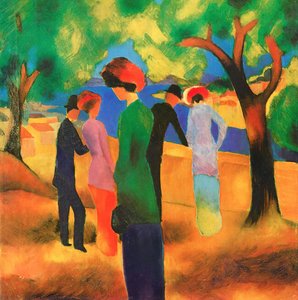
August Macke’s “Elisabeth at the Table,” painted in 1909, is more than just a depiction of two women sharing a moment; it’s a vibrant distillation of Fauvist principles and a poignant glimpse into the burgeoning artistic spirit of early 20th-century Germany. Measuring a modest 22 x 16 cm, this oil on canvas radiates an immediate warmth, drawing the viewer into a scene of intimate companionship rendered with a boldness rarely seen before its time. Macke, a key figure within the influential Der Blaue Reiter group, masterfully employs color and brushstroke to evoke not just what he saw, but how he *felt* about it – a characteristic hallmark of Expressionism.
The painting’s power lies fundamentally in its embrace of Fauvism. Macke abandons traditional representational accuracy for an unrestrained use of color, employing hues that are often jarringly bright and deliberately non-naturalistic. The reds, blues, and yellows aren't meant to mimic reality; instead, they pulsate with emotional intensity, contributing to the painting’s dynamic energy. Notice how the brushstrokes themselves – loose, gestural, and applied with a palpable urgency – further amplify this effect. This technique wasn't simply about aesthetics; it was a deliberate attempt to convey subjective experience, a core tenet of the movement.
The subject matter itself—two women seated at a table laden with books, handbags, and chairs – speaks volumes about the changing social landscape of the period. This isn’t a formal portrait intended to elevate status; it's an observation of everyday life, imbued with a sense of quiet contemplation. The objects themselves are rendered with a remarkable degree of detail, suggesting a comfortable domesticity, yet they are presented within Macke’s intensely colored framework, elevating them to something almost symbolic. The woman on the left, seemingly engrossed in a book, and the other, perhaps engaged in conversation or simply enjoying the moment, create an atmosphere of relaxed intimacy.
"Elisabeth at the Table" was created during a period of immense artistic upheaval. Macke’s work reflects the broader trends of his time – the rejection of academic conventions in favor of subjective expression, and the exploration of new visual languages. His association with Der Blaue Reiter (The Blue Rider) further contextualizes the painting, placing it within a circle of artists who were pushing the boundaries of artistic convention. Macke’s influence extends beyond Fauvism; his emphasis on emotional intensity and dynamic brushwork foreshadowed many later developments in modern art.
Most-Famous-Paintings offers a meticulously crafted hand-painted reproduction of August Macke’s “Elisabeth at the Table,” allowing you to bring this captivating artwork into your home or office. Each reproduction is created using archival materials and techniques, ensuring its longevity and fidelity to the original. This isn't merely a print; it's an investment in art history, a tangible connection to one of the most significant figures of the early 20th-century art scene. Consider this piece as more than just decoration – it’s a window into a world of vibrant color, emotional intensity, and profound artistic vision.


1887 - 1914 , Tyskland

Explore the profound history and technical mastery of woodcut relief printing. From ancient origins to German Expressionism, discover how artists use the subtractive process to create iconic works. A definitive guide for art students, collectors, and historians.

Discover the technical mastery behind Most-Famous-Paintings.com's premium Giclée canvas prints. Our guide for elite collectors explores archival pigment inks, museum-grade substrates, and the science of high-fidelity reproduction to ensure lasting beauty and historical accuracy.


Hold dig opdateret med de seneste kunstnyheder, eksklusive tilbud og indretningsideer.
Fortæl os om dit projekt, og vores kunsteksperter vil give dig 3 personlige kunstforslag.
Vi kuraterer 3 valgmuligheder kun til dig – Gratis!


 Se i fuld skala
 Del
Del Del
Del
 Detaljer

 Download
 Lignende værker
 Røntgenundersøgelse
 Diasshow
 Se mere







 Glasmulighed er kun tilgængelig i størrelser under 110 cm