x

 Oil On CanvasWallArtGerman Expressionism
 191419th Century
 90.0 x 61.0 cm
Håndmalet olie på lærred i din valgte størrelse og ramme, udført efter bestilling af vores kunstnere. ( Køb print Køb billede)





























Vælg mellem vores forudindstillede størrelser, der matcher kunstværkets originale proportioner.

Du kan indtaste dine egne mål for at passe til en bestemt ramme eller plads. Hvis den valgte størrelse ikke stemmer overens med det originale billedes proportioner, vil vi enten beskære kunstværket eller udvide maleriet med yderligere håndmalede elementer. En digital skitse sendes til din godkendelse, før produktionen påbegyndes.
Bemærk venligst, at forhåndsvisningen på skærmen ikke afspejler den faktiske beskæring eller udvidelse. Kun skitsen vil nøjagtigt vise den endelige komposition.
Selvom specialmål er mulige, anbefaler vi at vælge en dimension fra den foruddefinerede liste for at bevare de originale proportioner.
Levering i hele verden () på 3/4 uger i stedet for de standard 5 uger. (16 august). Ingen kompromiser med kvaliteten.


Dancer
Størrelse på reproduktion
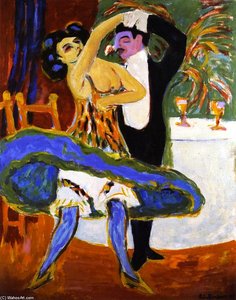
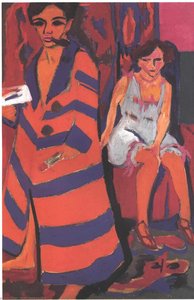
“Dancer,” painted in 1914 by Ernst Ludwig Kirchner, is more than just a depiction of a woman in white; it's a visceral plunge into the heart of German Expressionism. This oil on canvas, measuring 90 x 61 cm, pulsates with an intensity born from Kirchner’s profound engagement with the anxieties and emotional currents swirling through early 20th-century Europe. The painting immediately arrests the viewer with its bold color palette – a riot of reds, blues, and yellows that seem to vibrate with unspoken emotion – and its deliberately distorted forms, hallmarks of a movement determined to reject the comfortable illusions of realism.
Kirchner’s ‘Dancer’ exemplifies the core tenets of Expressionism, a movement that sought to express inner psychological states rather than objective reality. Born from a period of rapid industrialization, social upheaval, and artistic experimentation, Expressionism aimed to capture the anxieties, alienation, and spiritual crises felt by many in response to these changes. Unlike traditional artists who focused on depicting the world as it appeared, Kirchner and his contemporaries deliberately distorted form and color to evoke specific emotions – fear, loneliness, disorientation – within the viewer. The influence of artists like Edvard Munch and Egon Schiele is palpable here, sharing a similar commitment to portraying subjective experience over objective observation.
The painting’s symbolism isn't overtly didactic; instead, it invites interpretation. The dancer herself could represent the destabilization of traditional values in a rapidly changing world. Her isolated presence within the theatrical setting suggests themes of alienation and the loss of connection. Painted in 1914, just before the outbreak of World War I, ‘Dancer’ reflects the pervasive sense of unease and uncertainty that gripped Europe at the time. Kirchner's work was deeply influenced by his experiences living in cities undergoing rapid transformation – from Frankfurt to Chemnitz – witnessing firsthand the social and psychological consequences of modernity.
“Dancer” remains a powerfully evocative artwork, demonstrating Kirchner's mastery of color and form to convey intense emotion. Its dynamic composition and unsettling beauty continue to resonate with viewers today. A hand-painted reproduction offers an exceptional opportunity to bring this seminal work into your home or office – a testament to the enduring power of Expressionism and a captivating addition to any art collection. Consider its impact as a focal point, injecting a dose of raw emotion and intellectual stimulation into your space.

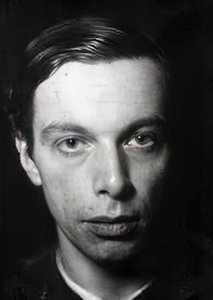
1880 - 1938 , Tyskland

Explore the visceral power of German Expressionism. From Ernst Ludwig Kirchner to Die Brücke, discover how bold colors and distorted forms unmask raw human emotion in this expert art history guide for collectors and enthusiasts.

Explore the profound history and technical mastery of woodcut relief printing. From ancient origins to German Expressionism, discover how artists use the subtractive process to create iconic works. A definitive guide for art students, collectors, and historians.


Hold dig opdateret med de seneste kunstnyheder, eksklusive tilbud og indretningsideer.
Fortæl os om dit projekt, og vores kunsteksperter vil give dig 3 personlige kunstforslag.
Vi kuraterer 3 valgmuligheder kun til dig – Gratis!


 Se i fuld skala
 Del
Del Del
Del
 Detaljer

 Download
 Lignende værker
 Røntgenundersøgelse
 Diasshow
 Se mere







 Glasmulighed er kun tilgængelig i størrelser under 110 cm