


x

Køb et højopløst, forbedret digitalt billede, der er langt bedre end online-forhåndsvisningen.
Hver fil er omhyggeligt forberedt af vores interne specialister ved hjælp af avancerede værktøjer og ekspertmæssig manuel retuschering. Vi sikrer, at hvert billede har enestående klarhed, præcis farvegengivelse og fine detaljer.
Den endelige fil leveres via e-mail inden for 72 timer og er optimeret til øjeblikkelig brug i professionelle, redaktionelle og trykte miljøer. Det er den samme kvalitet, som førende designstudier, forlag og gallerier har tillid til.
Download en højopløselig fil til personlig fremvisning, print og kreative projekter. ( Køb print Køb håndlavet maleri)
Når du vælger Most-Famous-Paintings.com, får du ikke blot et billede – du modtager et professionelt optimeret digitalt kunstværk, skabt med præcision og sikret med en tilfredshedsgaranti. Her er alt, hvad din ordre automatisk indeholder:

Din højkvalitets digitale billedfil vil blive sendt til din e-mail inden for 72 timer efter bestilling – klar til øjeblikkelig brug.

Dit kunstværk optimeres professionelt ved hjælp af avancerede AI-værktøjer og manuel redigering, hvilket sikrer maksimal detaljegrad, klarhed og farvenøjagtighed.

Har du ved en fejl slettet eller mistet din fil? Ingen bekymring – vi sender den igen til enhver tid, helt gratis.

Nyd dit kunstværk med det samme uden told, afgifter eller leveringsgebyrer – digitale downloads er altid skattefrie.

Vi sikrer, at dit digitale billede gengiver de originale farver så præcist som muligt ved hjælp af professionelle værktøjer og farvestyring.

Hvis du ikke er tilfreds med dit digitale billede, vil vi revidere det eller refundere 100% inden for 60 dage – uden spørgsmål.

Ik tilfreds? Få fuld refusion inden for 60 dage efter modtagelse af din digitale fil – uden spørgsmål.

Køb 3 billeder, spar 10% - Køb 5, spar 15% - Køb 10+, spar 20%. Ideelt til kreative projekter, gallerier og bureauer.
Fernand Léger's "Ballet Mécanique," painted in 1924, isn’t merely a depiction of a scene; it’s a vibrant, pulsating embodiment of the machine age and its impact on human experience. This groundbreaking work, born from Léger’s fascination with industrial forms and his post-war reflections, transcends simple representation to become a dynamic exploration of rhythm, movement, and the increasingly mechanized world around us. The painting captures a fleeting moment within a larger, almost frenetic sequence – a snapshot of urban life filtered through the lens of Cubism and a burgeoning interest in technology’s influence.
The composition itself is immediately arresting. Léger abandons traditional perspective, instead presenting a series of interlocking rectangular frames, reminiscent of a filmstrip or a mechanical animation. Within these frames, we encounter a cast of figures – women engaged in everyday activities like gardening and laundry, alongside glimpses of industrial machinery and domestic objects. These elements aren’t rendered with meticulous detail; rather, they are fragmented, simplified, and abstracted into geometric shapes—cylinders, cones, and angular forms that dominate the scene. This deliberate reduction emphasizes their mechanical essence, transforming familiar subjects into stylized symbols of a rapidly changing world.
“Ballet Mécanique” is deeply rooted in Léger’s development of “Tubism,” an artistic style he pioneered alongside Robert Delaunay. Tubism sought to capture the essence of modern life through the simplification of forms into cylindrical shapes, reflecting the perceived strength and stability of machinery. This approach wasn't about replicating reality but rather distilling it down to its fundamental geometric components – a direct response to the industrial landscape that was reshaping Europe after World War I. The painting’s palette is deliberately restrained—primarily consisting of bold primary colors (red, blue, yellow) punctuated by black and white—further reinforcing the mechanical aesthetic. The lack of shading or depth contributes to the feeling of flatness and immediacy, as if we are witnessing a continuous stream of images unfolding before our eyes.
It’s crucial to understand that “Ballet Mécanique” was conceived in conjunction with a film of the same name, directed by Dudley Murphy. Léger and Murphy intended the painting to serve as a visual accompaniment to the film, capturing its dynamic rhythm and fragmented imagery. The film itself—a pioneering experiment in experimental cinema—utilized synchronized music composed by George Antheil, further amplifying the sense of mechanical precision and rhythmic intensity. The pairing of the painting and the film created a truly immersive experience, blurring the boundaries between art forms and reflecting the growing fascination with new technologies and their impact on culture.
Beyond its technical innovations, “Ballet Mécanique” carries a potent symbolic weight. The repetitive movements of the figures, the fragmented forms, and the relentless pace of the composition evoke a sense of both excitement and anxiety—a reflection of the rapid social and technological changes occurring in the 1920s. The painting isn’t simply celebrating progress; it's also hinting at the potential alienation and dehumanization that can accompany industrialization. The figures, though seemingly engaged in everyday activities, appear strangely detached and isolated within their mechanical surroundings. Despite this underlying tension, “Ballet Mécanique” ultimately offers a surprisingly optimistic vision of modernity—a celebration of dynamism, energy, and the transformative power of technology.
Today, reproductions of "Ballet Mécanique" remain highly sought after by collectors and interior designers alike. Its bold colors, dynamic composition, and iconic imagery make it a striking addition to any space. When incorporated into an interior setting, the painting’s inherent energy can invigorate a room, creating a conversation piece that speaks to both the history of modern art and the ongoing fascination with the machine age. Consider pairing it with sleek, minimalist furniture or incorporating elements of industrial design to further enhance its visual impact.

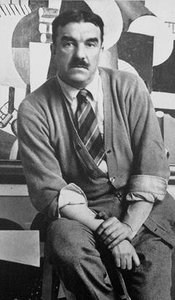
1881 - 1955 , Frankrig


Hold dig opdateret med de seneste kunstnyheder, eksklusive tilbud og indretningsideer.
Fortæl os om dit projekt, og vores kunsteksperter vil give dig 3 personlige kunstforslag.
Vi kuraterer 3 valgmuligheder kun til dig – Gratis!


 Se i fuld skala
 Del
Del Del
Del
 Detaljer

 Download
 Lignende værker
 Røntgenundersøgelse
 Diasshow

 Se mere


