


x

Håndmalet olie på lærred i din valgte størrelse og ramme, udført efter bestilling af vores kunstnere. ( Køb print Køb billede)





























Vælg mellem vores forudindstillede størrelser, der matcher kunstværkets originale proportioner.

Du kan indtaste dine egne mål for at passe til en bestemt ramme eller plads. Hvis den valgte størrelse ikke stemmer overens med det originale billedes proportioner, vil vi enten beskære kunstværket eller udvide maleriet med yderligere håndmalede elementer. En digital skitse sendes til din godkendelse, før produktionen påbegyndes.
Bemærk venligst, at forhåndsvisningen på skærmen ikke afspejler den faktiske beskæring eller udvidelse. Kun skitsen vil nøjagtigt vise den endelige komposition.
Selvom specialmål er mulige, anbefaler vi at vælge en dimension fra den foruddefinerede liste for at bevare de originale proportioner.
Levering i hele verden () på 3/4 uger i stedet for de standard 5 uger. (18 august). Ingen kompromiser med kvaliteten.


Still Life with key
Størrelse på reproduktion
Fernand Léger's Still Life with Key is more than just a depiction of musical instruments; it’s a profound meditation on the burgeoning relationship between humanity and machinery, rendered in his signature “Tubism” style. Painted by this pivotal figure of the early 20th century, the artwork captures a moment of quiet contemplation amidst a carefully orchestrated tableau of objects – a violin, cello, piano, books, and a bowl – each imbued with a sense of deliberate arrangement that speaks to Léger’s fascination with geometric forms and industrial aesthetics. The painting's power lies not just in its subject matter but in the way Léger translates observed reality into an intensely abstract language, anticipating the radical shifts occurring within the art world at the time.
Created between 1920 and 1930, Still Life with Key firmly establishes Léger’s groundbreaking approach known as “Tubism.” Emerging from his earlier work, particularly the "Dynamic Cubes," Tubism sought to represent objects not as single, unified forms but as a series of interlocking geometric volumes – cylinders, cones, and cubes – reflecting the fragmented perspectives offered by modern urban life and the mechanized world. Léger was deeply influenced by the industrial landscape of Paris, witnessing firsthand the rise of factories, trains, and other machines that were reshaping society. This fascination is vividly expressed in the painting’s fractured representation of the instruments, suggesting their construction as a complex assembly of parts rather than a seamless whole.
Beyond its purely formal concerns, Still Life with Key carries significant symbolic weight. The musical instruments themselves – violin, cello, and piano – represent the enduring power of human creativity and expression in an increasingly mechanized world. Their placement within the composition is deliberate, creating a visual dialogue between organic forms (the instruments) and geometric ones (Léger’s fragmented representation). The books scattered throughout the scene could symbolize knowledge, tradition, or perhaps a yearning for stability amidst the rapid changes brought about by industrialization. Even the key, subtly integrated into the artwork, hints at unlocking new possibilities, accessing hidden structures, or controlling the forces of modernity.
Léger’s technique is characterized by bold brushstrokes, a vibrant palette dominated by blues, greens, and ochres, and a meticulous attention to detail within his abstracted forms. He employed a layering technique, building up the composition through multiple applications of paint, creating a textured surface that adds depth and dynamism to the work. The overall effect is one of controlled chaos – a visual representation of the energy and movement inherent in the machine age. Still Life with Key evokes a sense of both fascination and unease, inviting viewers to contemplate the complex relationship between humanity and technology, a theme that remains remarkably relevant today. This reproduction offers an exceptional opportunity to experience Léger’s revolutionary vision firsthand.

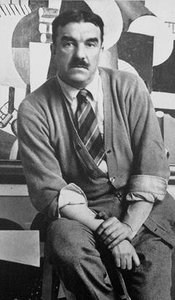
1881 - 1955 , Frankrig
Explore the profound emotional depth of Lyrical Abstraction. Discover how masters like Raymond Parker used color and form to bridge Impressionism and Abstract Expressionism. Learn about this pivotal movement through our expert-led art history guide.

Explore the profound emotional depth of Color Field painting. Discover the history of mid-century abstraction, from Rothko to Newman, and learn how pure color transforms the viewer's experience through our expert art history guide.


Hold dig opdateret med de seneste kunstnyheder, eksklusive tilbud og indretningsideer.
Fortæl os om dit projekt, og vores kunsteksperter vil give dig 3 personlige kunstforslag.
Vi kuraterer 3 valgmuligheder kun til dig – Gratis!


 Se i fuld skala
 Del
Del Del
Del
 Detaljer

 Download
 Lignende værker
 Røntgenundersøgelse
 Diasshow

 Se mere







 Glasmulighed er kun tilgængelig i størrelser under 110 cm


