x

Giclée- eller lærredstryk i museumskvalitet med hurtig produktion og fleksible muligheder for finish. ( Skift til håndmalet maleri Skift til billede)





























Vælg mellem vores forudindstillede størrelser, der matcher kunstværkets originale proportioner.

Du kan indtaste dine egne mål for at passe til en specifik ramme eller et bestemt område. Hvis den valgte størrelse ikke stemmer overens med det originale billedes proportioner, vil vi enten beskære kunstværket eller udvide billedet med en spejlet eller ensfarvet kant. En digital mockup vil blive sendt til din godkendelse, før produktionen påbegyndes.
Bemærk venligst, at forhåndsvisningen på skærmen ikke afspejler den faktiske beskæring eller udvidelse. Kun mockuppen vil nøjagtigt vise den endelige komposition.
Selvom specialmål er tilgængelige, anbefaler vi at vælge et mål fra den foruddefinerede liste for at bevare de originale proportioner.
Verdensomspændende levering () på 2 uger i stedet for de sædvanlige 4/5 uger. (11 august)


The field trip
Størrelse på reproduktion
Fernand Léger’s “The Field Trip,” completed in 1925, stands as an emblem of Surrealist innovation and a profound reflection on the anxieties and aspirations of the interwar period. More than just a depiction of schoolchildren embarking on a journey to observe a locomotive, Léger's canvas embodies a radical reimagining of artistic representation—a deliberate rejection of illusionism in favor of a visual language that prioritizes geometric abstraction and conveys an overwhelming sense of movement.
“The Field Trip” emerged during a period of intense social and technological upheaval. The rapid industrialization of Europe—fueled by advancements in steam power, metallurgy, and transportation—was reshaping urban landscapes and altering the rhythms of daily life. Artists responded to these changes with diverse strategies, ranging from outright rejection of modernity to attempts to synthesize its principles with traditional forms. Léger’s Surrealist approach distinguishes itself through a calculated embrace of abstraction—a deliberate distortion of reality intended not merely to shock but also to provoke contemplation about the nature of perception and representation.
Beyond its literal depiction of schoolchildren and locomotives, “The Field Trip” is laden with symbolic significance. Léger’s use of repetitive geometric shapes—particularly rectangles—represents the relentless march of industrial progress, mirroring the rhythmic pulsations of the locomotive engine. The flattened picture plane symbolizes a rejection of illusionism and an insistence on confronting viewers with the raw materiality of the artwork. Furthermore, Léger subtly transforms recognizable elements—faces, bodies—into stylized abstractions, suggesting that artistic representation transcends mere imitation of nature.
"The Field Trip" evokes a complex emotional response in the viewer. The painting’s assertive color palette and dynamic brushstrokes convey an underlying sense of anxiety—a reflection of the uncertainties surrounding the future. Yet, simultaneously, Léger imbues his artwork with moments of wonder—captured in the expressive faces of the children and the luminous glow emanating from the locomotive. Ultimately, Léger's masterpiece compels us to reconsider our relationship with both the physical world and artistic expression—challenging us to embrace abstraction as a tool for conveying profound truths about human experience.

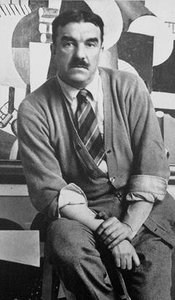
1881 - 1955 , Frankrig


Hold dig opdateret med de seneste kunstnyheder, eksklusive tilbud og indretningsideer.
Fortæl os om dit projekt, og vores kunsteksperter vil give dig 3 personlige kunstforslag.
Vi kuraterer 3 valgmuligheder kun til dig – Gratis!


 Se i fuld skala
 Del
Del Del
Del
 Detaljer

 Download
 Lignende værker
 Røntgenundersøgelse
 Diasshow
 Se mere







 Glasmulighed er kun tilgængelig i størrelser under 110 cm