


x

Giclée- eller lærredstryk i museumskvalitet med hurtig produktion og fleksible muligheder for finish. ( Køb håndlavet maleri Køb billede)





























Vælg mellem vores forudindstillede størrelser, der matcher kunstværkets originale proportioner.

Du kan indtaste dine egne mål for at passe til en specifik ramme eller et bestemt område. Hvis den valgte størrelse ikke stemmer overens med det originale billedes proportioner, vil vi enten beskære kunstværket eller udvide billedet med en spejlet eller ensfarvet kant. En digital mockup vil blive sendt til din godkendelse, før produktionen påbegyndes.
Bemærk venligst, at forhåndsvisningen på skærmen ikke afspejler den faktiske beskæring eller udvidelse. Kun mockuppen vil nøjagtigt vise den endelige komposition.
Selvom specialmål er tilgængelige, anbefaler vi at vælge et mål fra den foruddefinerede liste for at bevare de originale proportioner.
Verdensomspændende levering () på 2 uger i stedet for de sædvanlige 4/5 uger. (14 august)


The tug
Størrelse på reproduktion
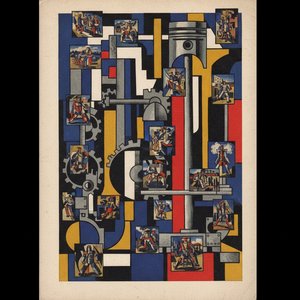
Fernand Léger’s “The Tug,” completed in 1928, isn't merely a depiction of a sailboat; it’s an embodiment of the anxieties and aspirations surrounding industrialization during the Weimar Republic. Léger, already established as a leading voice in the Bauhaus movement and Surrealist circles, sought to translate the relentless rhythm of the machine age into a visual language that defied traditional representation.
Technique-wise, Léger employed a bold palette dominated by reds, yellows, and blacks – colors that evoke both heat and darkness. He utilized thick impasto brushstrokes, layering paint onto the canvas with considerable physicality. This technique isn’t simply about applying color; it's about creating palpable texture, mirroring the rough surfaces of industrial machinery and conveying the raw power of nature.
“The Tug” emerged during a period of profound societal transformation in Germany. The Bauhaus school championed functionalism and geometric abstraction as responses to the perceived decadence of bourgeois culture, mirroring Léger’s artistic convictions. Simultaneously, advancements in engineering and manufacturing fueled an optimistic belief in progress—a belief tempered by anxieties about social upheaval and impending conflict.
Despite its apparent simplicity, “The Tug” is laden with symbolic significance. The sailboat itself represents resilience and determination – a struggle against overwhelming forces—while the turbulent waves symbolize instability and uncertainty. Léger’s deliberate use of contrasting colors reinforces this duality, highlighting both the destructive potential and inherent beauty of the natural world.
Viewing “The Tug” evokes a visceral response. The painting's energetic brushstrokes and bold palette convey a sense of urgency and excitement, mirroring the anxieties and aspirations of its time. Yet, beneath the surface chaos lies an underlying harmony—a testament to Léger’s belief that even in the face of adversity, beauty can endure. It invites contemplation on themes of struggle, transformation, and the enduring power of artistic vision.


1881 - 1955 , Frankrig
Oplev Fernand Légers 25 mest ikoniske kunstværker! Dyk ned i kubismens verden, maskinæraen og hans farverige malerier. Find inspiration til din boligindretning & køb reproduktioner af højeste kvalitet på Most-Famous-Paintings.com.

Explore the profound geometric mastery of Fernand Léger. Discover how his 'Tubism' and Machine Age aesthetics redefined modern art, offering timeless inspiration for discerning collectors seeking to integrate Cubist dynamism into sophisticated contemporary interiors.

Explore the vibrant world of Fernand Léger. Discover how his 'Tubism' and Machine Age aesthetics redefined modern art, offering profound inspiration for discerning collectors seeking geometric beauty and industrial dynamism.
Explore the profound intersection of industry and artistry. Discover museum-quality reproductions of Machine Age masterpieces by Léger and Rivera, curated for elite collectors seeking to infuse luxury interiors with the powerful, geometric soul of industrial progress.

Oplev industriens sjæl i kunsten! Udforsk 10 ikoniske værker fra impressionismen til realismen. Find inspiration til dit hjem og køb museumskvalitets kunsttryk online hos Most-Famous-Paintings.com – din kilde til berømte malerier & dekoration.


Hold dig opdateret med de seneste kunstnyheder, eksklusive tilbud og indretningsideer.
Fortæl os om dit projekt, og vores kunsteksperter vil give dig 3 personlige kunstforslag.
Vi kuraterer 3 valgmuligheder kun til dig – Gratis!


 Se i fuld skala
 Del
Del Del
Del
 Detaljer

 Download
 Lignende værker
 Røntgenundersøgelse
 Diasshow
 Se mere







 Glasmulighed er kun tilgængelig i størrelser under 110 cm


