x

Håndmalet olie på lærred i din valgte størrelse og ramme, udført efter bestilling af vores kunstnere. ( Køb print Køb billede)





























Vælg mellem vores forudindstillede størrelser, der matcher kunstværkets originale proportioner.

Du kan indtaste dine egne mål for at passe til en bestemt ramme eller plads. Hvis den valgte størrelse ikke stemmer overens med det originale billedes proportioner, vil vi enten beskære kunstværket eller udvide maleriet med yderligere håndmalede elementer. En digital skitse sendes til din godkendelse, før produktionen påbegyndes.
Bemærk venligst, at forhåndsvisningen på skærmen ikke afspejler den faktiske beskæring eller udvidelse. Kun skitsen vil nøjagtigt vise den endelige komposition.
Selvom specialmål er mulige, anbefaler vi at vælge en dimension fra den foruddefinerede liste for at bevare de originale proportioner.
Levering i hele verden () på 3/4 uger i stedet for de standard 5 uger. (14 august). Ingen kompromiser med kvaliteten.


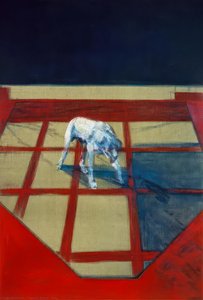
man with dog
Størrelse på reproduktion
Francis Bacon’s “Man with Dog,” completed in 1953, stands as one of the most unsettling and iconic images produced by the British Surrealist painter. More than just a depiction of a man and his canine companion, it embodies a profound exploration of human vulnerability and the inescapable confrontation with mortality – themes central to Bacon’s artistic vision throughout his prolific career.
The painting presents a starkly simple scene: a man standing on what appears to be a metal grate or railing, clutching a dog firmly in his arms. Alongside him is another dog, positioned slightly off-center, gazing towards the viewer with an expression of palpable apprehension. Bacon deliberately eschewed elaborate narrative elements, prioritizing instead the raw physicality of the figures and their relationship.
“Man with Dog” firmly establishes Bacon’s signature style – a blend of Surrealism and Expressionism that rejects traditional representational conventions. He employed a technique characterized by thick impasto, applying paint directly onto the canvas in layers of textured pigment. This method creates a palpable sense of physicality, mirroring the psychological turmoil depicted within the artwork. The monochrome palette—primarily black and white—intensifies the emotional impact, stripping away any distractions from the core subject matter.
Painted in the immediate aftermath of World War II, “Man with Dog” reflects the pervasive anxieties of the era. Bacon’s artistic explorations coincided with the burgeoning philosophical movement of existentialism, championed by thinkers like Jean-Paul Sartre and Albert Camus. These philosophers questioned traditional notions of morality and purpose, emphasizing individual responsibility and confronting the absurdity of existence – concepts that profoundly resonated with Bacon’s own worldview.
The symbolism within “Man with Dog” is multilayered and deliberately ambiguous. The man's posture—rigid yet vulnerable—suggests a struggle against overwhelming forces. The dog’s gaze directs attention outwards, conveying fear of the unknown and highlighting the precariousness of human existence. Furthermore, the grate or railing symbolizes confinement and separation, reinforcing the painting’s overarching theme of isolation – a recurring motif in Bacon's oeuvre.
"Man with Dog" doesn't offer comfort; it compels viewers to confront uncomfortable truths about human fragility. The painting’s unsettling stillness amplifies its emotional resonance, forcing contemplation on the inevitability of death and decay. Bacon’s masterful manipulation of texture and monochrome color contributes to an atmosphere of profound melancholy and psychological unease—a testament to his ability to translate inner turmoil into visual form.
This arresting artwork continues to captivate audiences today, serving as a powerful reminder of the enduring relevance of existentialist thought and Bacon’s unparalleled capacity for conveying the darkest recesses of human emotion. Its haunting beauty resides precisely in its refusal to shy away from confronting the fundamental questions of life and death.

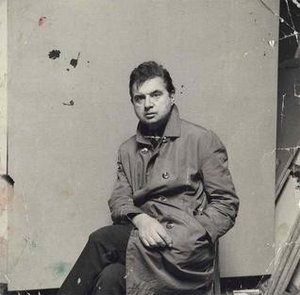
1909 - 1992 , Irland

Explore the profound depths of Surrealism. From Dalí’s dreamscapes to Magritte’s enigmas, master the history of the subconscious mind through our expert art guide and discover museum-quality oil reproductions of the world's most iconic surrealist masterpieces.


Hold dig opdateret med de seneste kunstnyheder, eksklusive tilbud og indretningsideer.
Fortæl os om dit projekt, og vores kunsteksperter vil give dig 3 personlige kunstforslag.
Vi kuraterer 3 valgmuligheder kun til dig – Gratis!


 Se i fuld skala
 Del
Del Del
Del
 Detaljer

 Download
 Lignende værker
 Røntgenundersøgelse
 Diasshow

 Se mere







 Glasmulighed er kun tilgængelig i størrelser under 110 cm