x

Håndmalet olie på lærred i din valgte størrelse og ramme, udført efter bestilling af vores kunstnere. ( Køb print Køb billede)





























Vælg mellem vores forudindstillede størrelser, der matcher kunstværkets originale proportioner.

Du kan indtaste dine egne mål for at passe til en bestemt ramme eller plads. Hvis den valgte størrelse ikke stemmer overens med det originale billedes proportioner, vil vi enten beskære kunstværket eller udvide maleriet med yderligere håndmalede elementer. En digital skitse sendes til din godkendelse, før produktionen påbegyndes.
Bemærk venligst, at forhåndsvisningen på skærmen ikke afspejler den faktiske beskæring eller udvidelse. Kun skitsen vil nøjagtigt vise den endelige komposition.
Selvom specialmål er mulige, anbefaler vi at vælge en dimension fra den foruddefinerede liste for at bevare de originale proportioner.
Levering i hele verden () på 3/4 uger i stedet for de standard 5 uger. (20 august). Ingen kompromiser med kvaliteten.


Three Figures and Portrait
Størrelse på reproduktion
Francis Bacon's "Three Figures and Portrait," painted in 1975, is not merely a depiction of three individuals; it’s an excavation of the human psyche – a raw, unsettling exploration of vulnerability, isolation, and the inescapable anxieties of existence. This work, rendered in oil paint and pastel on canvas, embodies the core tenets of Bacon's mature style: distorted forms, fragmented figures, and a deliberate avoidance of comforting realism. The painting immediately confronts the viewer with its claustrophobic space, dominated by a sense of unease and impending dread. It’s a world where bodies are stretched and contorted, faces dissolve into masks of anguish, and the boundaries between life and death become increasingly blurred.
The composition itself is deliberately ambiguous. Three figures occupy the central plane, their postures suggesting both confrontation and concealment. The placement of the smaller figures – one lurking in the left foreground, another receding into the darkness on the far left – creates a sense of spatial disorientation, mirroring the psychological turmoil at play. A chair positioned to the right anchors the scene, while a dining table behind it hints at domesticity disrupted, perhaps even abandoned. Above them hangs a portrait, an element that subtly complicates the narrative, suggesting a reflection or a distorted memory of self.
Bacon's technique is central to understanding the painting’s profound impact. He employed a layered approach, building up thick impasto – literally piling paint onto the canvas – creating surfaces that are both tactile and intensely expressive. The colors are predominantly dark – bruised purples, sickly greens, and murky browns – punctuated by flashes of unsettling red. These hues aren't used to represent reality but rather to convey emotional states: fear, pain, and a sense of impending doom. Bacon’s brushstrokes are frenzied and agitated, mirroring the inner turmoil he sought to capture. The figures themselves appear almost skeletal, their forms dissolving into grotesque shapes – a deliberate strategy to strip away any semblance of idealized beauty and expose the raw, vulnerable core of human existence.
The use of pastel alongside oil paint adds another layer of complexity. Pastel’s softer texture contrasts sharply with the impastoed oil, creating a dynamic tension within the composition. This juxtaposition further emphasizes the painting's unsettling quality, suggesting a struggle between order and chaos, control and surrender.
Bacon’s work in the 1970s reflects the anxieties of a post-war world grappling with existential questions. Having experienced significant personal upheaval throughout his life – including the loss of loved ones and periods of intense emotional distress – Bacon channeled these experiences into his art, creating images that resonated with the collective unease of the time. His subject matter often drew from classical mythology and religious iconography, but he radically distorted these references, transforming them into symbols of modern alienation and psychological fragmentation. Influenced by artists like Picasso and Giacometti, Bacon pushed the boundaries of figurative painting, rejecting traditional notions of beauty and representation in favor of a brutally honest portrayal of human suffering.
"Three Figures and Portrait" is rich with symbolic potential. The figures themselves can be interpreted as representations of individuals trapped within their own minds, struggling to connect with others or find meaning in a chaotic world. The portrait hanging above them might symbolize the elusive nature of identity – a fragmented reflection of the self that resists complete understanding. The overall atmosphere of the painting is one of profound loneliness and isolation, reflecting Bacon’s lifelong preoccupation with themes of mortality and the fragility of human existence. It's a work that demands engagement, inviting viewers to confront their own anxieties and contemplate the darker aspects of the human condition. A reproduction offers a powerful way to experience this intensely emotional artwork in your own space.

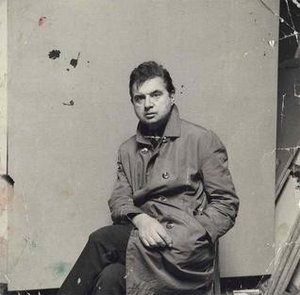
1909 - 1992 , Irland

Explore the profound history and technical brilliance of oil on panel painting. From Renaissance masters to modern techniques, discover why this rigid support offers unparalleled precision and permanence for fine art lovers and collectors.


Hold dig opdateret med de seneste kunstnyheder, eksklusive tilbud og indretningsideer.
Fortæl os om dit projekt, og vores kunsteksperter vil give dig 3 personlige kunstforslag.
Vi kuraterer 3 valgmuligheder kun til dig – Gratis!


 Se i fuld skala
 Del
Del Del
Del
 Detaljer

 Download
 Lignende værker
 Røntgenundersøgelse
 Diasshow

 Se mere







 Glasmulighed er kun tilgængelig i størrelser under 110 cm