


x
 Oil On CanvasWallArtFuturism and Expression
 1917Modern
 47.0 x 68.0 cm
Køb et højopløst, forbedret digitalt billede, der er langt bedre end online-forhåndsvisningen.
Hver fil er omhyggeligt forberedt af vores interne specialister ved hjælp af avancerede værktøjer og ekspertmæssig manuel retuschering. Vi sikrer, at hvert billede har enestående klarhed, præcis farvegengivelse og fine detaljer.
Den endelige fil leveres via e-mail inden for 72 timer og er optimeret til øjeblikkelig brug i professionelle, redaktionelle og trykte miljøer. Det er den samme kvalitet, som førende designstudier, forlag og gallerier har tillid til.
Download en højopløselig fil til personlig fremvisning, print og kreative projekter. ( Køb print Køb håndlavet maleri)
Når du vælger Most-Famous-Paintings.com, får du ikke blot et billede – du modtager et professionelt optimeret digitalt kunstværk, skabt med præcision og sikret med en tilfredshedsgaranti. Her er alt, hvad din ordre automatisk indeholder:

Din højkvalitets digitale billedfil vil blive sendt til din e-mail inden for 72 timer efter bestilling – klar til øjeblikkelig brug.

Dit kunstværk optimeres professionelt ved hjælp af avancerede AI-værktøjer og manuel redigering, hvilket sikrer maksimal detaljegrad, klarhed og farvenøjagtighed.

Har du ved en fejl slettet eller mistet din fil? Ingen bekymring – vi sender den igen til enhver tid, helt gratis.

Nyd dit kunstværk med det samme uden told, afgifter eller leveringsgebyrer – digitale downloads er altid skattefrie.

Vi sikrer, at dit digitale billede gengiver de originale farver så præcist som muligt ved hjælp af professionelle værktøjer og farvestyring.

Hvis du ikke er tilfreds med dit digitale billede, vil vi revidere det eller refundere 100% inden for 60 dage – uden spørgsmål.

Ik tilfreds? Få fuld refusion inden for 60 dage efter modtagelse af din digitale fil – uden spørgsmål.

Køb 3 billeder, spar 10% - Køb 5, spar 15% - Køb 10+, spar 20%. Ideelt til kreative projekter, gallerier og bureauer.
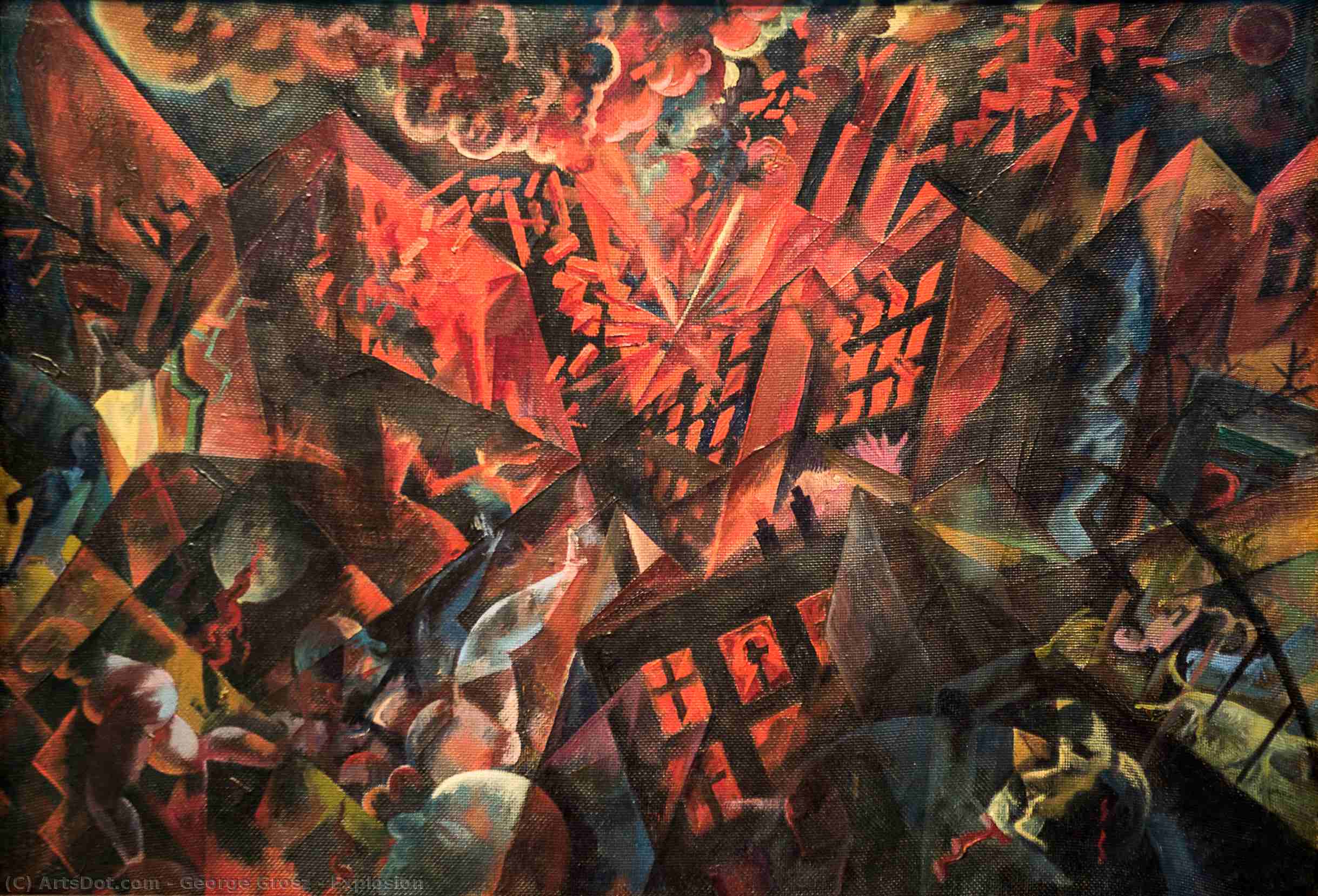
George Grosz’s “Explosion,” painted in 1917, isn’t merely a depiction of war; it’s a visceral scream against the very foundations of society. Born from the artist’s disillusionment following his discharge from the German army due to mental health struggles – a direct consequence of witnessing the horrors of World War I – this work embodies the chaotic disintegration of both physical landscapes and moral values. Grosz, a key figure in the Dada movement and a master of Expressionism, utilizes the burgeoning principles of Futurism to create an image that remains profoundly unsettling and remarkably relevant today. The painting’s immediate impact is one of overwhelming devastation: collapsing high-rise buildings, rendered in furious reds and oranges, seem to pinwheel around a central vortex of black, sucking in shattered windows and billowing smoke – a tangible representation of the war's indiscriminate destruction. It’s a scene that demands attention, forcing the viewer to confront the brutal reality of conflict.
To fully appreciate "Explosion," one must understand its historical context. Painted in 1917, a pivotal year marked by the height of World War I, the artwork reflects the widespread disillusionment and anti-war sentiment that fueled the rise of Dadaism. Grosz’s work aligns with this movement's rejection of traditional artistic values and embrace of irrationality and absurdity as responses to the perceived madness of the era. His earlier training in meticulous Dutch master copies – particularly those of Eduard von Grützner – provided him with a strong technical foundation, which he then deliberately subverted, using his skill to amplify the emotional impact of his subject matter. The painting’s genesis is inextricably linked to Grosz's personal trauma and his profound critique of the militaristic society that produced such devastation.
The fiery background, a dominant feature of “Explosion,” isn’t simply an aesthetic choice; it’s a deliberate symbol of intense heat and destruction. The swirling clouds and streaks of light suggest not just explosions but also the psychological turmoil experienced by those caught in the war's grip. The angular forms of the collapsing buildings – reminiscent of Cubist influences – further contribute to the painting’s sense of fragmentation and disorientation. Grosz masterfully employs contrast, juxtaposing the fiery foreground with cooler blues and greens in the background, intensifying the overall feeling of chaos and amplifying the emotional impact.
"Explosion" remains a powerful testament to George Grosz’s artistic vision and his unwavering commitment to social commentary. Its influence can be seen in contemporary artists who continue to grapple with themes of war, destruction, and societal decay. The Museum of Modern Art (MoMA) recognizes this significance, holding “Explosion” within its collection as a cornerstone of modern art history. This reproduction offers an exceptional opportunity to own a piece of this pivotal artwork, allowing you to experience the raw emotion and intellectual depth that define Grosz’s legacy.


1893 - 1959 , Tyskland


Hold dig opdateret med de seneste kunstnyheder, eksklusive tilbud og indretningsideer.
Fortæl os om dit projekt, og vores kunsteksperter vil give dig 3 personlige kunstforslag.
Vi kuraterer 3 valgmuligheder kun til dig – Gratis!


 Se i fuld skala
 Del
Del Del
Del
 Detaljer

 Download
 Lignende værker
 Røntgenundersøgelse
 Diasshow
 Se mere


