


x
 Acrylic On CanvasWallArtBaroque
 1615
1615 129.0 x 94.0 cm
 Cleveland Museum of Art
Køb et højopløst, forbedret digitalt billede, der er langt bedre end online-forhåndsvisningen.
Hver fil er omhyggeligt forberedt af vores interne specialister ved hjælp af avancerede værktøjer og ekspertmæssig manuel retuschering. Vi sikrer, at hvert billede har enestående klarhed, præcis farvegengivelse og fine detaljer.
Den endelige fil leveres via e-mail inden for 72 timer og er optimeret til øjeblikkelig brug i professionelle, redaktionelle og trykte miljøer. Det er den samme kvalitet, som førende designstudier, forlag og gallerier har tillid til.
Download en højopløselig fil til personlig fremvisning, print og kreative projekter. ( Køb print Køb håndlavet maleri)
Når du vælger Most-Famous-Paintings.com, får du ikke blot et billede – du modtager et professionelt optimeret digitalt kunstværk, skabt med præcision og sikret med en tilfredshedsgaranti. Her er alt, hvad din ordre automatisk indeholder:

Din højkvalitets digitale billedfil vil blive sendt til din e-mail inden for 72 timer efter bestilling – klar til øjeblikkelig brug.

Dit kunstværk optimeres professionelt ved hjælp af avancerede AI-værktøjer og manuel redigering, hvilket sikrer maksimal detaljegrad, klarhed og farvenøjagtighed.

Har du ved en fejl slettet eller mistet din fil? Ingen bekymring – vi sender den igen til enhver tid, helt gratis.

Nyd dit kunstværk med det samme uden told, afgifter eller leveringsgebyrer – digitale downloads er altid skattefrie.

Vi sikrer, at dit digitale billede gengiver de originale farver så præcist som muligt ved hjælp af professionelle værktøjer og farvestyring.

Hvis du ikke er tilfreds med dit digitale billede, vil vi revidere det eller refundere 100% inden for 60 dage – uden spørgsmål.

Ik tilfreds? Få fuld refusion inden for 60 dage efter modtagelse af din digitale fil – uden spørgsmål.

Køb 3 billeder, spar 10% - Køb 5, spar 15% - Køb 10+, spar 20%. Ideelt til kreative projekter, gallerier og bureauer.
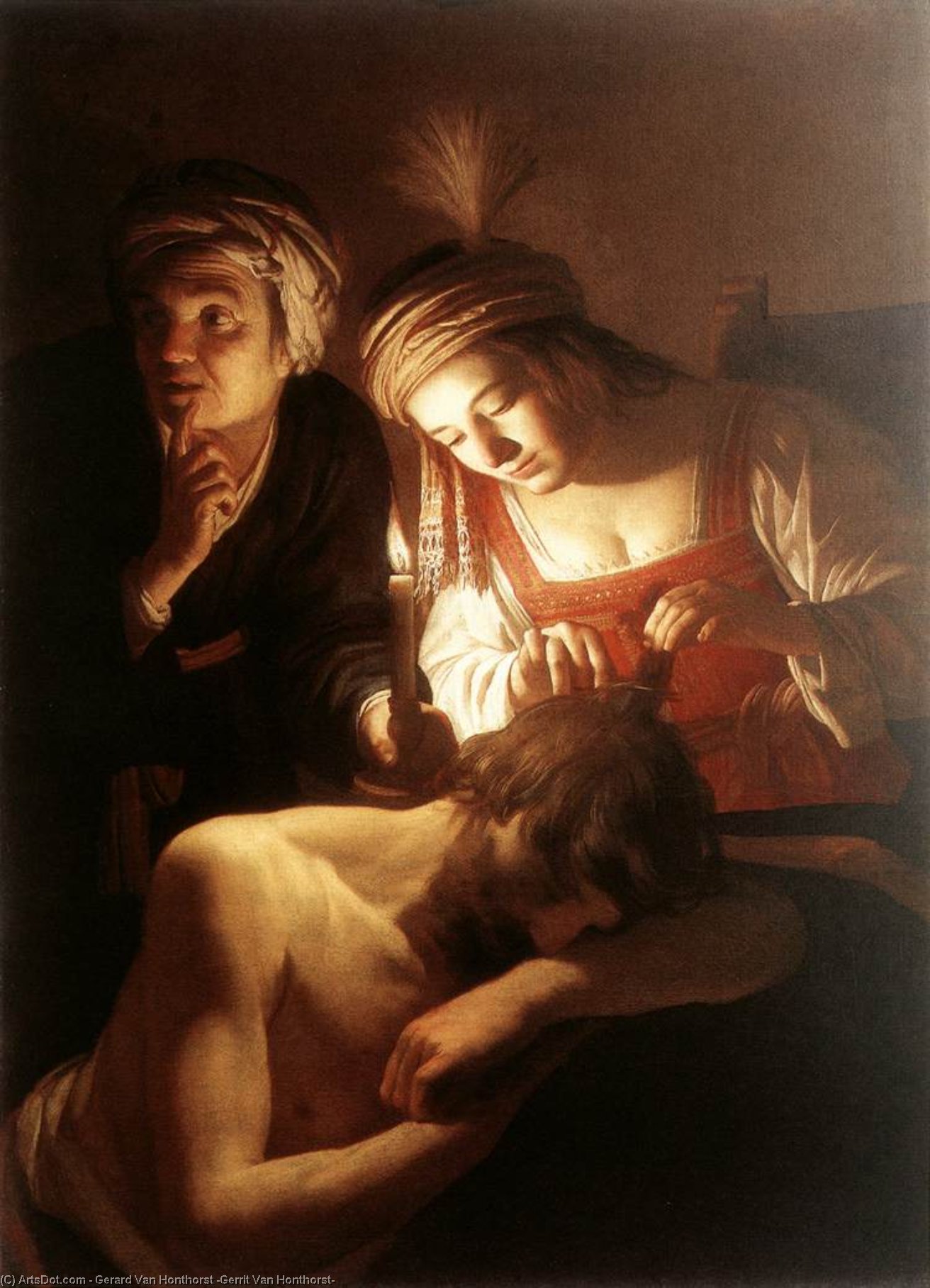
Gerard van Honthorst's "Samson and Delilah," painted in 1615, isn’t merely a depiction of a biblical tale; it’s a meticulously crafted tableau vivant—a stage set frozen in time. The painting immediately commands attention with its intensely focused composition, drawing the viewer into a small, intimate chamber dominated by a sprawling dining table. Three figures occupy this space: Samson, lying prone and vulnerable on the table, his body partially draped with a cloth; Delilah, her hand raised to her face in a gesture of both anguish and calculated seduction; and the enigmatic woman beside her, seemingly observing the unfolding drama with a mixture of concern and perhaps even complicity. The lighting, characteristic of Honthorst’s signature style—tenebrism—is masterful, plunging much of the scene into deep shadow while bathing the central figures in a dramatic, almost theatrical light source. This stark contrast amplifies the emotional intensity, creating an atmosphere thick with suspense and impending doom.
Van Honthorst’s artistic journey profoundly shaped this work, mirroring his encounter with the revolutionary techniques of Caravaggio in Rome. Like Caravaggio, Honthorst employed tenebrism to create a heightened sense of drama and psychological intensity. However, while Caravaggio often used stark, almost brutal contrasts of light and dark, Honthorst softens the effect slightly, creating a more nuanced and emotionally complex atmosphere. The careful placement of the light source—a single candle illuminating the central figures—is crucial, directing our attention to the key elements of the narrative and emphasizing the vulnerability of Samson. This technique wasn’t simply an aesthetic choice; it was a deliberate strategy for conveying the story's emotional core – the slow unraveling of strength and trust.
The painting is deeply rooted in the Baroque period, characterized by its dramatic intensity, theatricality, and focus on emotion and storytelling. Honthorst’s work exemplifies these qualities perfectly, showcasing his mastery of light, composition, and psychological realism.The story of Samson and Delilah is a potent allegory of betrayal, temptation, and the loss of innocence. The painting doesn't simply recount the biblical narrative; it delves into its emotional heart. Samson’s vulnerability as he lies exposed on the table speaks to his diminished strength—both physical and spiritual—while Delilah’s seductive gaze embodies the allure of deceit and the destructive power of manipulation. The woman beside her, often interpreted as Semadar, represents a silent witness to this tragic exchange, perhaps reflecting the wider community's complicity in Samson’s downfall. The act of shaving his hair, traditionally a symbol of strength and divine protection, becomes an emblem of utter defeat.
Historical Context:** The painting was created during a period of significant artistic innovation in the Netherlands, marked by a renewed interest in classical art and a growing emphasis on realism and emotional expression. Honthorst’s work reflects these trends, while also incorporating his own distinctive style and influences.Further research reveals that this painting is part of a larger collection of biblical scenes created by Honthorst during his time in Rome. The Cleveland Museum of Art holds a remarkably similar version, offering valuable insights into the artist’s technique and compositional choices. The Web Gallery of Art provides detailed images and historical information about Honthorst's life and work, while WikiArt offers a comprehensive overview of the painting itself. These resources highlight the enduring fascination with this dramatic narrative and the skill of the artist who brought it to life on canvas. High-quality reproductions capture the richness of color and detail, allowing viewers to appreciate the artistry of this Baroque masterpiece for generations to come.


1590 - 1656 , Holland


Hold dig opdateret med de seneste kunstnyheder, eksklusive tilbud og indretningsideer.
Fortæl os om dit projekt, og vores kunsteksperter vil give dig 3 personlige kunstforslag.
Vi kuraterer 3 valgmuligheder kun til dig – Gratis!


 Se i fuld skala
 Del
Del Del
Del
 Detaljer

 Download
 Lignende værker
 Røntgenundersøgelse
 Diasshow
 Se mere


