


x

 Futurist Painting
 1912
1912 56.0 x 69.0 cm
 MoMA - Museum of Modern Art
Giclée- eller lærredstryk i museumskvalitet med hurtig produktion og fleksible muligheder for finish. ( Køb håndlavet maleri Køb billede)





























Vælg mellem vores forudindstillede størrelser, der matcher kunstværkets originale proportioner.

Du kan indtaste dine egne mål for at passe til en specifik ramme eller et bestemt område. Hvis den valgte størrelse ikke stemmer overens med det originale billedes proportioner, vil vi enten beskære kunstværket eller udvide billedet med en spejlet eller ensfarvet kant. En digital mockup vil blive sendt til din godkendelse, før produktionen påbegyndes.
Bemærk venligst, at forhåndsvisningen på skærmen ikke afspejler den faktiske beskæring eller udvidelse. Kun mockuppen vil nøjagtigt vise den endelige komposition.
Selvom specialmål er tilgængelige, anbefaler vi at vælge et mål fra den foruddefinerede liste for at bevare de originale proportioner.
Verdensomspændende levering () på 2 uger i stedet for de sædvanlige 4/5 uger. (16 august)


Speeding Automobile
Størrelse på reproduktion
Giacomo Balla’s “Speeding Automobile,” completed in 1912, stands as a cornerstone of Futurism—a movement that vehemently rejected the past and embraced speed, dynamism, and technological advancement. Painted on wood, this striking artwork exemplifies the Futurist aesthetic's obsession with capturing fleeting moments of motion and disrupting traditional artistic conventions.
The inclusion of two figures—one positioned on the left side of the canvas and another closer to the center—adds a human element to the scene, emphasizing the relationship between individuals and the burgeoning pace of industrialization. These figures aren’t merely incidental; they serve as conduits for conveying the emotional impact of this accelerated world.
Born in Turin in 1871, Giacomo Balla's artistic journey began with an initial inclination towards music before shifting his focus to visual art following his father’s untimely death. His formative years were spent honing his skills in lithograph printmaking and studying at academies and the University of Turin. Moving to Rome in 1895 broadened his horizons creatively, fostering collaborations with illustrators and portrait painters.
The painting emerged during a period defined by fervent optimism about technological progress and fueled by the revolutionary manifesto penned by Filippo Tommaso Marinetti in 1910. Futurism championed concepts like violence, speed, and the glorification of machines—ideas that profoundly challenged artistic sensibilities of the time.
"Speeding Automobile" transcends mere depiction; it embodies Futurist ideals. The vibrant colors and fractured forms symbolize the disruption of established order and celebrate the exhilarating energy of modernity. The headlights, strategically placed, represent illumination—both literal and metaphorical—guiding viewers toward a new understanding of time and space.

1871 - 1958 , Danmark
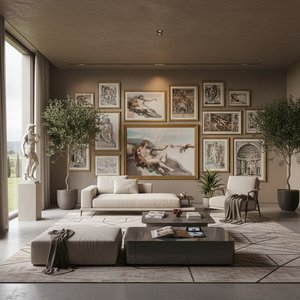
Oplev Michelangelos 25 mest ikoniske værker – fra David til Pietà og Sixtinske Kapel. Lær om renæssancens mester, hans teknikker & tidløse kunst. Find museumskvalitets reproduktioner på Most-Famous-Paintings.com.

Explore the Italian Renaissance! Discover humanist ideals, iconic masterpieces by Leonardo, Michelangelo & Raphael, and lasting artistic innovations. A comprehensive guide for art enthusiasts.

Oplev romantikkens storhedstid! Dyk ned i historierne bag 10 ikoniske malerier af Caspar David Friedrich, Delacroix & Goya. Find inspiration til dit hjem med museumskvalitets kunsttryk på Most-Famous-Paintings.com. Udforsk samlingen online!

Dyk ned i surrealismens fascinerende verden med 10 ikoniske malerier fra Dalí, Magritte og Miró. Lær historierne bag disse mesterværker og find inspiration til din boligindretning hos Most-Famous-Paintings – køb museumskvalitets kunsttryk online.
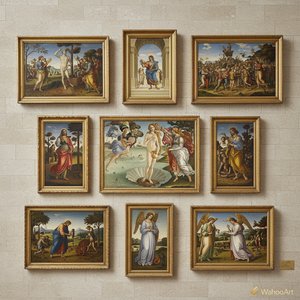
Oplev renæssancens guldalder! Udforsk top 10 mesterværker fra Leonardo da Vinci, Michelangelo & Botticelli. Lær om kunsthistorie og find museumskvalitets reproduktioner til dit hjem på Most-Famous-Paintings.com. Inspiration & dekoration.


Hold dig opdateret med de seneste kunstnyheder, eksklusive tilbud og indretningsideer.
Fortæl os om dit projekt, og vores kunsteksperter vil give dig 3 personlige kunstforslag.
Vi kuraterer 3 valgmuligheder kun til dig – Gratis!


 Se i fuld skala
 Del
Del Del
Del
 Detaljer

 Download
 Lignende værker
 Røntgenundersøgelse
 Diasshow
 Se mere







 Glasmulighed er kun tilgængelig i størrelser under 110 cm


