x

Giclée- eller lærredstryk i museumskvalitet med hurtig produktion og fleksible muligheder for finish. ( Køb håndlavet maleri Køb billede)





























Vælg mellem vores forudindstillede størrelser, der matcher kunstværkets originale proportioner.

Du kan indtaste dine egne mål for at passe til en specifik ramme eller et bestemt område. Hvis den valgte størrelse ikke stemmer overens med det originale billedes proportioner, vil vi enten beskære kunstværket eller udvide billedet med en spejlet eller ensfarvet kant. En digital mockup vil blive sendt til din godkendelse, før produktionen påbegyndes.
Bemærk venligst, at forhåndsvisningen på skærmen ikke afspejler den faktiske beskæring eller udvidelse. Kun mockuppen vil nøjagtigt vise den endelige komposition.
Selvom specialmål er tilgængelige, anbefaler vi at vælge et mål fra den foruddefinerede liste for at bevare de originale proportioner.
Verdensomspændende levering () på 2 uger i stedet for de sædvanlige 4/5 uger. (18 august)


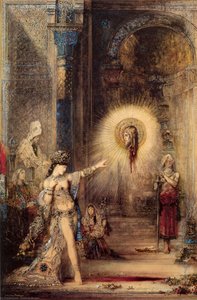
Venise
Størrelse på reproduktion
Gustave Moreau’s “Venise,” completed around 1885, stands as a cornerstone of Symbolist painting—a movement that prioritized emotion and psychological depth over literal representation. Unlike the Impressionists who sought to capture fleeting moments of visual experience, Moreau aimed to distill the essence of feeling into an image imbued with spiritual significance. This artwork isn’t merely a depiction of Venice; it's a portal into Moreau’s inner world—a realm populated by fantastical figures and bathed in ethereal luminescence.
Moreau’s artistic vision drew heavily from classical mythology, specifically the legend of Venus and Adonis. The central nude figure embodies Venus herself, reclining gracefully on a rocky outcrop—a motif reminiscent of ancient sculptures depicting goddesses in repose. Her expansive wings, feathered with meticulous detail, elevate her above earthly concerns, symbolizing divine grace and transcendence. This deliberate allusion to pagan iconography underscores Moreau’s desire to explore themes of beauty, desire, and mortality through the lens of timeless myths.
Moreau achieved his dreamlike effect primarily through oil paint applied with loose brushstrokes—a technique characteristic of Symbolist painters. These strokes create a palpable textural surface that captures the subtle nuances of light and shadow, contributing to the artwork’s overall atmosphere. The artist skillfully utilizes lines to define the contours of the figure and wings, emphasizing their organic forms while simultaneously conveying movement and dynamism. Furthermore, Moreau employs muted earthy tones—pale ochres, browns, and greys—to evoke a sense of melancholy and solitude, mirroring the contemplative mood he wished to convey.
In the hazy background, Moreau introduces a suggestion of Venice’s cityscape—a distant panorama rendered in soft pastel hues. This inclusion isn't merely decorative; it serves as a counterpoint to the figure’s serene isolation, hinting at the passage of time and the inevitable decay inherent in earthly existence. The flattened perspective reinforces the dreamlike quality of the scene, immersing the viewer in Moreau’s imaginative vision.
"Venise" exemplifies Moreau's profound engagement with Symbolist principles—a rejection of realism in favor of subjective experience and spiritual contemplation. Its enduring appeal lies in its ability to evoke a powerful emotional response, prompting viewers to ponder questions of beauty, mortality, and the relationship between humanity and divinity. Gustave Moreau’s masterpiece continues to inspire artists and collectors alike, cementing his place as one of the most influential figures in late nineteenth-century art.

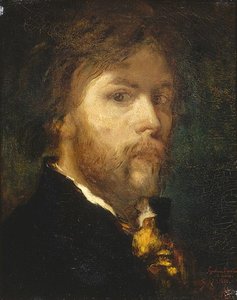
1826 - 1898 , Frankrig

Explore the evocative world of Symbolist painting. Discover how masters like Gustave Moreau rejected realism to capture dreams, myths, and the subconscious through fine art history and expert analysis.

Explore the profound beauty of Greek mythology through art history. From Baroque masterpieces to Renaissance classics, discover how gods and heroes have inspired the world's greatest painters in this expert guide for collectors and history lovers.


Hold dig opdateret med de seneste kunstnyheder, eksklusive tilbud og indretningsideer.
Fortæl os om dit projekt, og vores kunsteksperter vil give dig 3 personlige kunstforslag.
Vi kuraterer 3 valgmuligheder kun til dig – Gratis!


 Se i fuld skala
 Del
Del Del
Del
 Detaljer

 Download
 Lignende værker
 Røntgenundersøgelse
 Diasshow
 Se mere







 Glasmulighed er kun tilgængelig i størrelser under 110 cm