


x

Giclée- eller lærredstryk i museumskvalitet med hurtig produktion og fleksible muligheder for finish. ( Køb håndlavet maleri Køb billede)





























Vælg mellem vores forudindstillede størrelser, der matcher kunstværkets originale proportioner.

Du kan indtaste dine egne mål for at passe til en specifik ramme eller et bestemt område. Hvis den valgte størrelse ikke stemmer overens med det originale billedes proportioner, vil vi enten beskære kunstværket eller udvide billedet med en spejlet eller ensfarvet kant. En digital mockup vil blive sendt til din godkendelse, før produktionen påbegyndes.
Bemærk venligst, at forhåndsvisningen på skærmen ikke afspejler den faktiske beskæring eller udvidelse. Kun mockuppen vil nøjagtigt vise den endelige komposition.
Selvom specialmål er tilgængelige, anbefaler vi at vælge et mål fra den foruddefinerede liste for at bevare de originale proportioner.
Verdensomspændende levering () på 2 uger i stedet for de sædvanlige 4/5 uger. (19 august)


Jerome Ottoz
Størrelse på reproduktion
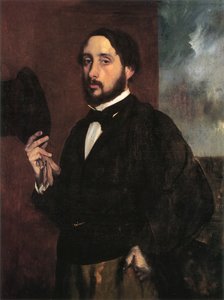
Edgar Degas’s “Jerome Ottoz,” painted in 1876, is more than just a portrait; it’s a carefully constructed moment of observation, a testament to the artist’s profound understanding of human character and his masterful manipulation of light and form. This oil on canvas work offers a glimpse into the world of Parisian society during the Impressionist era, capturing not merely an appearance but a subtle sense of dignity and contemplation within the subject himself. The painting's power resides in its intimate scale – a close-up view that demands attention to every detail, from the meticulously rendered texture of Ottoz’s attire to the thoughtful cast of his gaze.
Degas, though often associated with the Impressionist movement, maintained a distinct artistic philosophy. He resisted the label, preferring to describe himself as a realist, driven by an unwavering commitment to honest observation. This dedication is vividly apparent in “Jerome Ottoz.” The artist’s bold brushstrokes, characteristic of his style, don't simply depict; they convey a sense of movement and atmosphere. Notice how Degas utilizes broken color – small, distinct strokes layered upon one another – to create an illusion of shimmering light and shadow, particularly around the hat brim and the folds of Ottoz’s clothing. This technique, crucial to Impressionism, elevates the portrait beyond a static representation, imbuing it with a dynamic quality.
Jerome Ottoz himself is presented as a man of quiet sophistication. His attire – a dark hat, tie, and likely formal jacket – speaks to his status within Parisian society. The artist’s deliberate focus on the subject's face, with its subtle expression and carefully rendered beard and mustache, invites us to contemplate his inner life. There’s an air of seriousness in Ottoz’s gaze, suggesting a thoughtful or perhaps even melancholic disposition. While the painting lacks overt symbolism, it embodies the Impressionist fascination with capturing everyday moments and the complexities of human experience. The hat itself can be interpreted as a symbol of status and profession, further grounding the portrait within its historical context.
"Jerome Ottoz" exemplifies Degas’s technical prowess with oil on canvas. The layering of paint creates depth and texture, allowing light to play across the surface in a captivating manner. The painting's composition—a tight cropping that forces the viewer into an intimate relationship with the subject—is a hallmark of Degas’s approach. This work stands as a significant example of his contribution to the Impressionist movement, showcasing his ability to capture not just likeness but also mood and character. It is a piece that continues to resonate with viewers today, demonstrating the enduring power of observation and artistic skill.

1834 - 1917 , Frankrig

Oplev 10 berømte malerier domineret af sort – fra Rembrandts drama til Goyas mystik. Lær historierne bag disse ikoniske kunstværker og find inspiration til dit hjem. Køb museumskvalitets reproduktioner på Most-Famous-Paintings.com

Explore the captivating world of Edgar Degas! Discover his innovative techniques, iconic ballet paintings, and unique portrayal of Parisian life in this insightful art history study.

Oplev impressionismens magi! Dyk ned i top 10 landskabsmalerier af Monet, Renoir & Van Gogh. Lær historien bag mesterværkerne og find inspiration til din indretning med Most-Famous-Paintings.dk – køb kunst online.

Oplev impressionismens magi! Dyk ned i top 10 landskabsmalerier af Monet, Renoir & Degas. Lær historierne bag disse ikoniske kunstværker og find inspiration til dit hjem hos Most-Famous-Paintings.com – museumskvalitet reproduktioner online.

Journey through Impressionistic Realism with 10 iconic masterpieces by Monet, Renoir & Van Gogh. Explore art history, techniques & find museum-quality reproductions for your home at Most-Famous-Paintings.com. Discover all masterpieces online!


Hold dig opdateret med de seneste kunstnyheder, eksklusive tilbud og indretningsideer.
Fortæl os om dit projekt, og vores kunsteksperter vil give dig 3 personlige kunstforslag.
Vi kuraterer 3 valgmuligheder kun til dig – Gratis!


 Se i fuld skala
 Del
Del Del
Del
 Detaljer

 Download
 Lignende værker
 Røntgenundersøgelse
 Diasshow

 Se mere







 Glasmulighed er kun tilgængelig i størrelser under 110 cm


