


x

 Olie på træpanelEarly Netherlandish Painting
 1432Renæssancen
 12.0 x 19.0 cm
Giclée- eller lærredstryk i museumskvalitet med hurtig produktion og fleksible muligheder for finish. ( Køb håndlavet maleri Køb billede)





























Vælg mellem vores forudindstillede størrelser, der matcher kunstværkets originale proportioner.

Du kan indtaste dine egne mål for at passe til en specifik ramme eller et bestemt område. Hvis den valgte størrelse ikke stemmer overens med det originale billedes proportioner, vil vi enten beskære kunstværket eller udvide billedet med en spejlet eller ensfarvet kant. En digital mockup vil blive sendt til din godkendelse, før produktionen påbegyndes.
Bemærk venligst, at forhåndsvisningen på skærmen ikke afspejler den faktiske beskæring eller udvidelse. Kun mockuppen vil nøjagtigt vise den endelige komposition.
Selvom specialmål er tilgængelige, anbefaler vi at vælge et mål fra den foruddefinerede liste for at bevare de originale proportioner.
Verdensomspændende levering () på 2 uger i stedet for de sædvanlige 4/5 uger. (22 august)


St. Jerome in his Study
Størrelse på reproduktion
Jan van Eyck’s St. Jerome in His Study, a remarkably intimate oil painting from 1432, isn't merely a depiction of a saint; it’s a meticulously crafted window into the mind and world of a Renaissance scholar. Measuring just over 12 by 19 centimeters, this diminutive panel commands attention not through its size, but through the sheer density of detail and the profound sense of quiet contemplation it evokes. The scene unfolds within a warmly lit study, dominated by the figure of St. Jerome himself – a man deeply absorbed in his work, surrounded by the tools and trappings of intellectual life. It’s a space both familiar and utterly captivating, inviting us to share in his solitary pursuit of knowledge.
Van Eyck's genius lies not just in his technical prowess—the astonishing realism achieved through his revolutionary use of oil paint—but also in his ability to imbue the scene with layers of symbolic meaning. The composition is carefully balanced, drawing our eye from the saint’s focused expression to the meticulously rendered objects that populate his study. Each element contributes to a narrative of faith, learning, and the quiet dignity of intellectual labor.
To truly appreciate St. Jerome in His Study, one must acknowledge the groundbreaking techniques employed by Van Eyck. He was a pioneer in the application of oil paint on panel, a medium that allowed for unprecedented levels of detail, luminosity, and textural richness. Unlike tempera paints which dry quickly and create a matte finish, oils could be manipulated slowly, building up layers of color and creating subtle gradations of tone. This painstaking process is evident in every brushstroke—the delicate rendering of the folds in Jerome’s robes, the intricate details of the books and instruments on his desk, and the soft glow of light illuminating the scene.
Van Eyck's mastery extends to his use of *sfumato*, a technique borrowed from the East, which creates an atmospheric haze around objects, softening edges and lending a sense of depth. This is particularly noticeable in the background, where the study appears slightly blurred, drawing our attention to the central figure and his immediate surroundings. The painting’s colors are rich and vibrant—deep reds, blues, and greens—but applied with remarkable restraint, creating a harmonious and balanced palette.
Beyond its technical brilliance, St. Jerome in His Study is a treasure trove of symbolism. The lion at the saint’s feet, a recurring motif in his legend, represents his triumph over wild beasts—both literal and metaphorical, symbolizing his ability to subdue temptation and maintain faith. The open books suggest his dedication to biblical scholarship, while the astrolabe and other instruments reflect his interest in astronomy and mathematics – subjects closely linked to theology during the Renaissance.
The hourglass, a potent symbol of mortality, reminds us of the fleeting nature of time and the importance of dedicating one’s life to virtuous pursuits. Even the simple gesture of Jerome's hand—holding a quill pen poised above his work— speaks volumes about his commitment to intellectual labor. The inclusion of a small jar labeled “TYRIRICA,” an antidote to snakebite, hints at the saint’s struggles against temptation and his reliance on divine grace.
St. Jerome in His Study stands as a pivotal work in the history of art, marking a crucial transition from the Gothic to the Renaissance style. Van Eyck's innovations with oil paint profoundly influenced subsequent generations of artists, paving the way for the development of Northern European painting and shaping the course of Western art. Alongside works like *The Ghent Altarpiece* and *Isabella Borluut*, this intimate portrait offers a profound insight into the mind of a master craftsman and a testament to the enduring power of symbolism in visual storytelling.

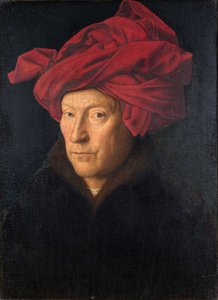
1390 - 1441 , Holland

Oplev de 10 ikoniske mesterværker fra tidlig nederlandsk maleri! Jan van Eyck, Rogier van der Weyden og andre flamske renæssancekunstnere. Find inspiration & køb museumskvalitets reproduktioner på Most-Famous-Paintings.com.

Explore the revolutionary art of Jan van Eyck! Discover his groundbreaking oil painting techniques, hidden symbolism, and lasting impact on the Early Netherlandish Renaissance. A deep dive for art enthusiasts.

Oplev de 10 ikoniske mesterværker fra den tidlige nederlandske renæssance! Jan van Eyck, Rogier van der Weyden og andre flamske malere. Find museumskvalitets kunsttryk & inspiration til din indretning på Most-Famous-Paintings.com.

Explore the captivating world of Early Netherlandish painting! Discover Jan van Eyck & other Flemish masters, their revolutionary techniques, hidden symbolism, and lasting legacy. A comprehensive guide for art enthusiasts.
Oplev Rembrandts 25 mest ikoniske kunstværker! Fordyb dig i historierne bag 'Nattevagten', hans selvportrætter og bibelske motiver. Find museumskvalitets reproduktioner & inspiration til din væg på Most-Famous-Paintings.com.


Hold dig opdateret med de seneste kunstnyheder, eksklusive tilbud og indretningsideer.
Fortæl os om dit projekt, og vores kunsteksperter vil give dig 3 personlige kunstforslag.
Vi kuraterer 3 valgmuligheder kun til dig – Gratis!


 Se i fuld skala
 Del
Del Del
Del
 Detaljer

 Download
 Lignende værker
 Røntgenundersøgelse
 Diasshow
 Se mere







 Glasmulighed er kun tilgængelig i størrelser under 110 cm


