


x
 Oil On CanvasWallArtBaroque
 1668Early Modern
 111.0 x 99.0 cm
 Residenzgalerie
Håndmalet olie på lærred i din valgte størrelse og ramme, udført efter bestilling af vores kunstnere. ( Skift til print Skift til billede)





























Vælg mellem vores forudindstillede størrelser, der matcher kunstværkets originale proportioner.

Du kan indtaste dine egne mål for at passe til en bestemt ramme eller plads. Hvis den valgte størrelse ikke stemmer overens med det originale billedes proportioner, vil vi enten beskære kunstværket eller udvide maleriet med yderligere håndmalede elementer. En digital skitse sendes til din godkendelse, før produktionen påbegyndes.
Bemærk venligst, at forhåndsvisningen på skærmen ikke afspejler den faktiske beskæring eller udvidelse. Kun skitsen vil nøjagtigt vise den endelige komposition.
Selvom specialmål er mulige, anbefaler vi at vælge en dimension fra den foruddefinerede liste for at bevare de originale proportioner.
Levering i hele verden () på 3/4 uger i stedet for de standard 5 uger. (9 august). Ingen kompromiser med kvaliteten.


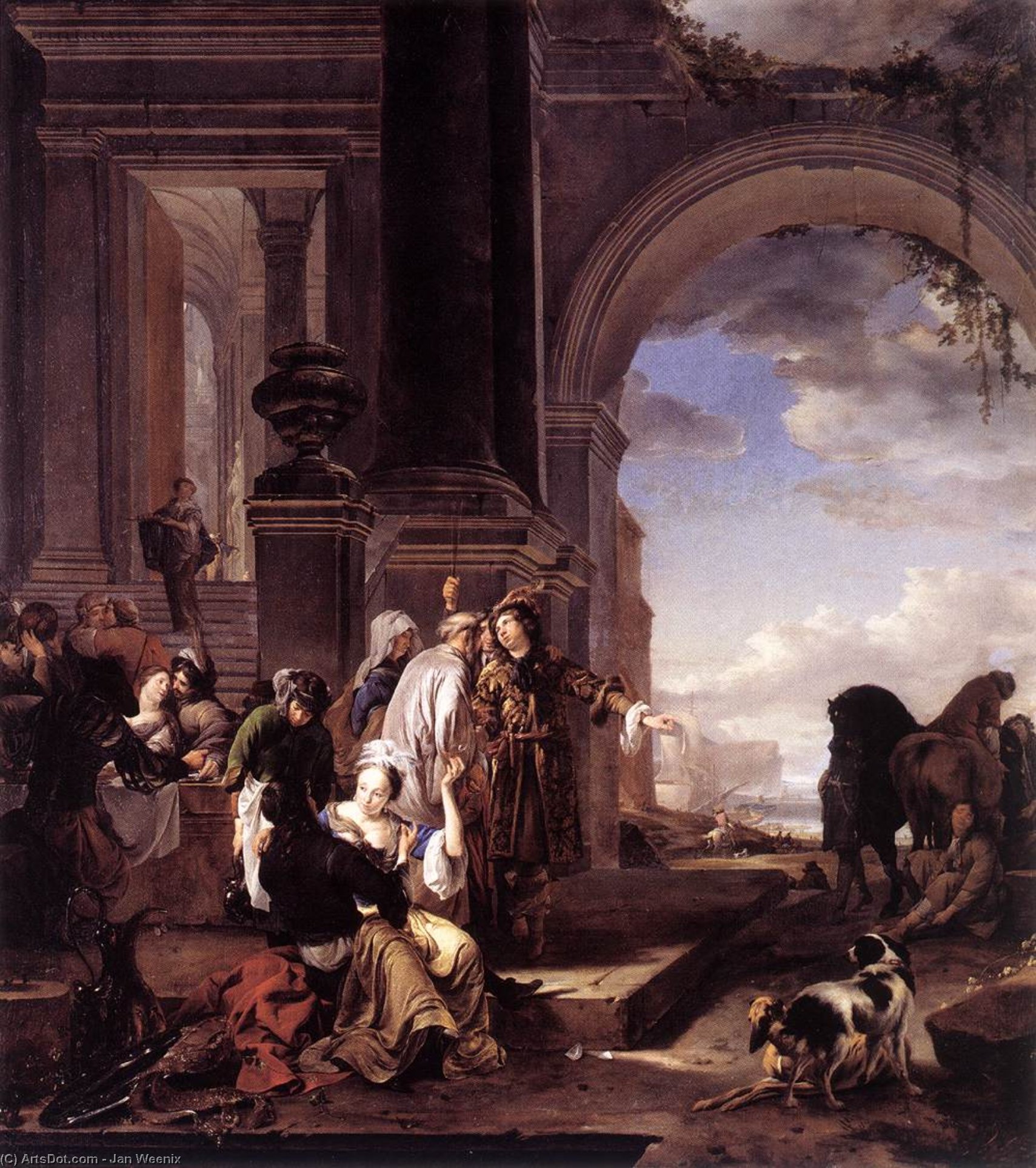
The Prodigal Son
Størrelse på reproduktion
In the profound depths of Jan Weenix’s 1668 masterpiece, The Prodigal Son, viewers are transported into a world of intense theatricality and raw human emotion. This classical oil painting serves as a breathtaking window into the Baroque era, capturing a moment of profound vulnerability and communal grief. The composition is masterfully orchestrated, drawing the eye through a complex arrangement of figures gathered around a fallen protagonist. Set against the evocative backdrop of an architectural ruin, the scene utilizes a powerful arched doorway to create a sense of immense depth, pulling the observer into the very heart of the tragedy. The interplay of light and shadow—a hallmark of the period—casts a dramatic glow upon the central figures, highlighting the textures of weathered stone and the heavy folds of drapery, while plunging the periphery into mysterious, somber shadows.
The technical prowess displayed in this work reflects the pinnacle of Dutch Golden Age skill. Weenix employs a sophisticated layering technique, utilizing glazes to achieve a luminous quality that breathes life into skin tones and the rich, earthy palette of ochres, deep reds, and warm browns. Every brushstroke serves a purpose, from the delicate rendering of facial expressions caught in moments of anguish to the more vigorous, textured applications used to define the decaying masonry of the ruins. This meticulous attention to detail creates a tactile experience for the viewer, where the smoothness of fine silk contrasts sharply with the rugged, crumbling edges of the ancient architecture, suggesting a world where human fragility meets the inexorable passage of time.
Beyond its visual splendor, The Prodigal Son is a profound meditation on loss, decay, and the cyclical nature of life. The fallen figure at the center of the composition acts as a powerful symbol of mortality, serving as the emotional anchor for the surrounding crowd. The architectural ruins that frame the scene are not merely decorative; they represent the inevitable decline of all earthly structures and the transient nature of human glory. As the eye wanders toward the distant seascape visible through the archway, there is a poignant contrast between the stillness of death within the ruins and the eternal, rhythmic movement of the sea. This juxtaposition invites collectors and enthusiasts to contemplate themes of redemption, consequence, and the enduring legacy of our actions.
For the discerning interior designer or art collector, this painting offers more than just aesthetic beauty; it provides a narrative soul for a space. The warm, somber tones and the commanding presence of the composition make it an ideal focal point for a room designed to evoke contemplation and grandeur. Whether placed in a traditional study or as a conversation piece in a contemporary gallery setting, The Prodigal Son commands attention through its ability to stir the spirit. It is a work that transcends mere decoration, offering a timeless connection to the mastery of Jan Weenix and the enduring power of classical storytelling.


1641 - 1719 , Holland

Explore the profound mastery of light and shadow in Dutch Golden Age art. From Rembrandt's chiaroscuro to Vermeer's luminosity, discover the techniques that defined an era and learn how to bring these museum-quality masterpieces into your home through expert oil reproductions.


Hold dig opdateret med de seneste kunstnyheder, eksklusive tilbud og indretningsideer.
Fortæl os om dit projekt, og vores kunsteksperter vil give dig 3 personlige kunstforslag.
Vi kuraterer 3 valgmuligheder kun til dig – Gratis!


 Se i fuld skala
 Del
Del Del
Del
 Detaljer

 Download
 Lignende værker
 Røntgenundersøgelse
 Diasshow
 Se mere







 Glasmulighed er kun tilgængelig i størrelser under 110 cm


