A Vision of the Mechanical: The World of John Amhurst Selby-Bigge
John Amhurst Selby-Bigge occupies a fascinating, yet often overlooked, position within the landscape of 20th-century British art. Emerging from a milieu steeped in both traditional artistic training and the burgeoning fascination with technology, he forged a unique path that blended abstract forms with the evocative imagery of machinery. While not a household name, Selby-Bigge’s contribution to movements like Unit One and his engagement with international Surrealism mark him as a significant figure in the development of Modern British painting. His work isn't simply *about* machines; it embodies their energy, their complexity, and even their potential for both creation and destruction. Born in England (the exact year remains somewhat elusive within readily available biographical data), Selby-Bigge’s life has been one dedicated to artistic exploration, continuing to this day as a living artist.
Early Influences and the Formation of a Style
Selby-Bigge's artistic journey began with formal training, providing him with a solid foundation in traditional techniques. However, it was the rapidly changing world around him – the rise of industrialization, the advent of flight, and the increasing pace of technological innovation – that truly ignited his creative spark. He became captivated by the aesthetic qualities of machines: their sleek lines, intricate mechanisms, and powerful forms. This fascination wasn’t merely a superficial interest in modern engineering; it was a deeper exploration of the relationship between humanity and technology, a theme that would permeate his entire oeuvre. The influence of Cubism is visible in early works, particularly in the fragmentation of form and the attempt to represent multiple perspectives simultaneously. But Selby-Bigge quickly moved beyond direct imitation, developing a distinctive style characterized by biomorphic shapes interwoven with mechanical elements. He wasn’t interested in realistic depictions; rather, he sought to capture the *feeling* of machinery – its dynamism, its precision, and its inherent strangeness.
Unit One and International Connections
A pivotal moment in Selby-Bigge's career came with his involvement in Unit One, a short-lived but influential group of British artists formed in 1935. This collective, which included figures like Paul Nash, Barbara Hepworth, and Henry Moore, aimed to promote abstract and constructivist art in Britain, challenging the dominance of more traditional styles. Selby-Bigge’s participation in Unit One exhibitions brought his work to a wider audience and solidified his position within the avant-garde.
- Collaboration & Exchange: His association with Unit One fostered valuable connections with other artists, leading to intellectual exchange and mutual inspiration.
- Surrealist Leanings: The group’s openness to experimentation also encouraged Selby-Bigge's exploration of Surrealism. He became increasingly interested in the subconscious mind, dream imagery, and the irrational, incorporating these elements into his paintings.
His engagement with international Surrealism was particularly significant. While he didn’t fully align himself with any single school or manifesto, he absorbed influences from artists like Max Ernst and Yves Tanguy, adapting their techniques to his own unique vision. This resulted in a distinctive brand of Surrealism that was both deeply personal and distinctly British.
Themes and Techniques: A Synthesis of Form and Meaning
Selby-Bigge’s paintings are often characterized by a complex interplay between organic and inorganic forms. Machines aren't presented as cold, sterile objects; they are imbued with life, energy, and even a sense of mystery. Recurring motifs include gears, pistons, pipes, and other mechanical components, but these elements are rarely depicted in a literal way. Instead, they are transformed into abstract shapes that evoke the feeling of movement, power, and transformation.
His palette is often muted, with earthy tones and subtle gradations of color creating a sense of depth and atmosphere. He frequently employed techniques such as layering, glazing, and scumbling to create rich textures and ambiguous spaces. The resulting paintings are not easily deciphered; they invite viewers to engage in their own interpretations, exploring the complex relationship between technology, nature, and the human psyche. The symbolism within his work is often open-ended, allowing for multiple readings. Machines can represent progress and innovation, but also alienation and destruction. They can be seen as metaphors for the body, the mind, or even the universe itself.
Legacy and Historical Significance
While Selby-Bigge’s work didn't achieve widespread commercial success during his lifetime, it has gained increasing recognition in recent years. His contribution to Modern British painting is now widely acknowledged, and his paintings are held in numerous public and private collections. He represents a unique voice within the broader context of 20th-century art – an artist who dared to explore the aesthetic possibilities of technology while remaining deeply rooted in traditional artistic values. His work serves as a reminder that even the most seemingly cold and impersonal objects can be imbued with beauty, meaning, and emotional resonance. As a living artist, Selby-Bigge continues to create, offering fresh perspectives on themes that remain relevant today – the relationship between humanity and technology, the power of imagination, and the enduring search for artistic expression. His ongoing practice ensures his legacy as an innovator and a vital contributor to the rich tapestry of British art history.



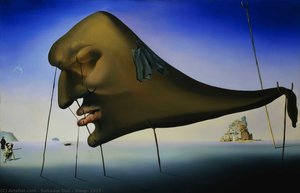
 1939
1939 48.0 x 34.0 cm
 Middlesbrough Institute of Modern Art
 Køb håndlavet maleri






 Se i fuld skala
 Del
Del Del
Del
 Detaljer

 Download
 Lignende værker
 Røntgenundersøgelse
 Diasshow
 Se mere




































 Glasmulighed er kun tilgængelig i størrelser under 110 cm