x

Håndmalet olie på lærred i din valgte størrelse og ramme, udført efter bestilling af vores kunstnere. ( Køb print Køb billede)





























Vælg mellem vores forudindstillede størrelser, der matcher kunstværkets originale proportioner.

Du kan indtaste dine egne mål for at passe til en bestemt ramme eller plads. Hvis den valgte størrelse ikke stemmer overens med det originale billedes proportioner, vil vi enten beskære kunstværket eller udvide maleriet med yderligere håndmalede elementer. En digital skitse sendes til din godkendelse, før produktionen påbegyndes.
Bemærk venligst, at forhåndsvisningen på skærmen ikke afspejler den faktiske beskæring eller udvidelse. Kun skitsen vil nøjagtigt vise den endelige komposition.
Selvom specialmål er mulige, anbefaler vi at vælge en dimension fra den foruddefinerede liste for at bevare de originale proportioner.
Levering i hele verden () på 3/4 uger i stedet for de standard 5 uger. (18 august). Ingen kompromiser med kvaliteten.


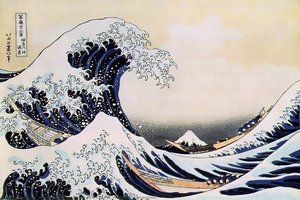
Ocean Waves
Størrelse på reproduktion
Katsushika Ōi (葛飾 応為, c. 1800 – c. 1866), often referred to as Ei (栄) or Ei-jo (栄女; lit. ‘woman Ei’), stands apart from her father, the celebrated Katsushika Hokusai, not merely as his daughter but as a remarkably accomplished artist in her own right—a testament to artistic lineage and independent creative spirit.
Born into a family steeped in artistic tradition – her father’s workshop was a hub of innovation during the Edo period – Ōi received invaluable training alongside her sisters, mastering calligraphy and honing her skills as a painter. Unlike many women of her time who pursued domestic roles, Ōi dedicated herself to art, collaborating closely with Hokusai on his monumental *Thirty-Six Views of Mount Fuji* series.
Her involvement wasn’t merely supportive; Ōi actively participated in the artistic process. She meticulously assisted her father with printing, preparing paper and overseeing the meticulous application of ink and color—a crucial element in ukiyo-e technique. This partnership exemplifies the interconnectedness of artistic endeavors during Edo Japan, where familial bonds fostered creativity and ensured the continuation of artistic traditions.
Furthermore, Ōi’s dedication extended beyond her father's studio. She established her own workshop and produced stunning bijin-ga paintings—images of beautiful women—demonstrating a remarkable ability to capture grace and elegance. Her work reflects a keen understanding of composition and color palettes, mirroring the stylistic influences prevalent at the time.
Ōi’s artistic style aligns closely with Hokusai's distinctive approach—characterized by bold outlines, vibrant colors (particularly Prussian blue), and a masterful use of perspective. Like her father, Ōi embraced innovative printing methods, skillfully utilizing the Berlin blue pigment to achieve breathtaking luminosity in her paintings.
Her prints are imbued with a serene beauty that captures the essence of Japanese landscape art—a reflection of the Edo period’s fascination with nature and its idealized representation. Ōi's meticulous attention to detail and her ability to convey emotion through visual imagery solidify her position as one of Japan’s foremost artists.
Ōi’s paintings resonate deeply with viewers due to their subtle portrayal of femininity and contemplation. The subjects she depicted—often serene women engaged in quiet activities—invite reflection on themes of beauty, grace, and inner peace. These images encapsulate the spirit of Edo Japan's aesthetic sensibilities.
Though overshadowed by her father’s fame, Katsushika Ōi carved out a distinguished artistic career—a beacon of female creativity during a period dominated by male artists. Her legacy continues to inspire admiration for her skill and dedication, reminding us that brilliance can flourish even within the shadow of greatness.


1760 - 1849 , Japan

Explore the profound beauty of Ukiyo-e. Discover the history, philosophy, and legendary masters of Japanese woodblock prints, from Hokusai to Kuniyoshi, in this expert guide to the 'Floating World'.

Explore the profound beauty of Japanese Ukiyo-e. From Hokusai's iconic waves to the elegance of the Edo period, discover the history and masters behind the 'Floating World' in this expert art-history guide for collectors and enthusiasts.

Explore the profound history of Ukiyo-e, from Hokusai's iconic waves to the vibrant culture of Edo Japan. Discover the intricate craft of woodblock printing and the enduring legacy of these Japanese masterpieces through our expert art history guide.

Explore the profound serenity of Japanese landscape painting. From Hokusai's waves to Zen-inspired ink washes, discover the history, technique, and spiritual depth of Ukiyo-e masters in this expert art historical guide for collectors and enthusiasts.


Hold dig opdateret med de seneste kunstnyheder, eksklusive tilbud og indretningsideer.
Fortæl os om dit projekt, og vores kunsteksperter vil give dig 3 personlige kunstforslag.
Vi kuraterer 3 valgmuligheder kun til dig – Gratis!


 Se i fuld skala
 Del
Del Del
Del
 Detaljer

 Download
 Lignende værker
 Røntgenundersøgelse
 Diasshow
 Se mere







 Glasmulighed er kun tilgængelig i størrelser under 110 cm