


x

Giclée- eller lærredstryk i museumskvalitet med hurtig produktion og fleksible muligheder for finish. ( Køb håndlavet maleri Køb billede)





























Vælg mellem vores forudindstillede størrelser, der matcher kunstværkets originale proportioner.

Du kan indtaste dine egne mål for at passe til en specifik ramme eller et bestemt område. Hvis den valgte størrelse ikke stemmer overens med det originale billedes proportioner, vil vi enten beskære kunstværket eller udvide billedet med en spejlet eller ensfarvet kant. En digital mockup vil blive sendt til din godkendelse, før produktionen påbegyndes.
Bemærk venligst, at forhåndsvisningen på skærmen ikke afspejler den faktiske beskæring eller udvidelse. Kun mockuppen vil nøjagtigt vise den endelige komposition.
Selvom specialmål er tilgængelige, anbefaler vi at vælge et mål fra den foruddefinerede liste for at bevare de originale proportioner.
Verdensomspændende levering () på 2 uger i stedet for de sædvanlige 4/5 uger. (20 august)


Samovar
Størrelse på reproduktion
Kazimir Malevich’s “Samovar,” painted in 1913, stands as a cornerstone of Cubo-Futurism and embodies the radical reimagining of artistic expression that defined this pivotal moment in early 20th-century art. More than just a depiction of an everyday household item—a traditional Russian tea urn—the painting delves into profound questions about perception and representation, reflecting Malevich’s unwavering commitment to stripping away illusion and accessing “the supremacy of pure feeling.”
Painted during a period of intense artistic experimentation in Moscow, “Samovar” emerged from the burgeoning avant-garde movement that challenged established conventions. Malevich’s journey began with explorations of Impressionism and Symbolism, but he swiftly embraced the revolutionary ideas circulating amongst European artists—particularly Picasso and Braque—who were pioneering Cubist techniques.
The influence of Futurism is palpable in Malevich's preoccupation with speed, dynamism, and technological advancement. However, unlike Futurists who celebrated machinery and urban life, Malevich aimed for a more spiritual dimension, believing that art could transcend the material world and communicate directly with the subconscious mind.
Despite its apparent simplicity—a monochromatic palette dominated by blues—“Samovar” is laden with symbolic significance. The fractured geometric shapes represent not only the disassembled form of the samovar but also a broader critique of traditional artistic representations. Malevich’s deliberate distortion invites viewers to confront their own perceptions and consider alternative ways of seeing.
The painting evokes a sense of quiet contemplation and intellectual curiosity. It encourages us to appreciate the beauty inherent in abstraction—the ability to convey emotion and ideas without resorting to visual realism. “Samovar” remains an enduring testament to Malevich’s pioneering vision and his unwavering belief in art as a vehicle for spiritual exploration.

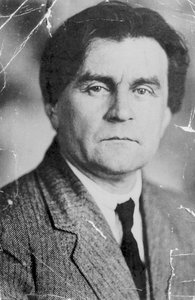
1878 - 1935 , Ukraine

Explore the radical world of Suprematism. Discover how Kazimir Malevich revolutionized modern art through pure geometric abstraction, non-objective form, and the supremacy of feeling. An essential guide for art students and collectors seeking deep historical context.

Explore the profound impact of Minimalism and Geometric Abstraction. From Mondrian to Malevich, discover how stripping art to its essential forms revolutionized modern aesthetics through our expert-led historical guide.

Explore the revolutionary world of Cubism. Discover how masters Pablo Picasso and Georges Braque dismantled reality through geometric abstraction to redefine modern art history.


Hold dig opdateret med de seneste kunstnyheder, eksklusive tilbud og indretningsideer.
Fortæl os om dit projekt, og vores kunsteksperter vil give dig 3 personlige kunstforslag.
Vi kuraterer 3 valgmuligheder kun til dig – Gratis!


 Se i fuld skala
 Del
Del Del
Del
 Detaljer

 Download
 Lignende værker
 Røntgenundersøgelse
 Diasshow

 Se mere







 Glasmulighed er kun tilgængelig i størrelser under 110 cm


