Sælg din kunst
Ønskeliste Indkøbskurv Cart
Se i fuld skalaSe i fuld skala AR-forhåndsvisningAR-forhåndsvisning Køb print Køb printKøb billede Køb billede DelDel
DetaljerDetaljer Tilføj til favoritter Tilføj til favoritter DownloadDownload Lignende værkerLignende værker RøntgenundersøgelseRøntgenundersøgelse DiasshowDiasshow

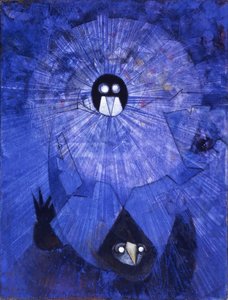
Abstract Composition

Konrad Zuse (1910-1995): German computer pioneer & artist. Inventor of the first programmable computer, Z3, & Plankalkül language. Explore his abstract compositions.

Håndlavet oliereproduktion

Håndmalet olie på lærred i din valgte størrelse og ramme, udført efter bestilling af vores kunstnere. (Køb print Køb printKøb billede Køb billede)

Standard
custom
CM
INCH

Vælg mellem vores forudindstillede størrelser, der matcher kunstværkets originale proportioner.

bredde
højde

Du kan indtaste dine egne mål for at passe til en bestemt ramme eller plads. Hvis den valgte størrelse ikke stemmer overens med det originale billedes proportioner, vil vi enten beskære kunstværket eller udvide maleriet med yderligere håndmalede elementer. En digital skitse sendes til din godkendelse, før produktionen påbegyndes.
Bemærk venligst, at forhåndsvisningen på skærmen ikke afspejler den faktiske beskæring eller udvidelse. Kun skitsen vil nøjagtigt vise den endelige komposition.
Selvom specialmål er mulige, anbefaler vi at vælge en dimension fra den foruddefinerede liste for at bevare de originale proportioner.

Eksempler på hvad der kan ændres: Udskift ansigt med kundens eget foto; Tilføj kæledyr (f.eks. udskift kat med hund); Inkluder en skjult besked i baggrunden; Ændr baggrundslandskab eller elementer.
Efter bestilling vil Most-Famous-Paintings.com team sende en e-mail til kunden for at få instruktioner og levere et udkast til en skitse.

Levering i hele verden () på 3/4 uger i stedet for de standard 5 uger. (17 august). Ingen kompromiser med kvaliteten.

why_choose_icon
Gratis ekspresforsendelse til hele verden
why_choose_icon
Lærred af linned i høj kvalitet
why_choose_icon
Fuld transportforsikring
why_choose_icon
Garanti for refusion af told og importafgifter
why_choose_icon
Garanti for præcis farvegengivelse
why_choose_icon
60 dages returret (kun ved fabrikationsfejl)
why_choose_icon
100% Tilfredshedsgaranti
why_choose_icon
Mængderabat tilgængelig

Samlet pris

$ 272

reproduction

Abstract Composition

Reproduktionsmetode

Størrelse på reproduktion

-

Samlet pris

$ 272


Kunstnerens biografi

Konrad Ernst Otto Zuse: Pioneer of Computing

Early Life and Education

  • Konrad Ernst Otto Zuse was born on June 22, 1910, in Berlin, Germany.
  • He studied mechanical engineering at the Technical University of Braunschweig, graduating in 1933.
  • Even during his studies, Zuse demonstrated a keen interest in automation and calculation, laying the groundwork for his future innovations.

The Genesis of Computing: Early Machines

  • Driven by frustration with repetitive calculations during his engineering work, Zuse began designing calculating machines in the 1930s.
  • His first creation was the Z1 (1936-1938), a mechanical binary computer using floating-point numbers and limited programmability. Though mechanically unreliable, it demonstrated key concepts.
  • The Z2 (1939) improved upon the Z1 with electromechanical relays, offering greater reliability but was destroyed during World War II.

The Z3: The First Functional Programmable Computer

  • In May 1941, Zuse completed the Z3, widely considered the world’s first functional program-controlled Turing-complete computer.
  • It was electromechanical, using relays, and operated with binary floating-point arithmetic.
  • The Z3 was destroyed during a bombing raid in 1943, but its design principles were revolutionary.

Further Developments: The Z4 and Beyond

  • Zuse continued his work, developing the Z4 (completed in 1945), which became the world’s first commercial computer. It was sold to the Aerodynamische Versuchsanstalt (AVA) for aerodynamic calculations.
  • He founded one of the earliest computer businesses, Zuse KG, to produce and sell computers.

Plankalkül: A Visionary Programming Language

  • Between 1943 and 1945, amidst wartime conditions, Zuse designed Plankalkül, the first high-level programming language.
  • It was remarkably advanced for its time, featuring concepts like data structures and conditional statements. However, it remained largely unimplemented during his lifetime due to lack of resources and computing power.

Later Life and Theoretical Work

  • In 1969, Zuse published Rechnender Raum (Calculating Space), proposing the concept of a computation-based universe – a precursor to digital physics.
  • He received belated recognition for his pioneering work in the latter part of his life, including the Turing Award in 1968.
  • Konrad Zuse died in Hünfeld, Germany, on December 18, 1995.

Historical Significance and Legacy

  • Zuse’s work was largely overlooked during World War II due to the conflict and limited communication with Allied researchers.
  • His contributions were crucial in laying the foundations for modern computing, influencing subsequent generations of computer scientists and engineers.
  • He is rightfully regarded as a founding father of computer science, whose vision extended beyond mere calculation to encompass the very nature of reality itself.

konrad ernst otto zuse

konrad ernst otto zuse

1910 - 1995 , Germany

Kort om kunstneren

  • Birth Date: 1910
  • Birth Place: Berlin, Germany
  • Death Date: 1995
  • Movement: Early Computing / Pioneer of Computer Science
  • Name: Konrad Ernst Otto Zuse
  • Nationality: German
  • Notable Works:
    • Z3
    • Plankalkül
    • Z4