


x


 Preview
 Bestil tryk Køb højopløseligt billede
 Del
Del
 Detaljer
 Tilføj til favoritter
 Download
 Lignende værker
 Røntgenundersøgelse
 Diasshow
 Oil On CanvasWallArtGerman Expressionism
 1904
1904 155.0 x 140.0 cm
 Hessisches Landesmuseum
Håndmalet olie på lærred i din valgte størrelse og ramme, udført efter bestilling af vores kunstnere.





























Vælg mellem vores forudindstillede størrelser, der matcher kunstværkets originale proportioner.

Du kan indtaste dine egne mål for at passe til en bestemt ramme eller plads. Hvis den valgte størrelse ikke stemmer overens med det originale billedes proportioner, vil vi enten beskære kunstværket eller udvide maleriet med yderligere håndmalede elementer. En digital skitse sendes til din godkendelse, før produktionen påbegyndes.
Bemærk venligst, at forhåndsvisningen på skærmen ikke afspejler den faktiske beskæring eller udvidelse. Kun skitsen vil nøjagtigt vise den endelige komposition.
Selvom specialmål er mulige, anbefaler vi at vælge en dimension fra den foruddefinerede liste for at bevare de originale proportioner.
Levering i hele verden () på 3/4 uger i stedet for de standard 5 uger. (25 juli). Ingen kompromiser med kvaliteten.


Der Harem
Størrelse på reproduktion
Lovis Corinth's "Der Harem," painted in 1904, isn’t merely a depiction of women; it’s an invitation into a private world of connection and unspoken narratives. This oil on canvas, currently residing within the Hessisches Landesmuseum in Darmstadt, Germany, transcends simple representation to become a poignant exploration of female solidarity and the quiet beauty of shared experience. Corinth, a pivotal figure in German Expressionism, masterfully blends elements of realism with an intensely personal style, creating a work that continues to resonate with viewers over a century later.
The scene unfolds within what appears to be a dimly lit interior – though the precise location remains deliberately ambiguous. Several women are arranged in a loose circle, their postures ranging from relaxed repose to active engagement. One woman is notably positioned on the floor, her legs extended in an open gesture that simultaneously conveys vulnerability and a quiet confidence. Beside her kneels another, offering a sense of support and companionship. The remaining figures – standing and partially obscured – contribute to a dynamic composition that avoids rigid formality, suggesting a natural gathering rather than a posed tableau. A small cat nestled near the bottom right corner introduces an element of domesticity, subtly reinforcing the feeling of a shared space and intimate routine.
Corinth’s technique is immediately striking. He employs loose brushstrokes and a vibrant palette that leans heavily into Impressionistic influences, yet retains a distinctly Expressionist sensibility. The colors are not rendered with photographic accuracy but rather imbued with emotional weight. Deep blues and greens dominate the background, creating an atmosphere of subdued light and shadow, while warmer tones – ochres, reds, and yellows – highlight the figures themselves. Corinth’s use of broken color and layering creates a sense of depth and movement, drawing the viewer into the scene and encouraging them to linger on individual details.
The artist's handling of light is particularly noteworthy. It’s not uniformly distributed; instead, it pools in certain areas, illuminating faces and creating subtle gradations of tone. This masterful manipulation of light contributes significantly to the painting’s emotional impact, suggesting a world bathed in both intimacy and mystery.
While “Der Harem” resists easy interpretation, it's clear that Corinth is exploring themes of female connection and solidarity. The open posture of the woman on the floor has been interpreted as a symbol of vulnerability and openness, while her companion’s kneeling position suggests support and acceptance. The absence of overt narrative – no dialogue, no discernible action – allows viewers to project their own interpretations onto the scene. It's not a story being told; it’s a moment being captured, a feeling being conveyed.
The inclusion of the cat is often seen as a symbol of domesticity and comfort, further reinforcing the sense of a shared space and intimate connection. Corinth was known for his exploration of human relationships, particularly those involving women, and “Der Harem” stands as a testament to his ability to capture the complexities of female bonds with remarkable sensitivity.
“Der Harem” is more than just a beautiful painting; it’s a window into the soul of an artist grappling with profound questions about human connection and identity. Corinth's work, deeply rooted in his personal experiences – including a difficult childhood and a tragic love affair – resonates powerfully with viewers today. The Hessisches Landesmuseum provides a fitting home for this significant piece, ensuring that its emotional resonance continues to be shared with generations of art lovers. Reproductions of “Der Harem” offer an accessible way to experience the painting’s beauty and depth, bringing Corinth's evocative vision into homes and spaces around the world.


1858 - 1925 , Holland

Oplev de 25 mest ikoniske kunstværker fra Metropolitan Museum of Art i New York! Fra Monet til Van Gogh – lær historierne bag mesterværkerne og find inspiration til dit hjem. Køb museumskvalitets reproduktioner på Most-Famous-Paintings.com.
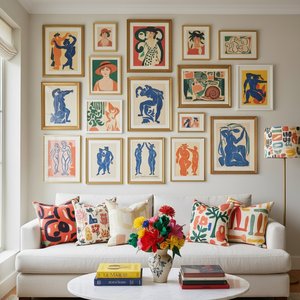
Oplev Henri Matisse' 25 mest ikoniske kunstværker – fra Fauvisme til Paper Cutouts. Lær historien bag farvernes mester og find inspiration til din boligindretning med museumskvalitets reproduktioner på Most-Famous-Paintings.com.
Oplev Egon Schiele's 25 mest ikoniske kunstværker. Dyk ned i ekspressionismens intensitet, portrætter og nøgenkunst. Find inspiration til din boligindretning & køb museumskvalitets reproduktioner på Most-Famous-Paintings.com.
Oplev James Abbott McNeill Whistlers 25 mest ikoniske kunstværker. Fordyb dig i æstetismens verden, tonale malerier & harmoniske kompositioner. Find reproduktioner af højeste kvalitet og inspiration til din indretning på Most-Famous-Paintings.com.

Oplev de 25 mest ikoniske kunstværker fra National Gallery of Art, Washington! Fra Cézannes revolutionerende stil til Matisses farverige mesterværker. Find inspiration og køb museumskvalitets reproduktioner på Most-Famous-Paintings.com.


Hold dig opdateret med de seneste kunstnyheder, eksklusive tilbud og indretningsideer.
Fortæl os om dit projekt, og vores kunsteksperter vil give dig 3 personlige kunstforslag.
Vi kuraterer 3 valgmuligheder kun til dig – Gratis!


 Del
Del

 Se mere







 Glasmulighed er kun tilgængelig i størrelser under 110 cm


