x


 Acrylic On CanvasWallArtNaive Art / Primitivism
 1963
1963 32.0 x 24.0 cm
Køb et højopløst, forbedret digitalt billede, der er langt bedre end online-forhåndsvisningen.
Hver fil er omhyggeligt forberedt af vores interne specialister ved hjælp af avancerede værktøjer og ekspertmæssig manuel retuschering. Vi sikrer, at hvert billede har enestående klarhed, præcis farvegengivelse og fine detaljer.
Den endelige fil leveres via e-mail inden for 72 timer og er optimeret til øjeblikkelig brug i professionelle, redaktionelle og trykte miljøer. Det er den samme kvalitet, som førende designstudier, forlag og gallerier har tillid til.
Download en højopløselig fil til personlig fremvisning, print og kreative projekter. ( Switch to Print Switch to hand made Painting)
Når du vælger Most-Famous-Paintings.com, får du ikke blot et billede – du modtager et professionelt optimeret digitalt kunstværk, skabt med præcision og sikret med en tilfredshedsgaranti. Her er alt, hvad din ordre automatisk indeholder:

Din højkvalitets digitale billedfil vil blive sendt til din e-mail inden for 72 timer efter bestilling – klar til øjeblikkelig brug.

Dit kunstværk optimeres professionelt ved hjælp af avancerede AI-værktøjer og manuel redigering, hvilket sikrer maksimal detaljegrad, klarhed og farvenøjagtighed.

Har du ved en fejl slettet eller mistet din fil? Ingen bekymring – vi sender den igen til enhver tid, helt gratis.

Nyd dit kunstværk med det samme uden told, afgifter eller leveringsgebyrer – digitale downloads er altid skattefrie.

Vi sikrer, at dit digitale billede gengiver de originale farver så præcist som muligt ved hjælp af professionelle værktøjer og farvestyring.

Hvis du ikke er tilfreds med dit digitale billede, vil vi revidere det eller refundere 100% inden for 60 dage – uden spørgsmål.

Ik tilfreds? Få fuld refusion inden for 60 dage efter modtagelse af din digitale fil – uden spørgsmål.

Køb 3 billeder, spar 10% - Køb 5, spar 15% - Køb 10+, spar 20%. Ideelt til kreative projekter, gallerier og bureauer.
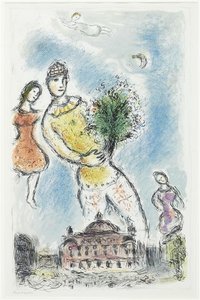
Marc Chagall’s “Acrobatics,” completed in 1963, stands as a testament to the artist's enduring fascination with dreams, memory, and the fantastical realm of childhood. Painted in Naïve Art style—a movement characterized by its rejection of academic conventions and embrace of childlike spontaneity—the canvas captures a moment suspended between earthly constraints and boundless aspiration.
Unlike Impressionism or Cubism, which sought to dissect reality into fragmented perspectives, Chagall’s approach prioritizes emotional expression over meticulous representation. Thickly applied paint—a hallmark of Naïve Art—creates a textured surface that pulsates with color and conveys an immediacy rarely achieved in more polished artistic styles. The artist eschews linear perspective, opting instead for flattened planes that heighten the sense of illusion and invite viewers into Chagall’s subjective experience.
"Acrobatics" is deeply rooted in Chagall's formative years spent in Vitebsk, Belarus—a town that served as a constant source of inspiration throughout his prolific career. The painting reflects the cultural landscape of Vitebsk during the period, where Jewish and Orthodox traditions intertwined, shaping artistic sensibilities. Furthermore, it emerged against the backdrop of Soviet repression following World War II, when Chagall faced censorship and endured personal hardship—experiences that undoubtedly informed the artwork’s melancholic undertones.
The composition is replete with symbolic imagery typical of Chagall's oeuvre. Dominating the scene are figures engaged in acrobatic maneuvers, representing a defiance of gravity and an upward striving for transcendence—themes central to Jewish mysticism and Chagall’s broader artistic vision. Surrounding these dancers are stylized flowers—particularly lilies—which symbolize purity and resurrection—references to biblical narratives and Chagall's own spiritual beliefs. The inclusion of a clock and vase adds layers of meaning, prompting contemplation on time, mortality, and the beauty of nature.
"Acrobatics" resonates with viewers not merely as an aesthetically pleasing artwork but also as a conduit to Chagall's innermost feelings. The painting evokes a sense of wonderment mingled with sadness—a poignant reminder of the passage of time and the fragility of human existence. Yet, its vibrant colors and dynamic movement instill optimism and convey a conviction that beauty persists even amidst adversity—a message conveyed powerfully by Chagall’s masterful manipulation of color and form.
This captivating artwork exemplifies Chagall’s unparalleled ability to transform personal experience into universal symbolism—a legacy that continues to inspire artists and collectors worldwide.

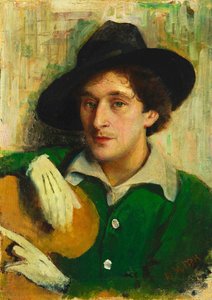
1887 - 1985 , Hviderusland


Hold dig opdateret med de seneste kunstnyheder, eksklusive tilbud og indretningsideer.
Fortæl os om dit projekt, og vores kunsteksperter vil give dig 3 personlige kunstforslag.
Vi kuraterer 3 valgmuligheder kun til dig – Gratis!


 Preview
 Del
Del Del
Del
 Detaljer

 Download
 Lignende værker
 Røntgenundersøgelse
 Diasshow
 Se mere