


x

Køb et højopløst, forbedret digitalt billede, der er langt bedre end online-forhåndsvisningen.
Hver fil er omhyggeligt forberedt af vores interne specialister ved hjælp af avancerede værktøjer og ekspertmæssig manuel retuschering. Vi sikrer, at hvert billede har enestående klarhed, præcis farvegengivelse og fine detaljer.
Den endelige fil leveres via e-mail inden for 72 timer og er optimeret til øjeblikkelig brug i professionelle, redaktionelle og trykte miljøer. Det er den samme kvalitet, som førende designstudier, forlag og gallerier har tillid til.
Download en højopløselig fil til personlig fremvisning, print og kreative projekter. ( Køb print Køb håndlavet maleri)
Når du vælger Most-Famous-Paintings.com, får du ikke blot et billede – du modtager et professionelt optimeret digitalt kunstværk, skabt med præcision og sikret med en tilfredshedsgaranti. Her er alt, hvad din ordre automatisk indeholder:

Din højkvalitets digitale billedfil vil blive sendt til din e-mail inden for 72 timer efter bestilling – klar til øjeblikkelig brug.

Dit kunstværk optimeres professionelt ved hjælp af avancerede AI-værktøjer og manuel redigering, hvilket sikrer maksimal detaljegrad, klarhed og farvenøjagtighed.

Har du ved en fejl slettet eller mistet din fil? Ingen bekymring – vi sender den igen til enhver tid, helt gratis.

Nyd dit kunstværk med det samme uden told, afgifter eller leveringsgebyrer – digitale downloads er altid skattefrie.

Vi sikrer, at dit digitale billede gengiver de originale farver så præcist som muligt ved hjælp af professionelle værktøjer og farvestyring.

Hvis du ikke er tilfreds med dit digitale billede, vil vi revidere det eller refundere 100% inden for 60 dage – uden spørgsmål.

Ik tilfreds? Få fuld refusion inden for 60 dage efter modtagelse af din digitale fil – uden spørgsmål.

Køb 3 billeder, spar 10% - Køb 5, spar 15% - Køb 10+, spar 20%. Ideelt til kreative projekter, gallerier og bureauer.
Mark Rothko's Untitled (Subway) isn’t merely a painting; it’s an immersion into the quiet, almost unbearable solitude of modern urban life. Completed in 1937, during a period of intense introspection and experimentation for the artist, this work transcends simple representation, instead offering a deeply felt emotional landscape. Rothko, grappling with the anxieties of his time – the rise of fascism, the displacement of Jewish communities, and the burgeoning alienation of city dwellers – sought to capture not what he *saw*, but what he *felt* in the face of these overwhelming forces.
The painting’s core is a deceptively simple composition: a series of rectangular blocks of color stacked vertically against a muted orange backdrop. These aren't vibrant, celebratory hues; rather, they are somber shades of brown, gray, and deep violet – colors that evoke the dampness of an underground station, the shadows cast by towering buildings, and the pervasive sense of confinement. The figures within the scene—a dozen or so individuals waiting for a train—are rendered with minimal detail, almost dissolving into the surrounding color fields. They are not portraits; they’re archetypes of urban anonymity, each lost in their own private thoughts, adrift in the collective experience of the subway.
Rothko’s technique is central to the painting’s power. He employed a layering process, applying thin washes of paint over increasingly thicker layers, creating a palpable sense of depth and texture. The edges of the rectangular blocks are deliberately soft and blurred, dissolving into the surrounding color fields – a characteristic feature of his mature work. This blurring effect isn't about lack of precision; it’s about conveying an emotional state: a feeling of being submerged, enveloped by the environment, losing oneself within the vastness of the city.
Crucially, Rothko avoided sharp outlines or distinct forms. He believed that color itself could evoke emotion and create a direct connection with the viewer. The rectangles aren’t meant to represent anything specific; they are vehicles for pure feeling – a distillation of experience into its most essential components. He famously stated, “I'm only interested in expressing basic human emotions—tragedy, ecstasy, doom.” This painting embodies a profound sense of ‘doom,’ not in a dramatic or overtly threatening way, but as a quiet, persistent melancholy that permeates the urban landscape.
To understand Untitled (Subway) fully, it's essential to consider the historical context in which it was created. Rothko had recently emigrated from Latvia to the United States with his family, a move driven by the escalating political instability and antisemitism of Eastern Europe. This experience of displacement profoundly shaped his artistic vision, fueling a lifelong exploration of themes related to loss, alienation, and the search for meaning. The subway itself—a symbol of transit, anonymity, and the constant movement of urban life—became a potent metaphor for this sense of dislocation.
Interestingly, Rothko’s early work was heavily influenced by Surrealism and Expressionism, reflecting his desire to grapple with complex emotions and psychological states. However, he quickly developed his own distinctive style, characterized by the use of large-scale color fields and a deliberate avoidance of representational imagery. Untitled (Subway) represents a pivotal moment in this evolution, marking a shift towards a more purely emotional and abstract approach to painting.
Untitled (Subway) remains one of Rothko’s most enduringly powerful works. Its understated elegance, coupled with its profound emotional resonance, continues to captivate viewers today. It's a testament to the artist’s ability to distill complex human experiences into their simplest and most evocative forms – a silent symphony of urban isolation that speaks volumes about the anxieties and uncertainties of modern life.
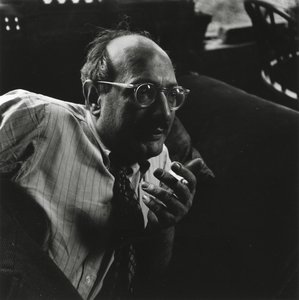
1903 - 1970 , Latvian


Hold dig opdateret med de seneste kunstnyheder, eksklusive tilbud og indretningsideer.
Fortæl os om dit projekt, og vores kunsteksperter vil give dig 3 personlige kunstforslag.
Vi kuraterer 3 valgmuligheder kun til dig – Gratis!


 Se i fuld skala
 Del
Del Del
Del
 Detaljer

 Download
 Lignende værker
 Røntgenundersøgelse
 Diasshow
 Se mere


