x


 Bestil tryk Køb højopløseligt billede
 Del
Del
 Detaljer
 Tilføj til favoritter
 Download
 Lignende værker
 Røntgenundersøgelse
 Diasshow
 Akryl på lærredVægkunstRenaissance
 1512Renæssance
 203.0 x 165.0 cm
 Galleria degli Uffizi
Håndmalet olie på lærred i din valgte størrelse og ramme, udført efter bestilling af vores kunstnere.





























Vælg mellem vores forudindstillede størrelser, der matcher kunstværkets originale proportioner.

Du kan indtaste dine egne mål for at passe til en bestemt ramme eller plads. Hvis den valgte størrelse ikke stemmer overens med det originale billedes proportioner, vil vi enten beskære kunstværket eller udvide maleriet med yderligere håndmalede elementer. En digital skitse sendes til din godkendelse, før produktionen påbegyndes.
Bemærk venligst, at forhåndsvisningen på skærmen ikke afspejler den faktiske beskæring eller udvidelse. Kun skitsen vil nøjagtigt vise den endelige komposition.
Selvom specialmål er mulige, anbefaler vi at vælge en dimension fra den foruddefinerede liste for at bevare de originale proportioner.
Levering i hele verden () på 3/4 uger i stedet for de standard 5 uger. (18 juli). Ingen kompromiser med kvaliteten.


Ideal Ansigt
Størrelse på reproduktion
Michelangelo Buonarroti’s “Ideal Face,” executed in chalk in 1512, transcends mere portraiture; it embodies the very essence of Renaissance aspiration—harmony, proportion, and divine contemplation. Housed within the Galleria degli Uffizi in Florence, this deceptively simple drawing commands attention not merely for its visual beauty but for the profound philosophical questions it poses about human perfection and artistic representation. The image captures a young woman’s serene gaze, her eyes gently closed as if lost in an inner world of tranquility—a pose immediately inviting viewers into a space of meditative reflection.
More than just a likeness, “Ideal Face” represents Michelangelo's unwavering dedication to classical ideals gleaned from the sculptures of antiquity. He meticulously dissected the human form, mirroring his lifelong fascination with anatomical observation and striving for flawless balance—a deliberate homage to the artistic principles championed by artists like Leonardo da Vinci and Andrea del Sarto during this transformative period.
The choice of chalk as the medium is crucial to understanding the artwork’s character. Unlike oil paints or fresco, chalk offered unparalleled detail and remarkable ability to capture subtle tonal nuances—a technique Michelangelo mastered with breathtaking precision. The resulting image possesses an ethereal quality, illuminated from within by a masterful manipulation of light and shadow, reflecting Michelangelo's profound engagement with the artistic heritage of Greece and Rome.
“Ideal Face” is fundamentally rooted in anatomical accuracy, mirroring Michelangelo’s lifelong pursuit of understanding the human body. The drawing meticulously portrays facial features—the delicate curve of her cheekbone, the precise alignment of her lips, and the subtle expression around her eyes—creating a harmonious composition that adheres to classical proportions. This isn't simply an imitation of beauty; it’s an exploration of mathematical ratios believed to underpin aesthetic perfection.
Beyond anatomical precision, “Ideal Face” embodies the broader cultural currents of the High Renaissance—the humanist emphasis on human dignity, the revival of classical learning, and the belief that art could elevate the soul. The woman’s closed eyes symbolize contemplation and inner peace—a reflection of Michelangelo's spiritual convictions and his desire to capture the essence of human experience.
The image continues to resonate today, reminding us of the enduring power of beauty to inspire awe and provoke introspection. Its meticulous detail and harmonious composition stand as a testament to Michelangelo’s unparalleled artistic genius—a masterpiece that secures its place among the most iconic artworks of all time.
Today, “Ideal Face” remains a treasured centerpiece within the Galleria degli Uffizi, inviting countless visitors to contemplate its timeless beauty. For those seeking deeper insight into this extraordinary work, resources abound—the original drawing can be viewed online at WGA. Furthermore, the Galleria degli Uffizi provides detailed information about the painting and its historical context on their website: Galleria Website.
And for those wishing to own a reproduction of this iconic image, numerous high-quality prints are available from reputable art dealers and online retailers—allowing you to bring Michelangelo’s vision of beauty into your home.


1475 - 1564 , Italien
Oplev Michelangelos 25 mest ikoniske værker – fra David til Pietà og Sixtinske Kapel. Lær om renæssancens mester, hans teknikker & tidløse kunst. Find museumskvalitets reproduktioner på Most-Famous-Paintings.com.
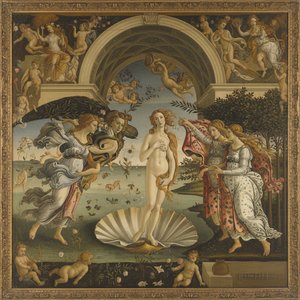
Oplev Sandro Botticellis 25 mest ikoniske malerier! Fordyb dig i renæssancens skønhed, mytologi og kunstnerisk genialitet. Find museumskvalitets reproduktioner & inspiration til din bolig på Most-Famous-Paintings.com – udforsk samlingen online!

Oplev Alte Pinakotekets 25 mest ikoniske kunstværker! Fordyb dig i renæssancens og barokkens mesterværker af Leonardo da Vinci, Rembrandt & Vermeer. Find inspiration til din indretning og køb museumskvalitets reproduktioner på Most-Famous-Paintings.com.

Oplev Galleria degli Uffizi's 25 mest ikoniske kunstværker! Dyk ned i renæssancens mestre som Leonardo da Vinci, Michelangelo & Botticelli. Find inspiration til din indretning og køb museumskvalitets reproduktioner på Most-Famous-Paintings.com.
Oplev renæssancens guldalder! Udforsk top 10 mesterværker fra Leonardo da Vinci, Michelangelo & Botticelli. Lær om kunsthistorie og find museumskvalitets reproduktioner til dit hjem på Most-Famous-Paintings.com. Inspiration & dekoration.


Hold dig opdateret med de seneste kunstnyheder, eksklusive tilbud og indretningsideer.
Fortæl os om dit projekt, og vores kunsteksperter vil give dig 3 personlige kunstforslag.
Vi kuraterer 3 valgmuligheder kun til dig – Gratis!


 Del
Del

 Se mere







 Glasmulighed er kun tilgængelig i størrelser under 110 cm