


x
Køb et højopløst, forbedret digitalt billede, der er langt bedre end online-forhåndsvisningen.
Hver fil er omhyggeligt forberedt af vores interne specialister ved hjælp af avancerede værktøjer og ekspertmæssig manuel retuschering. Vi sikrer, at hvert billede har enestående klarhed, præcis farvegengivelse og fine detaljer.
Den endelige fil leveres via e-mail inden for 72 timer og er optimeret til øjeblikkelig brug i professionelle, redaktionelle og trykte miljøer. Det er den samme kvalitet, som førende designstudier, forlag og gallerier har tillid til.
Download en højopløselig fil til personlig fremvisning, print og kreative projekter. ( Køb print Køb håndlavet maleri)
Når du vælger Most-Famous-Paintings.com, får du ikke blot et billede – du modtager et professionelt optimeret digitalt kunstværk, skabt med præcision og sikret med en tilfredshedsgaranti. Her er alt, hvad din ordre automatisk indeholder:

Din højkvalitets digitale billedfil vil blive sendt til din e-mail inden for 72 timer efter bestilling – klar til øjeblikkelig brug.

Dit kunstværk optimeres professionelt ved hjælp af avancerede AI-værktøjer og manuel redigering, hvilket sikrer maksimal detaljegrad, klarhed og farvenøjagtighed.

Har du ved en fejl slettet eller mistet din fil? Ingen bekymring – vi sender den igen til enhver tid, helt gratis.

Nyd dit kunstværk med det samme uden told, afgifter eller leveringsgebyrer – digitale downloads er altid skattefrie.

Vi sikrer, at dit digitale billede gengiver de originale farver så præcist som muligt ved hjælp af professionelle værktøjer og farvestyring.

Hvis du ikke er tilfreds med dit digitale billede, vil vi revidere det eller refundere 100% inden for 60 dage – uden spørgsmål.

Ik tilfreds? Få fuld refusion inden for 60 dage efter modtagelse af din digitale fil – uden spørgsmål.

Køb 3 billeder, spar 10% - Køb 5, spar 15% - Køb 10+, spar 20%. Ideelt til kreative projekter, gallerier og bureauer.

In the vibrant, shifting landscape of nineteenth-century France, few artists captured the delicate interplay between human emotion and social grace as intimately as Nicolas Eustache Maurin. Born in the historic town of Perpignan in 1799, Maurin was a child of artistic lineage, the son of the painter Pierre Maurin. This early immersion in the scent of oil paints and the tactile nature of the studio laid the foundation for a career that would eventually bridge the worlds of fine painting and the burgeoning medium of lithography. His journey from the quiet corners of southern France to the prestigious salons of Paris was fueled by a rigorous technical training, most notably under the guidance of Henri Regnault, whose influence helped shape Maurin’s ability to infuse even the simplest line with profound psychological depth.
As Maurin established himself in the Parisian art scene, he became a master of the lithographic stone, an artist capable of translating the fleeting nuances of a facial expression into permanent, striking imagery. His work during the 1830s and 1840s reflected the spirit of Romanticism, a movement that sought to explore the depths of individual feeling and the dramatic beauty of the human condition. Whether through his celebrated portraits or his more playful, observational prints, Maurin possessed a rare gift for capturing the "spirit of the age." His hands were skilled not just in the mechanical precision required for engraving, but in the artistic interpretation that allowed him to breathe life into his subjects, making them feel like contemporaries to anyone viewing his work decades later.
Maurin’s legacy is perhaps most vibrantly felt through his ability to document the faces and fashions of his era. He was a painter of manners, an observer of the subtle social cues that defined nineteenth-century life. His portfolio contains a remarkable breadth of subject matter, ranging from the deeply personal to the broadly historical. One cannot discuss his contributions without mentioning his ability to distill complex personalities into singular, evocative compositions. His work often touched upon themes of intimacy and domesticity, seen in titles such as Love, Modesty, and Tender Avowal, where he utilized tonal gradations and soft shading to create a sense of warmth and vulnerability.
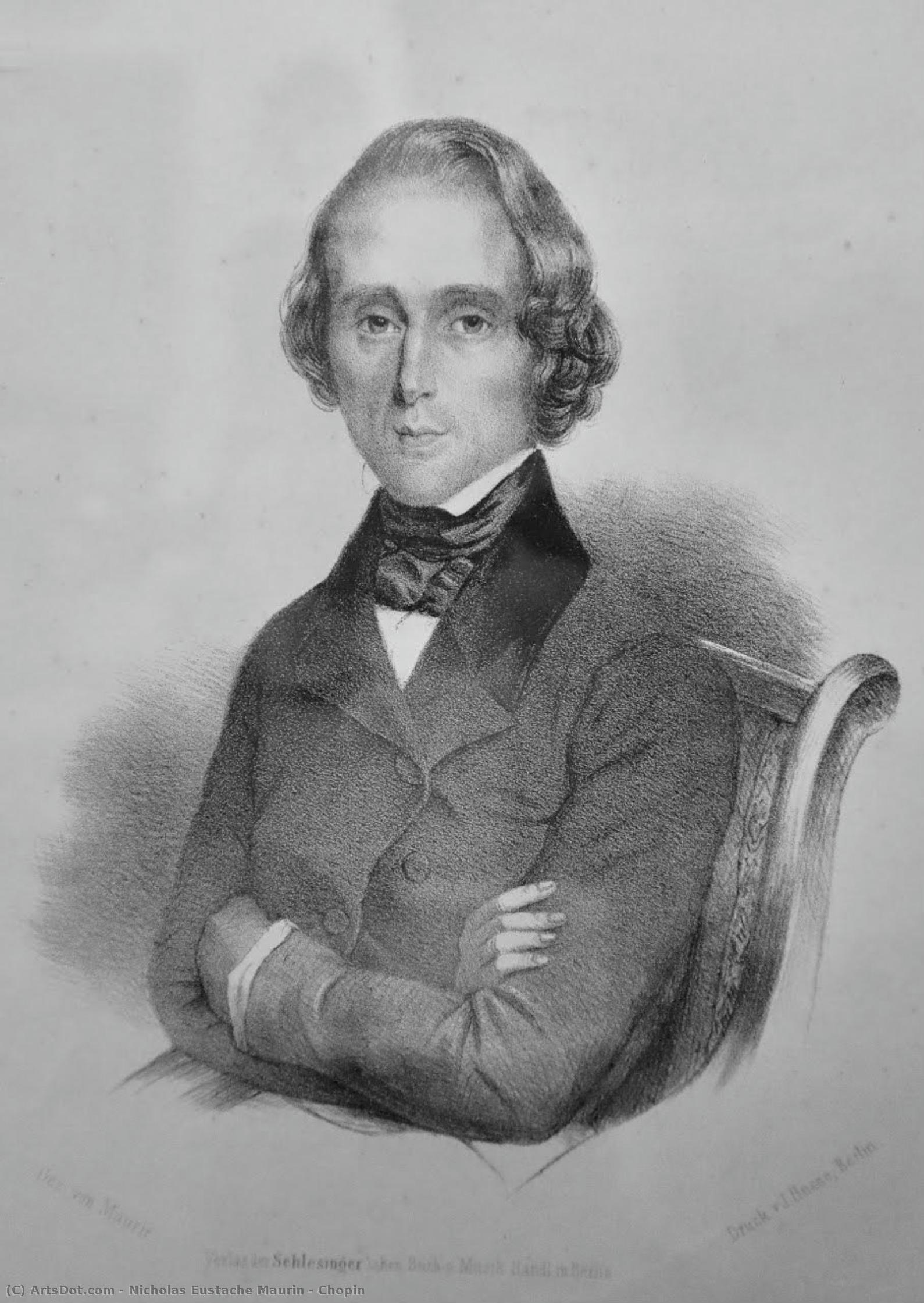
Beyond the domestic sphere, Maurin’s talent for portraiture allowed him to immortalize some of the most significant figures of his time. His ability to capture the essence of a person—the weight of their thoughts or the spark of their intellect—is evident in his depictions of legendary figures such as Chopin and James Madison. These were not merely likenesses; they were character studies that utilized the unique textures of lithography to suggest depth and movement. His work often appeared in prestigious collections, including the National Portrait Gallery in London and The Metropolitan Museum of Art, ensuring that his vision of the nineteenth century would endure long after his passing in 1850.
What truly set Maurin apart from his contemporaries was his elevation of lithography from a reproductive tool to a primary medium of artistic expression. While many used the technique to simply copy existing paintings, Maurin approached the stone with the eye of a painter. He understood how light could be manipulated through varying pressures on the lithographic crayon, creating a sense of atmosphere that mimicked the soft glow of candlelight or the dramatic shadows of a studio portrait. This technical prowess allowed him to participate in significant series, such as his Iconography of Contemporaries, which served as a visual encyclopedia of the era's most notable individuals.
The historical significance of Nicolas Eustache Maurin lies in his role as a visual chronicler. Through his meticulous attention to detail and his empathetic approach to his subjects, he provided a window into the social fabric of nineteenth-century France. His work remains a testament to the power of printmaking to capture both the grand narratives of history and the quiet, intimate moments of human existence. Today, collectors and historians alike look to his prints not just as beautiful objects of art, but as essential fragments of a lost world, preserved through the enduring magic of stone and ink.

1799 - 1850 , France


Hold dig opdateret med de seneste kunstnyheder, eksklusive tilbud og indretningsideer.
Fortæl os om dit projekt, og vores kunsteksperter vil give dig 3 personlige kunstforslag.
Vi kuraterer 3 valgmuligheder kun til dig – Gratis!


 Se i fuld skala
 Del
Del Del
Del
 Detaljer

 Download
 Lignende værker
 Røntgenundersøgelse
 Diasshow
 Se mere





