


x
Håndmalet olie på lærred i din valgte størrelse og ramme, udført efter bestilling af vores kunstnere. ( Køb print Køb billede)





























Vælg mellem vores forudindstillede størrelser, der matcher kunstværkets originale proportioner.

Du kan indtaste dine egne mål for at passe til en bestemt ramme eller plads. Hvis den valgte størrelse ikke stemmer overens med det originale billedes proportioner, vil vi enten beskære kunstværket eller udvide maleriet med yderligere håndmalede elementer. En digital skitse sendes til din godkendelse, før produktionen påbegyndes.
Bemærk venligst, at forhåndsvisningen på skærmen ikke afspejler den faktiske beskæring eller udvidelse. Kun skitsen vil nøjagtigt vise den endelige komposition.
Selvom specialmål er mulige, anbefaler vi at vælge en dimension fra den foruddefinerede liste for at bevare de originale proportioner.
Levering i hele verden () på 3/4 uger i stedet for de standard 5 uger. (20 august). Ingen kompromiser med kvaliteten.


Way to Tibet
Størrelse på reproduktion
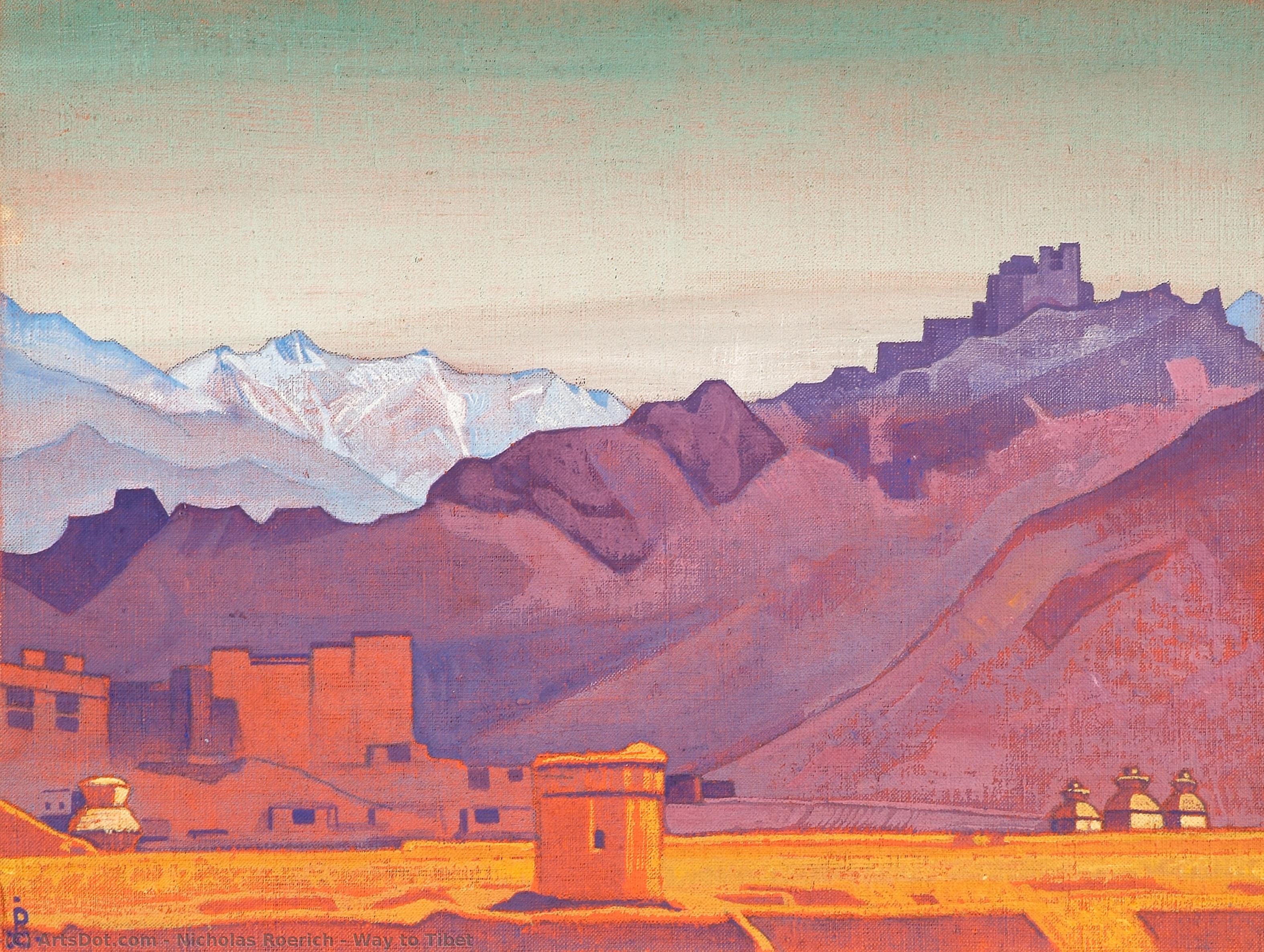
Nicholas Roerich's "Way to Tibet," painted in 1925, isn’t merely a landscape; it’s a profound visual meditation on spirituality, exploration, and the enduring connection between humanity and the sublime. Created during a period of intense personal and artistic transformation for the Russian painter – marked by his growing fascination with Eastern mysticism and his expeditions to Tibet – this work embodies Roerich's signature style: a potent blend of Symbolism, landscape painting, and deeply embedded philosophical concepts. The canvas unfolds as a dramatic vista of towering mountains bathed in an ethereal light, hinting at both earthly grandeur and the promise of spiritual ascent.
Technically, “Way to Tibet” is executed in tempera on cardboard, a choice that lends the surface a remarkable textural quality – a subtle roughness that contrasts beautifully with the smooth transitions of color. Roerich’s brushwork is deliberate yet fluid, guiding the viewer's eye across the scene with confident strokes. He masterfully employs atmospheric perspective, creating an illusion of immense depth and scale. The mountains themselves are rendered with meticulous detail, their snow-capped peaks piercing a sky that shifts from a delicate turquoise to a rich, warm orange – a symbolic representation of the journey from earthly concerns to higher consciousness.
The composition is laden with symbolism, reflecting Roerich’s evolving worldview. The prominent architectural elements nestled within the mountains—temples and dwellings—suggest a connection between humanity and the sacred landscape. These structures aren't depicted as imposing monuments but rather as humble extensions of nature, implying a harmonious relationship between civilization and the wilderness. The vastness of the sky, punctuated by the sharp peaks, represents the infinite possibilities of spiritual exploration. The color palette itself is deeply symbolic: the purples and pinks evoke a sense of mystery and transformation, while the oranges represent warmth, enlightenment, and the promise of rebirth.
Roerich’s interest in Tibet stemmed from his belief in its ancient wisdom and connection to universal spiritual truths. He saw the Himalayas as a conduit between worlds – a pathway for souls seeking transcendence. “Way to Tibet” can be interpreted as a visual representation of this journey, not just geographically but also spiritually. The painting resonates with themes found in Eastern philosophy, particularly the concept of *samsara* (the cycle of birth and death) and the pursuit of liberation.
Painted in 1925, “Way to Tibet” emerged from a pivotal period in Roerich's life. Following his first expedition to Tibet in 1923-1924, he became increasingly immersed in the study of Tibetan Buddhism and its teachings. This experience profoundly influenced his art, leading him to incorporate elements of mysticism and symbolism into his work. The painting reflects a broader cultural shift—a growing interest in Eastern spirituality during the early 20th century – alongside Roerich’s personal quest for meaning and connection.
It's important to note that Roerich wasn't simply documenting a landscape; he was attempting to capture an *experience* – a feeling of awe, wonder, and spiritual yearning. His paintings are not static representations but dynamic expressions of inner states, inviting the viewer to participate in his own journey of discovery.
Today, “Way to Tibet” continues to captivate viewers with its evocative beauty and profound symbolism. Reproductions offer a wonderful opportunity to bring this powerful image into your home or office, creating a space that is both visually stunning and spiritually resonant. When selecting a reproduction, consider the quality of materials – a high-quality print on archival paper will ensure that the colors remain vibrant for years to come.
Beyond its aesthetic qualities, “Way to Tibet” serves as a reminder of the enduring human desire for connection—to nature, to spirituality, and to something larger than ourselves. It’s a testament to Nicholas Roerich's visionary art and his profound understanding of the mysteries that lie at the heart of existence.


1874 - 1947 , Rusland

Journey through art history's most serene lake landscapes. From Romantic vistas to light-drenched Impressionist waters, discover the stories behind these iconic masterpieces and find museum-quality, hand-painted oil reproductions for your private collection.

Journey through the evolution of landscape art, from sacred Renaissance vistas to Surrealist dreamscapes. Gain expert historical insights and discover exquisite, hand-painted oil reproductions of the world's most iconic masterpieces at Most-Famous-Paintings.com.

Embark on an expert journey through the history of landscape painting. Explore how masters used the horizon to evoke the sublime. Discover museum-quality, hand-painted oil reproductions and bespoke commissions at Most-Famous-Paintings.com—where art history meets timeless elegance.


Hold dig opdateret med de seneste kunstnyheder, eksklusive tilbud og indretningsideer.
Fortæl os om dit projekt, og vores kunsteksperter vil give dig 3 personlige kunstforslag.
Vi kuraterer 3 valgmuligheder kun til dig – Gratis!


 Se i fuld skala
 Del
Del Del
Del
 Detaljer

 Download
 Lignende værker
 Røntgenundersøgelse
 Diasshow


 Se mere







 Glasmulighed er kun tilgængelig i størrelser under 110 cm


