x
 Oil On CanvasWallArtCubist Exploration
 188519th Century
 80.0 x 64.0 cm
Håndmalet olie på lærred i din valgte størrelse og ramme, udført efter bestilling af vores kunstnere. ( Køb print Køb billede)





























Vælg mellem vores forudindstillede størrelser, der matcher kunstværkets originale proportioner.

Du kan indtaste dine egne mål for at passe til en bestemt ramme eller plads. Hvis den valgte størrelse ikke stemmer overens med det originale billedes proportioner, vil vi enten beskære kunstværket eller udvide maleriet med yderligere håndmalede elementer. En digital skitse sendes til din godkendelse, før produktionen påbegyndes.
Bemærk venligst, at forhåndsvisningen på skærmen ikke afspejler den faktiske beskæring eller udvidelse. Kun skitsen vil nøjagtigt vise den endelige komposition.
Selvom specialmål er mulige, anbefaler vi at vælge en dimension fra den foruddefinerede liste for at bevare de originale proportioner.
Levering i hele verden () på 3/4 uger i stedet for de standard 5 uger. (14 august). Ingen kompromiser med kvaliteten.


Gardanne
Størrelse på reproduktion
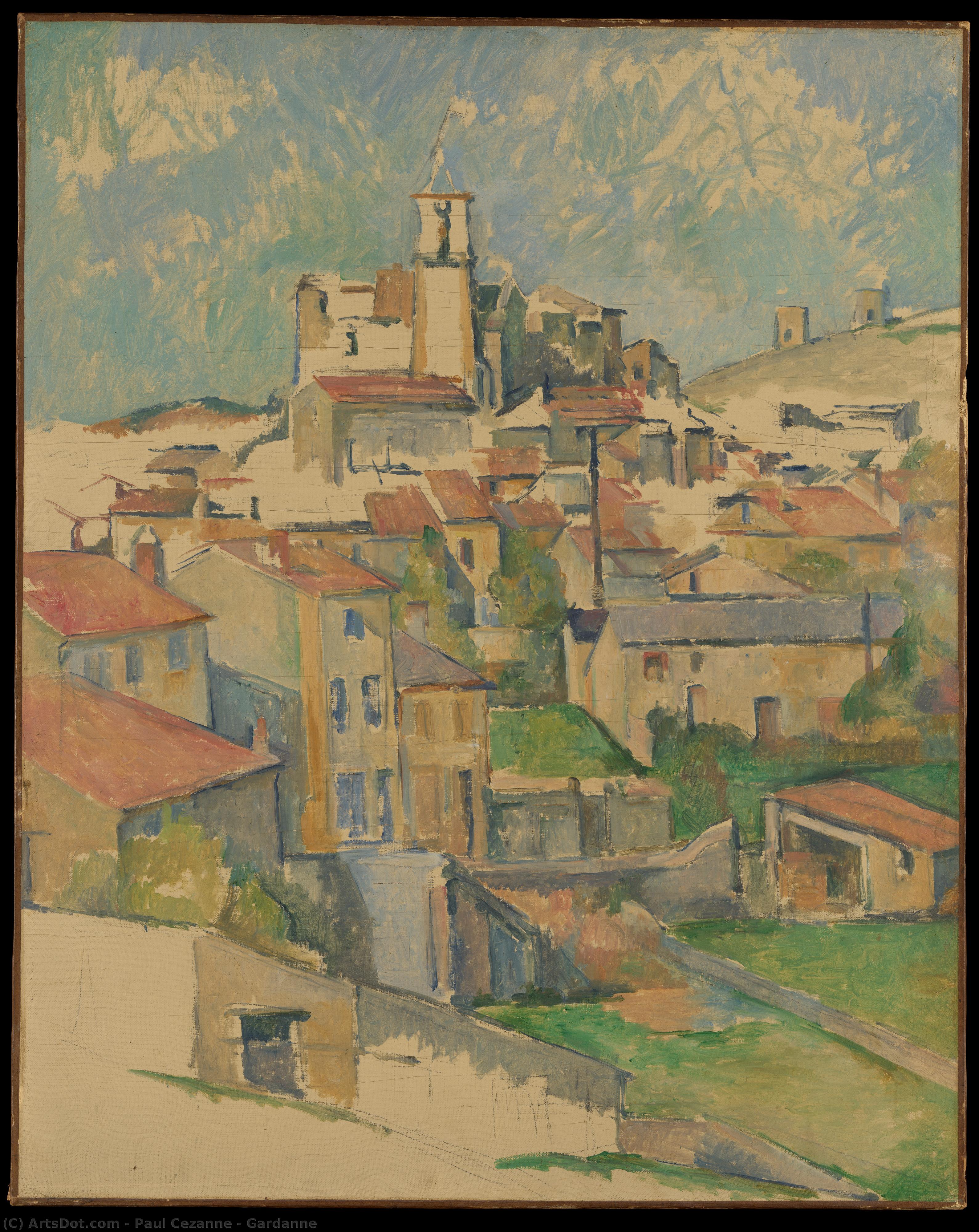
In the heart of the French landscape, where the sun-drenched hills of Aix-en-Provence meet the rugged spirit of the Mediterranean, Paul Cézanne captured more than just a view; he captured a revolution. His 1885 masterpiece, Gardanne, serves as a profound window into a moment when art began to shed its traditional skin. This is not merely a depiction of a hillside town, but an intentional dismantling and rebuilding of perception itself. As the eye wanders across the canvas, one does not find the fleeting, misty light of the Impressionists, but rather a deliberate search for permanence. Cézanne sought to render the world with a structural solidity that felt as eternal as the mountains themselves, turning a simple Provençal village into a monumental study of form and weight.
The composition is nothing short of architectural. Moving away from the vanishing points of classical perspective, Cézanne employs a technique that anticipates the fractured brilliance of Cubism. The buildings of Gardanne are rendered as a series of interlocking planes—cubes, pyramids, and facets that seem to emerge organically from the earth. The steeple of the local church punctuates the skyline with an assertive verticality, acting as an anchor for the swirling, rhythmic arrangement of red-roofed houses. This geometric dance creates a sense of rhythmic stability, where every stroke of the brush contributes to a larger, cohesive structure that feels both grounded and dynamic.
To behold Gardanne is to experience the warmth of the South through a sophisticated, muted palette. Cézanne avoids the garish in favor of the harmonious, utilizing earthy ochres, deep reds, and soft terracottas that mirror the very soil of the region. These tones are not merely decorative; they are functional, used to build volume and create a sense of depth without relying on traditional shading. The way the light interacts with these faceted surfaces creates a subtle vibration, a visual pulse that breathes life into the inanimate stone and tile. For the discerning collector or interior designer, this palette offers an unparalleled versatility, providing a sophisticated focal point that brings a sense of organic warmth and historical depth to any curated space.
Beyond the technical mastery lies a deeper, more symbolic resonance. The painting captures a tension between the man-made and the natural world. While the village is built into the terrain, its sharp edges and structured forms stand in a quiet dialogue with the undulating hills. There is an emotional gravity here—a sense of stillness that invites contemplation. It is a piece that speaks to the concept of endurance. In an era of rapid change, Cézanne’s ability to find the immutable essence within a landscape offers a profound sense of peace and permanence.
For those looking to elevate an interior with art that possesses both intellectual rigor and aesthetic grace, a high-quality reproduction of Gardanne is an exquisite choice. It is a work that rewards repeated viewing, revealing new layers of geometric complexity and tonal nuance upon every encounter. Whether placed in a contemporary gallery setting or a classic study, the painting acts as a bridge between the historical weight of Post-Impressionism and the bold abstractions of the modern age.
Owning a piece of this caliber is an opportunity to surround oneself with the legacy of "the father of us all," as Picasso once called him. It is more than decoration; it is an invitation to see the world through the eyes of a master who believed that nature could be understood through the beautiful, analytical logic of art.

1839 - 1906 , Frankrig
Oplev Paul Cézannes 25 mest ikoniske malerier – fra stilleben til landskaber. Lær om impressionismen, hans unikke stil og køb eksklusive kunsttryk på Most-Famous-Paintings.dk. Find inspiration til din indretning!

Oplev Paul Klees 25 mest ikoniske malerier! Dyk ned i en verden af abstrakt kunst, ekspressionisme og farverig kreativitet. Find inspiration til din boligindretning & køb museumskvalitets reproduktioner på Most-Famous-Paintings.com.

Oplev impressionismens magi! Dyk ned i top 10 kunstværker af Monet, Renoir & Degas. Lær historierne bag disse ikoniske malerier og find inspiration til din indretning. Museumskvalitet reproduktioner på Most-Famous-Paintings.com – udforsk samlingen online!

Explore the profound emotional depth & innovative techniques of Post-Impressionism with Most-Famous-Paintings. Discover Cézanne, Van Gogh, Gauguin & more – and their lasting impact on modern art.

Explore the profound emotional depth & formal innovations of Post-Impressionism with our expert guide. Discover Cézanne, Van Gogh, Gauguin & more. Learn about art history, collecting, and investing in this pivotal movement.


Hold dig opdateret med de seneste kunstnyheder, eksklusive tilbud og indretningsideer.
Fortæl os om dit projekt, og vores kunsteksperter vil give dig 3 personlige kunstforslag.
Vi kuraterer 3 valgmuligheder kun til dig – Gratis!


 Se i fuld skala
 Del
Del Del
Del
 Detaljer

 Download
 Lignende værker
 Røntgenundersøgelse
 Diasshow
 Se mere







 Glasmulighed er kun tilgængelig i størrelser under 110 cm