x

Giclée- eller lærredstryk i museumskvalitet med hurtig produktion og fleksible muligheder for finish. ( Køb håndlavet maleri Køb billede)





























Vælg mellem vores forudindstillede størrelser, der matcher kunstværkets originale proportioner.

Du kan indtaste dine egne mål for at passe til en specifik ramme eller et bestemt område. Hvis den valgte størrelse ikke stemmer overens med det originale billedes proportioner, vil vi enten beskære kunstværket eller udvide billedet med en spejlet eller ensfarvet kant. En digital mockup vil blive sendt til din godkendelse, før produktionen påbegyndes.
Bemærk venligst, at forhåndsvisningen på skærmen ikke afspejler den faktiske beskæring eller udvidelse. Kun mockuppen vil nøjagtigt vise den endelige komposition.
Selvom specialmål er tilgængelige, anbefaler vi at vælge et mål fra den foruddefinerede liste for at bevare de originale proportioner.
Verdensomspændende levering () på 2 uger i stedet for de sædvanlige 4/5 uger. (21 august)


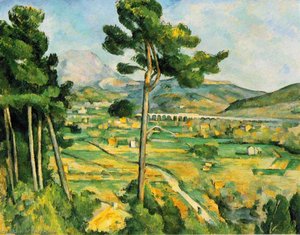
The Bridge at Maincy
Størrelse på reproduktion
Paul Cézanne’s “The Bridge at Maincy,” painted in 1879, isn't merely a depiction of a rustic wooden bridge spanning the Almont River; it’s a pivotal moment in art history—a deliberate dismantling of conventional landscape painting and a bold assertion of artistic vision. This remarkable work, now residing within the hallowed halls of the Musée d’Orsay in Paris, offers a glimpse into Cézanne's intensely personal approach to capturing nature, one that would profoundly influence generations of artists to come. It represents a bridge not just across a river, but between the fleeting impressions of Impressionism and the nascent geometric explorations of Cubism.
The scene itself is deceptively simple: a weathered wooden footbridge, its timbers worn by time and use, arches gracefully over the gently flowing Almont River. Lush greenery—a tapestry of trees, shrubs, and undergrowth—frames the composition, creating a sense of depth and enclosure. Yet, within this apparent tranquility lies a carefully constructed arrangement, a deliberate orchestration of form and color that reveals Cézanne’s revolutionary techniques. He wasn't interested in simply replicating what he saw; instead, he sought to distill the essence of the landscape—its underlying structure, its spatial relationships—into a series of interlocking planes and geometric shapes.
Cézanne’s approach to painting was radically different from that of his Impressionist predecessors. While Impressionists focused on capturing the fleeting effects of light and color, Cézanne sought to represent the essential forms beneath the surface. In “The Bridge at Maincy,” this is evident in his use of loose, expressive brushstrokes—not blended or diffused as in traditional painting, but applied with a distinct physicality, each stroke acting as an individual element within the overall composition. He employed a technique he called "separating planes," breaking down the landscape into distinct geometric volumes – the bridge itself, the river, the surrounding foliage – and rendering them with a careful attention to their three-dimensional qualities.
The painting’s color palette is equally significant. Cézanne eschewed bright, vibrant hues in favor of muted tones—ochres, browns, greens, and blues—that evoke the earthy textures and atmospheric conditions of the landscape. He layered these colors in thick impasto strokes, creating a tactile surface that invites close examination. Notice how he uses color not to mimic reality but to define form and create depth. The sky isn’t painted with a single shade of blue; instead, it's built up from layers of lavender, gray, and pale green, suggesting distance and atmospheric perspective.
“The Bridge at Maincy” stands as a crucial transitional work in Cézanne’s oeuvre and a harbinger of the artistic movements that would follow. It anticipates the geometric abstraction of Cubism, with its fragmented forms and multiple perspectives, while simultaneously retaining a strong connection to Impressionist principles—particularly in its emphasis on color and light. Cézanne's exploration of spatial relationships – how objects appear to recede into the distance or overlap one another – laid the groundwork for future artists like Picasso and Braque, who would take his ideas further.
Beyond its formal innovations, “The Bridge at Maincy” also carries a profound sense of quiet contemplation. The bridge itself becomes a symbol of connection—linking the viewer to the landscape, to Cézanne’s vision, and to the enduring beauty of nature. It's a painting that rewards patient observation, inviting us to lose ourselves in its intricate details and contemplate the artist’s remarkable ability to capture not just what he saw, but also how he *felt* about it.
While the original “The Bridge at Maincy” remains a treasured masterpiece within the Musée d'Orsay, Most-Famous-Paintings.com offers exquisite, hand-painted reproductions that allow you to experience this iconic work in your own home. Our skilled artists meticulously recreate every detail—from Cézanne’s distinctive brushstrokes to the subtle nuances of color—ensuring that your reproduction captures the essence and beauty of this groundbreaking painting. Explore more about Paul Cézanne and his artistic journey on Most-Famous-Paintings.com, and delve deeper into the history of the Musée d'Orsay on Wikipedia.


1839 - 1906 , Frankrig

Explore the profound evolution of Post-Impressionist landscapes. From Van Gogh's emotional brushwork to Cézanne's structural mastery, discover how these visionaries redefined art history through color and form in this expert guide for fine art enthusiasts.


Hold dig opdateret med de seneste kunstnyheder, eksklusive tilbud og indretningsideer.
Fortæl os om dit projekt, og vores kunsteksperter vil give dig 3 personlige kunstforslag.
Vi kuraterer 3 valgmuligheder kun til dig – Gratis!


 Se i fuld skala
 Del
Del Del
Del
 Detaljer

 Download
 Lignende værker
 Røntgenundersøgelse
 Diasshow

 Se mere







 Glasmulighed er kun tilgængelig i størrelser under 110 cm