x

Køb et højopløst, forbedret digitalt billede, der er langt bedre end online-forhåndsvisningen.
Hver fil er omhyggeligt forberedt af vores interne specialister ved hjælp af avancerede værktøjer og ekspertmæssig manuel retuschering. Vi sikrer, at hvert billede har enestående klarhed, præcis farvegengivelse og fine detaljer.
Den endelige fil leveres via e-mail inden for 72 timer og er optimeret til øjeblikkelig brug i professionelle, redaktionelle og trykte miljøer. Det er den samme kvalitet, som førende designstudier, forlag og gallerier har tillid til.
Download en højopløselig fil til personlig fremvisning, print og kreative projekter. ( Køb print Køb håndlavet maleri)
Når du vælger Most-Famous-Paintings.com, får du ikke blot et billede – du modtager et professionelt optimeret digitalt kunstværk, skabt med præcision og sikret med en tilfredshedsgaranti. Her er alt, hvad din ordre automatisk indeholder:

Din højkvalitets digitale billedfil vil blive sendt til din e-mail inden for 72 timer efter bestilling – klar til øjeblikkelig brug.

Dit kunstværk optimeres professionelt ved hjælp af avancerede AI-værktøjer og manuel redigering, hvilket sikrer maksimal detaljegrad, klarhed og farvenøjagtighed.

Har du ved en fejl slettet eller mistet din fil? Ingen bekymring – vi sender den igen til enhver tid, helt gratis.

Nyd dit kunstværk med det samme uden told, afgifter eller leveringsgebyrer – digitale downloads er altid skattefrie.

Vi sikrer, at dit digitale billede gengiver de originale farver så præcist som muligt ved hjælp af professionelle værktøjer og farvestyring.

Hvis du ikke er tilfreds med dit digitale billede, vil vi revidere det eller refundere 100% inden for 60 dage – uden spørgsmål.

Ik tilfreds? Få fuld refusion inden for 60 dage efter modtagelse af din digitale fil – uden spørgsmål.

Køb 3 billeder, spar 10% - Køb 5, spar 15% - Køb 10+, spar 20%. Ideelt til kreative projekter, gallerier og bureauer.
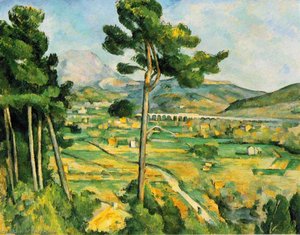
Paul Cézanne's "Untitled (6835)," a captivating landscape rendered in the soft hues of blue and green, offers a profound glimpse into the artist’s revolutionary approach to capturing the essence of nature. Painted around 1886, this work stands as a pivotal bridge between the fleeting impressions of Impressionism and the nascent geometric explorations that would define Cubism. It's not merely a depiction of a scene; it’s an investigation into form, light, and the very structure of perception – a core tenet of Cézanne’s artistic philosophy. The painting immediately draws the viewer in with its serene atmosphere, suggesting a peaceful afternoon by the water, yet hinting at a deeper complexity beneath the surface.
The composition is deceptively simple: a modest dwelling nestled amongst a cluster of trees that recede into the distance, bordered by what appears to be a tranquil body of water. However, Cézanne doesn’t offer a straightforward representation. Instead, he employs a technique characterized by deliberate simplification and an emphasis on underlying forms. The trees aren't rendered with meticulous detail; rather, they are broken down into their fundamental geometric shapes – cylinders, cones, and planes – creating a sense of solidity and presence. This fragmentation, a hallmark of Cézanne’s style, anticipates the deconstruction of form that would later characterize Cubism. The placement of figures within the scene—some clustered together, others dispersed—adds to the feeling of a lived-in space, suggesting a community connected by this idyllic setting.
Understanding Cézanne’s work requires acknowledging his unique position within the art world. Initially dismissed as overly formal and lacking in Impressionistic spontaneity, he persevered with his intensely personal vision. His dedication to studying nature—particularly at Mont Sainte-Victoire, a towering peak near Aix-en-Provence that dominated his view for decades—became central to his artistic practice. As documented in the Wikipedia article linked above, Cézanne repeatedly returned to this mountain, painting it from countless vantage points, relentlessly analyzing its form and light. “Untitled (6835)” embodies this process; the subtle variations in color and perspective reflect Cézanne’s tireless efforts to capture not just a visual likeness but also the *essence* of Mont Sainte-Victoire.
The painting's palette is restrained yet remarkably effective, relying on carefully modulated blues and greens to evoke the atmosphere of the landscape. The use of light is equally deliberate – it’s diffused and atmospheric, suggesting an overcast day rather than a bright, sunny one. Notice how Cézanne employs broken brushstrokes, layering color upon color to create depth and texture. This technique, far removed from the smooth blending favored by many Impressionists, contributes significantly to the painting's sense of solidity and structure.
While seemingly a simple pastoral scene, “Untitled (6835)” is rich in symbolic potential. The house itself could represent domesticity, stability, or perhaps even a retreat from the complexities of modern life. The presence of people—some engaged in conversation, others enjoying solitude—adds to this sense of community and connection. The umbrella, a small detail, subtly suggests protection from the elements – a quiet invitation to pause and appreciate the beauty of nature. More broadly, the painting speaks to a longing for tranquility and harmony, values that resonated deeply with Cézanne’s own life.
Cézanne's work wasn't simply about depicting what he saw; it was about conveying *how* he perceived the world. “Untitled (6835)” is a testament to this ambition – a beautifully rendered, profoundly thoughtful painting that continues to captivate viewers with its quiet power and enduring relevance. A hand-painted reproduction offers an exceptional opportunity to bring this masterpiece into your home, allowing you to experience the artist’s revolutionary vision firsthand.


1839 - 1906 , Frankrig


Hold dig opdateret med de seneste kunstnyheder, eksklusive tilbud og indretningsideer.
Fortæl os om dit projekt, og vores kunsteksperter vil give dig 3 personlige kunstforslag.
Vi kuraterer 3 valgmuligheder kun til dig – Gratis!


 Se i fuld skala
 Del
Del Del
Del
 Detaljer

 Download
 Lignende værker
 Røntgenundersøgelse
 Diasshow

 Se mere