x

Giclée- eller lærredstryk i museumskvalitet med hurtig produktion og fleksible muligheder for finish. ( Køb håndlavet maleri Køb billede)





























Vælg mellem vores forudindstillede størrelser, der matcher kunstværkets originale proportioner.

Du kan indtaste dine egne mål for at passe til en specifik ramme eller et bestemt område. Hvis den valgte størrelse ikke stemmer overens med det originale billedes proportioner, vil vi enten beskære kunstværket eller udvide billedet med en spejlet eller ensfarvet kant. En digital mockup vil blive sendt til din godkendelse, før produktionen påbegyndes.
Bemærk venligst, at forhåndsvisningen på skærmen ikke afspejler den faktiske beskæring eller udvidelse. Kun mockuppen vil nøjagtigt vise den endelige komposition.
Selvom specialmål er tilgængelige, anbefaler vi at vælge et mål fra den foruddefinerede liste for at bevare de originale proportioner.
Verdensomspændende levering () på 2 uger i stedet for de sædvanlige 4/5 uger. (19 august)


untitled (7495)
Størrelse på reproduktion
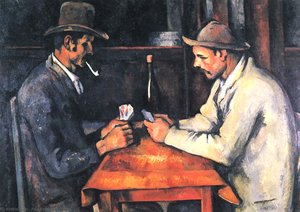
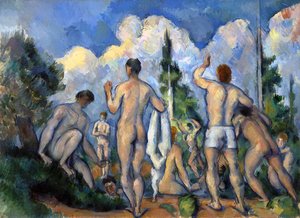
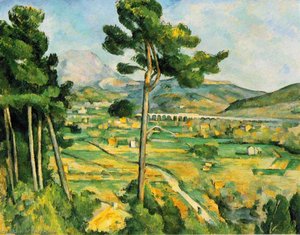
Paul Cézanne's "Untitled (7495)," a remarkably intimate portrait, offers a glimpse into the artist’s evolving approach to capturing not just likeness but also essence. Painted around 1890-1896, during a pivotal period in his artistic development, this work transcends simple representation and delves into the realm of psychological observation and formal exploration. It's a painting that invites prolonged viewing, revealing layers of subtle detail and a profound sense of quietude – a hallmark of Cézanne’s later style.
The subject is a man seated at a table, his posture suggesting both relaxation and thoughtful introspection. He wears a simple hat, its brim casting a gentle shadow across his face, partially obscuring his features yet simultaneously emphasizing the lines etched by experience. The most striking element is undoubtedly his resting head – a gesture of vulnerability and repose that immediately draws the viewer in. A cigarette smolders between his fingers, a small emblem of leisure and perhaps even melancholy, hinting at a contemplative state. Scattered around the table are several apples—a recurring motif in Cézanne’s still lifes, representing not just fruit but also ideas, forms, and the very essence of nature. The bottle adds to the scene's domesticity, grounding the portrait within a familiar, everyday setting.
Cézanne was relentlessly dedicated to understanding the underlying structure of objects – a pursuit that fundamentally altered the course of modern art. In “Untitled (7495),” this is evident in his deliberate manipulation of perspective and form. He doesn't aim for photographic realism; instead, he breaks down the subject into its fundamental geometric components—planes, cylinders, and cones—and reconstructs them on the canvas with a careful attention to color and light. Notice how the table itself isn’t rendered as a single, unified surface but rather as a collection of overlapping planes, each imbued with subtle variations in tone and hue. This technique, anticipating Cubism, dismantles traditional illusionistic space, presenting a more intellectual and analytical approach to representation.
The brushstrokes are loose and expressive, yet meticulously controlled. Cézanne employed a broken color technique—applying small, distinct strokes of pure pigment rather than blending them together—to create a vibrant, textured surface. The apple’s crimson glow is achieved through this method, radiating warmth and vitality against the muted tones of the background. The bird perched in the upper left corner adds an element of unexpected grace and perhaps even a touch of wistful observation to the scene.
While Cézanne rarely offered explicit explanations for his work, art historians have identified several symbolic layers within “Untitled (7495).” The apple, as mentioned earlier, represents not just nourishment but also temptation, knowledge, and the fleeting nature of beauty. The cigarette can be interpreted as a symbol of contemplation, solitude, or even a quiet rebellion against societal expectations. The clock hanging on the wall subtly introduces an element of time—a reminder of mortality and the passage of life.
More profoundly, the painting evokes a sense of introspection and melancholy. The man’s posture suggests a moment of private reflection, a pause in the relentless flow of daily life. The overall atmosphere is one of quiet dignity and understated emotion – a testament to Cézanne's ability to capture the essence of human experience through his masterful manipulation of form and color. It’s a portrait that speaks not just *of* a man, but *to* the viewer, inviting us to contemplate our own place within the larger tapestry of existence.
Paul Cézanne's influence on 20th-century art is immeasurable. He paved the way for Cubism and other avant-garde movements by challenging traditional notions of representation and emphasizing the formal qualities of art. His exploration of color, form, and perspective continues to inspire artists today. Reproductions of works like “Untitled (7495)” offer a tangible connection to this revolutionary artist and his enduring legacy – a reminder that true beauty lies not just in imitation but in the courageous pursuit of artistic innovation.


1839 - 1906 , Frankrig
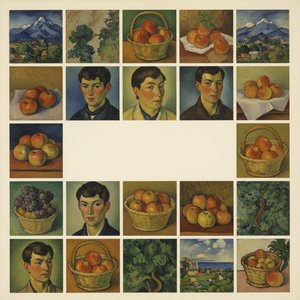
Oplev Paul Cézannes 25 mest ikoniske malerier – fra stilleben til landskaber. Lær om impressionismen, hans unikke stil og køb eksklusive kunsttryk på Most-Famous-Paintings.dk. Find inspiration til din indretning!

Explore the rich history of still life painting with Most-Famous-Paintings. Discover Dutch Masters, decode vanitas symbolism & learn about collecting timeless art. Expert insights and museum-quality reproductions.

Explore the rich history & symbolism of still life painting with Most-Famous-Paintings. Discover masterpieces from the Dutch Golden Age, learn about vanitas art, and find expert guidance for collecting timeless artworks.

Explore the rich history of still life painting & the symbolism of fruit across art movements. Discover masterpieces from Caravaggio to Cézanne with Most-Famous-Paintings – expert guidance & museum-quality reproductions.

Explore the profound world of Clyfford Still's Abstract Expressionism with Most-Famous-Paintings. Discover his unique style, existential themes & investment potential. Expert analysis for discerning collectors.


Hold dig opdateret med de seneste kunstnyheder, eksklusive tilbud og indretningsideer.
Fortæl os om dit projekt, og vores kunsteksperter vil give dig 3 personlige kunstforslag.
Vi kuraterer 3 valgmuligheder kun til dig – Gratis!


 Se i fuld skala
 Del
Del Del
Del
 Detaljer

 Download
 Lignende værker
 Røntgenundersøgelse
 Diasshow
 Se mere







 Glasmulighed er kun tilgængelig i størrelser under 110 cm