x

Giclée- eller lærredstryk i museumskvalitet med hurtig produktion og fleksible muligheder for finish. ( Køb håndlavet maleri Køb billede)





























Vælg mellem vores forudindstillede størrelser, der matcher kunstværkets originale proportioner.

Du kan indtaste dine egne mål for at passe til en specifik ramme eller et bestemt område. Hvis den valgte størrelse ikke stemmer overens med det originale billedes proportioner, vil vi enten beskære kunstværket eller udvide billedet med en spejlet eller ensfarvet kant. En digital mockup vil blive sendt til din godkendelse, før produktionen påbegyndes.
Bemærk venligst, at forhåndsvisningen på skærmen ikke afspejler den faktiske beskæring eller udvidelse. Kun mockuppen vil nøjagtigt vise den endelige komposition.
Selvom specialmål er tilgængelige, anbefaler vi at vælge et mål fra den foruddefinerede liste for at bevare de originale proportioner.
Verdensomspændende levering () på 2 uger i stedet for de sædvanlige 4/5 uger. (15 august)


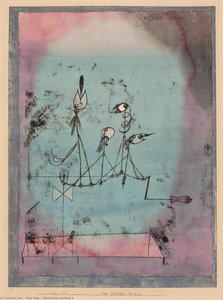
About Chess
Størrelse på reproduktion
Paul Klee’s “About Chess” is more than just a depiction of a checkered pattern; it's an invitation into the artist’s mind—a vibrant exploration of form, color, and emotion that speaks to the core principles of Expressionism. Created in 1940 during his time in Switzerland amidst the anxieties of World War II, this painting embodies Klee’s unwavering belief in art as a conduit for inner experience.
The style is unmistakably Expressionist, prioritizing subjective feeling over objective representation. Unlike traditional landscapes or portraits, “About Chess” abandons any illusion of reality, opting instead for a deliberately fragmented visual vocabulary. Geometric shapes—squares, triangles, circles—are interwoven with amorphous blobs and dots, creating a dynamic interplay between order and chaos.
Klee’s technique is characterized by meticulous layering of watercolor and gouache pigments on paper. He employs a hatching and crosshatching method to build up tonal values, achieving remarkable depth and texture despite the apparent simplicity of the composition. The artist's hand is visible in every brushstroke, conveying a sense of spontaneity and immediacy that underscores the painting’s expressive power.
Historically, Klee’s work aligns with the broader Expressionist movement—a reaction against rationalism and formalism—which sought to capture the psychological realities of human existence. Influenced by artists like Edvard Munch and Wassily Kandinsky, Klee embraced abstraction as a means of conveying spiritual truths and confronting existential anxieties.
Symbolically, “About Chess” operates on multiple levels. The chessboard itself represents intellectual struggle—the confrontation between opposing forces—while the scattered dots symbolize points of connection and potential insight. The bold colors—red, blue, yellow, black, white—are not merely decorative; they are imbued with emotional significance, reflecting Klee’s fascination with color theory and his desire to evoke visceral responses in the viewer.
Ultimately, “About Chess” resonates deeply with its audience through its profound emotional impact. It captures a state of contemplative awareness—a moment of stillness amidst turbulent circumstances—and invites viewers to contemplate the complexities of human consciousness. The painting’s luminous palette and textured surface convey a sense of warmth and vitality, reminding us that even in times of darkness, beauty can endure.

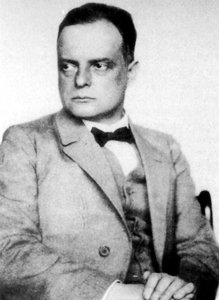
1879 - 1940 , Schweiz

Explore the captivating history of geometric abstraction in art, from ancient roots to contemporary masters. Expert insights for collectors & enthusiasts. Discover key artists, movements & investment potential.

Explore the life & work of Jacob Kainen, a pivotal figure in American Abstract Expressionism and Color Field painting. Discover his journey from Social Realism to vibrant abstraction and lasting influence on 20th-century art.

Explore the captivating world of Beatrice Parsons, a pioneering British abstract expressionist. Discover her journey from garden watercolors to evocative color field paintings and learn about her place within art history.

Explore the captivating world of Paul Klee! Discover his innovative art, Bauhaus influence, & unique symbolic language. Expert analysis & high-quality reproductions at Most-Famous-Paintings.

Explore the groundbreaking abstract expressionism of Morris Louis, a pioneer of Color Field painting. Discover his innovative techniques, influential series & lasting legacy in post-war American art. Learn more at Most-Famous-Paintings.


Hold dig opdateret med de seneste kunstnyheder, eksklusive tilbud og indretningsideer.
Fortæl os om dit projekt, og vores kunsteksperter vil give dig 3 personlige kunstforslag.
Vi kuraterer 3 valgmuligheder kun til dig – Gratis!


 Se i fuld skala
 Del
Del Del
Del
 Detaljer

 Download
 Lignende værker
 Røntgenundersøgelse
 Diasshow
 Se mere







 Glasmulighed er kun tilgængelig i størrelser under 110 cm