


x

 Acrylic On CanvasWallArtRomanticism
 1652
1652 36.0 x 47.0 cm
 Gemäldegalerie Alte Meister
Giclée- eller lærredstryk i museumskvalitet med hurtig produktion og fleksible muligheder for finish. ( Køb håndlavet maleri Køb billede)





























Vælg mellem vores forudindstillede størrelser, der matcher kunstværkets originale proportioner.

Du kan indtaste dine egne mål for at passe til en specifik ramme eller et bestemt område. Hvis den valgte størrelse ikke stemmer overens med det originale billedes proportioner, vil vi enten beskære kunstværket eller udvide billedet med en spejlet eller ensfarvet kant. En digital mockup vil blive sendt til din godkendelse, før produktionen påbegyndes.
Bemærk venligst, at forhåndsvisningen på skærmen ikke afspejler den faktiske beskæring eller udvidelse. Kun mockuppen vil nøjagtigt vise den endelige komposition.
Selvom specialmål er tilgængelige, anbefaler vi at vælge et mål fra den foruddefinerede liste for at bevare de originale proportioner.
Verdensomspændende levering () på 2 uger i stedet for de sædvanlige 4/5 uger. (25 august)


Resting Herd
Størrelse på reproduktion
Paulus Potter’s “Resting Herd,” painted in 1652, is more than just a depiction of cattle; it's a profound meditation on the relationship between humanity and nature, a cornerstone of the Dutch Golden Age’s burgeoning interest in capturing the beauty and tranquility of the countryside. This remarkable work, now housed at the Staatliche Kunstsammlungen Dresden, offers a rare glimpse into the artistic sensibilities of a tragically short-lived talent – Paulus Potter himself, who died at just 28 years old. The painting immediately draws the viewer in with its remarkably low vantage point, placing us within the scene as if we’re standing amongst the animals, fostering an intimate and almost voyeuristic connection to this peaceful tableau.
Potter's style represents a pivotal shift in Dutch art. Moving beyond the prevalent genre scenes of his father, Pieter Symonsz Potter, he embraced a distinctly Romantic approach – not in the sense of the later movement, but rather in its emphasis on capturing raw emotion and naturalism. He eschewed the idealized representations favored by earlier artists, opting instead for a directness and immediacy that was revolutionary at the time. The composition is remarkably balanced, with the figures of the animals arranged in a loose, organic manner, suggesting a sense of spontaneous movement and life. The muted palette – dominated by earthy browns, greens, and greys – further enhances the painting’s serene atmosphere, creating a visual experience that is both calming and deeply evocative.
Paulus Potter's work stands as a significant departure from the established conventions of Dutch art. While animal subjects were certainly present in earlier paintings, they were typically relegated to secondary roles, serving primarily as decorative elements or symbols within larger narratives. Potter, however, elevates the animals to the central focus of his compositions, treating them with an unprecedented level of detail and respect. This shift reflects a broader cultural trend during the Dutch Golden Age – a growing appreciation for the natural world and its inherent beauty. The painting’s realism is remarkable; one can almost feel the warmth of the sun on the animals' hides and hear the gentle rustling of the grass.
The inclusion of a shepherd, identifiable by his simple clothing and attentive posture, adds another layer of meaning to the scene. He isn’t actively managing the herd but rather observing it with quiet contemplation – suggesting a harmonious coexistence between man and nature. The sheep, positioned on the left side of the composition, further reinforces this theme of pastoral tranquility. The subtle details—the varying textures of the animals' coats, the individual expressions on their faces, the dappled sunlight filtering through the trees—demonstrate Potter’s meticulous attention to detail and his profound understanding of animal anatomy.
Beyond its technical brilliance, “Resting Herd” is rich in symbolic meaning. The scene evokes a sense of timelessness and stability, reflecting the values that were central to Dutch society during the 17th century – hard work, piety, and a deep connection to the land. The painting’s quietude speaks to a desire for respite from the pressures of urban life, offering viewers an opportunity to escape into a world of natural beauty and serenity. The low vantage point invites us to share in the animals' peaceful repose, fostering a sense of empathy and connection.
Potter’s untimely death at the age of 28 cut short a brilliant career, but his legacy endures through works like “Resting Herd.” It remains a powerful testament to the beauty of the natural world and a poignant reminder of the fleeting nature of artistic genius. Reproductions of this iconic painting offer a chance to bring this evocative scene into any space, inviting viewers to contemplate the timeless themes of harmony, tranquility, and the enduring connection between humanity and nature.


1625 - 1654 , Holland

Udforsk dyrenes fascinerende symbolik i kunsthistorien! Fra antikken til moderne indretning – lær om betydningen og find smukke reproduktioner hos .
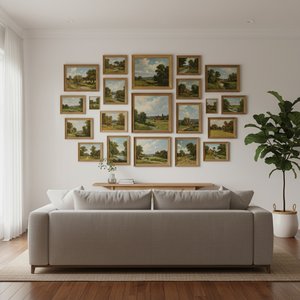
Oplev John Constables 25 mest ikoniske værker! Fordyb dig i engelsk romantik, betagende landskaber og tidløs skønhed. Køb museumskvalitets reproduktioner af 'The Hay Wain' & mere på Most-Famous-Paintings.com – inspiration til dit hjem.

Discover the breathtaking beauty of Dutch Golden Age landscapes. Explore the mastery of light, chiaroscuro, and 17th-century realism through an expert art history lens, celebrating the enduring legacy of the Dutch Masters for discerning collectors and art lovers.
Explore the history of serene landscape art & discover artists who evoke tranquility. Find the perfect calming artwork for your home with expert guidance from Most-Famous-Paintings.

Discover Jan van Goyen, the master of Dutch landscape painting. Explore his subtle technique, atmospheric realism & lasting influence on art history. Learn about this 17th-century pioneer at Most-Famous-Paintings.


Hold dig opdateret med de seneste kunstnyheder, eksklusive tilbud og indretningsideer.
Fortæl os om dit projekt, og vores kunsteksperter vil give dig 3 personlige kunstforslag.
Vi kuraterer 3 valgmuligheder kun til dig – Gratis!


 Se i fuld skala
 Del
Del Del
Del
 Detaljer

 Download
 Lignende værker
 Røntgenundersøgelse
 Diasshow
 Se mere







 Glasmulighed er kun tilgængelig i størrelser under 110 cm


