x

 Oil On CanvasWallArtBaroque Painting
 1655
1655 108.0 x 86.0 cm
 Pradomuseet
Køb et højopløst, forbedret digitalt billede, der er langt bedre end online-forhåndsvisningen.
Hver fil er omhyggeligt forberedt af vores interne specialister ved hjælp af avancerede værktøjer og ekspertmæssig manuel retuschering. Vi sikrer, at hvert billede har enestående klarhed, præcis farvegengivelse og fine detaljer.
Den endelige fil leveres via e-mail inden for 72 timer og er optimeret til øjeblikkelig brug i professionelle, redaktionelle og trykte miljøer. Det er den samme kvalitet, som førende designstudier, forlag og gallerier har tillid til.
Download en højopløselig fil til personlig fremvisning, print og kreative projekter. ( Køb print Køb håndlavet maleri)
Når du vælger Most-Famous-Paintings.com, får du ikke blot et billede – du modtager et professionelt optimeret digitalt kunstværk, skabt med præcision og sikret med en tilfredshedsgaranti. Her er alt, hvad din ordre automatisk indeholder:

Din højkvalitets digitale billedfil vil blive sendt til din e-mail inden for 72 timer efter bestilling – klar til øjeblikkelig brug.

Dit kunstværk optimeres professionelt ved hjælp af avancerede AI-værktøjer og manuel redigering, hvilket sikrer maksimal detaljegrad, klarhed og farvenøjagtighed.

Har du ved en fejl slettet eller mistet din fil? Ingen bekymring – vi sender den igen til enhver tid, helt gratis.

Nyd dit kunstværk med det samme uden told, afgifter eller leveringsgebyrer – digitale downloads er altid skattefrie.

Vi sikrer, at dit digitale billede gengiver de originale farver så præcist som muligt ved hjælp af professionelle værktøjer og farvestyring.

Hvis du ikke er tilfreds med dit digitale billede, vil vi revidere det eller refundere 100% inden for 60 dage – uden spørgsmål.

Ik tilfreds? Få fuld refusion inden for 60 dage efter modtagelse af din digitale fil – uden spørgsmål.

Køb 3 billeder, spar 10% - Køb 5, spar 15% - Køb 10+, spar 20%. Ideelt til kreative projekter, gallerier og bureauer.
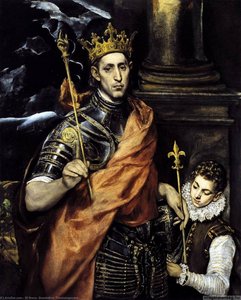
Philippe de Champaigne’s “King Louis XIII” is more than just a royal portrait; it's a meticulously crafted distillation of power, authority, and the weighty responsibilities borne by a young king navigating a turbulent era. Painted in 1655 during the height of Louis XIII’s reign, this oil on canvas masterpiece offers a rare glimpse into the man behind the crown – a figure both formidable and subtly introspective. The painting resides within the esteemed collection of the Museo del Prado in Madrid, a testament to its enduring artistic merit and historical significance.
Champaigne's style is distinctly Baroque, characterized by dramatic lighting, rich textures, and an emphasis on realistic detail. He masterfully employs chiaroscuro – the interplay of light and shadow – to sculpt Louis XIII’s form, lending him a palpable sense of presence and gravitas. The king isn’t depicted in flamboyant splendor; rather, Champaigne favors a restrained elegance, focusing on conveying dignity and control through posture and expression. Note the deliberate positioning of his hands, resting calmly yet purposefully upon the armrest – a subtle display of authority that speaks volumes about his command over the kingdom.
Louis XIII’s reign was defined by constant challenges: the lingering threat of religious conflict between Catholics and Huguenots, the machinations of powerful Italian advisors like Cardinal Richelieu, and the ongoing struggle to consolidate royal authority after his father's assassination. This turbulent backdrop is subtly reflected in the painting’s composition. The somber palette – dominated by deep reds, browns, and blacks – evokes a sense of seriousness and responsibility. The carefully chosen details—the richly embroidered velvet robe, the ornate sword, the jeweled ring—are not merely decorative; they are symbols of his royal status and the burdens he carries.
Historical context is crucial to understanding this portrait. Louis XIII ascended the throne at a precarious age, inheriting a kingdom riddled with political intrigue and religious divisions. His early years were marked by instability and the constant need to balance competing factions. Champaigne’s decision to portray Louis XIII in a relatively austere manner—avoiding excessive ornamentation or theatrical gestures—suggests an awareness of this delicate situation. He sought to convey not just the king's power, but also his wisdom and restraint.
Beyond the obvious symbols of royalty, “King Louis XIII” is rich in subtle visual cues. The king’s gaze, direct and unwavering, conveys a sense of self-awareness and perhaps even melancholy. The inclusion of the sword – a traditional emblem of power and justice – underscores his role as protector of the realm. However, it's the small details—the slight furrow of his brow, the subtle tension in his muscles—that lend the portrait an unexpected intimacy. Champaigne doesn’t present us with a distant, idealized image of royalty; instead, he offers a glimpse into the inner life of a man grappling with immense responsibility.
Interestingly, the painting underwent a later transformation. Champaigne reworked it in 1662 to depict Louis XIII as Saint Louis, reflecting the growing influence of Jansenism within the French court and the king’s personal piety. This adaptation highlights Champaigne's versatility as an artist and his ability to respond to evolving cultural and religious currents. The original portrait remains a powerful testament to Louis XIII’s reign, while the later version offers a poignant reflection on the king’s spiritual life.
“King Louis XIII” by Philippe de Champaigne is a remarkable achievement of Baroque portraiture—a painting that transcends its historical context and continues to resonate with viewers today. Its masterful composition, evocative use of light and shadow, and subtle psychological insights combine to create an image of enduring power and beauty. Whether admired for its artistic merit or its historical significance, this portrait remains a captivating window into the life and times of one of France’s most complex and influential monarchs.


1602 - 1674 , Holland


Hold dig opdateret med de seneste kunstnyheder, eksklusive tilbud og indretningsideer.
Fortæl os om dit projekt, og vores kunsteksperter vil give dig 3 personlige kunstforslag.
Vi kuraterer 3 valgmuligheder kun til dig – Gratis!


 Se i fuld skala
 Del
Del Del
Del
 Detaljer

 Download
 Lignende værker
 Røntgenundersøgelse
 Diasshow
 Se mere