


x


 Bestil tryk Bestil maleri
 Del
Del
 Detaljer
 Tilføj til favoritter
 Download
 Lignende værker
 Røntgenundersøgelse
 Diasshow
Køb et højopløst, forbedret digitalt billede, der er langt bedre end online-forhåndsvisningen.
Hver fil er omhyggeligt forberedt af vores interne specialister ved hjælp af avancerede værktøjer og ekspertmæssig manuel retuschering. Vi sikrer, at hvert billede har enestående klarhed, præcis farvegengivelse og fine detaljer.
Den endelige fil leveres via e-mail inden for 72 timer og er optimeret til øjeblikkelig brug i professionelle, redaktionelle og trykte miljøer. Det er den samme kvalitet, som førende designstudier, forlag og gallerier har tillid til.
Download en højopløselig fil til personlig fremvisning, print og kreative projekter.
Når du vælger Most-Famous-Paintings.com, får du ikke blot et billede – du modtager et professionelt optimeret digitalt kunstværk, skabt med præcision og sikret med en tilfredshedsgaranti. Her er alt, hvad din ordre automatisk indeholder:

Din højkvalitets digitale billedfil vil blive sendt til din e-mail inden for 72 timer efter bestilling – klar til øjeblikkelig brug.

Dit kunstværk optimeres professionelt ved hjælp af avancerede AI-værktøjer og manuel redigering, hvilket sikrer maksimal detaljegrad, klarhed og farvenøjagtighed.

Har du ved en fejl slettet eller mistet din fil? Ingen bekymring – vi sender den igen til enhver tid, helt gratis.

Nyd dit kunstværk med det samme uden told, afgifter eller leveringsgebyrer – digitale downloads er altid skattefrie.

Vi sikrer, at dit digitale billede gengiver de originale farver så præcist som muligt ved hjælp af professionelle værktøjer og farvestyring.

Hvis du ikke er tilfreds med dit digitale billede, vil vi revidere det eller refundere 100% inden for 60 dage – uden spørgsmål.

Ik tilfreds? Få fuld refusion inden for 60 dage efter modtagelse af din digitale fil – uden spørgsmål.

Køb 3 billeder, spar 10% - Køb 5, spar 15% - Køb 10+, spar 20%. Ideelt til kreative projekter, gallerier og bureauer.
Piet Mondrian's "Composition No. V," painted in 1914, isn’t merely a painting; it’s an architectural blueprint for pure abstraction, a distillation of the artist’s lifelong quest to reveal the underlying structure of reality through geometric forms and elemental colors. This seminal work, housed within the MoMA's collection, offers a profound glimpse into the genesis of Neoplasticism – Mondrian’s revolutionary approach to art that sought to transcend representational imagery and capture the essence of universal harmony.
The canvas itself is dominated by a carefully orchestrated grid of black lines bisecting fields of vibrant color: assertive reds, cool blues, and sunny yellows. These aren't arbitrary choices; they are meticulously selected hues representing fundamental forces – red for energy and passion, blue for tranquility and spirituality, and yellow for intellect and illumination. The composition isn’t chaotic, despite its seemingly simple arrangement. Instead, it possesses a dynamic equilibrium, a visual tension that draws the eye across the surface while simultaneously suggesting an underlying order.
Mondrian's journey to this iconic composition was paved with experimentation. Initially trained as a landscape painter in the Dutch Impressionist tradition – evidenced by works like “The Red Mill” – he gradually moved away from depicting the external world, recognizing its inherent limitations in conveying spiritual truth. His early explorations of Pointillism and Fauvism provided valuable lessons in color theory and expressive brushwork, but ultimately proved insufficient to his artistic goals. He sought a more rigorous, intellectual approach, one that would strip away all superfluous detail and reveal the essential elements of art.
Crucially, Mondrian’s thinking was deeply influenced by Theosophy, a spiritual philosophy emphasizing the interconnectedness of all things. This belief informed his desire to create an art form that reflected this underlying unity – a visual language capable of communicating universal values beyond the limitations of individual experience. The influence of Japanese art, particularly its emphasis on asymmetry and negative space, also played a significant role in shaping his evolving style.
“Composition No. V” is a textbook example of Neoplasticism – Mondrian’s systematic reduction of form to its most basic elements. He abandoned traditional perspective and representation, opting instead for a strictly orthogonal grid composed of horizontal and vertical lines. These lines aren't merely decorative; they define the spatial relationships within the painting, creating a sense of depth and structure. The colors themselves are applied in flat planes, devoid of shading or modeling, further emphasizing their purity and essential nature.
The black lines act as both dividers and connectors, delineating distinct areas while simultaneously linking them together to form a cohesive whole. This deliberate simplification wasn’t an exercise in minimalism; it was a conscious effort to reveal the underlying structure of reality – a world composed of fundamental geometric forms and elemental colors.
“Composition No. V” is more than just a visually striking artwork; it’s an invitation to contemplate the nature of beauty, order, and spirituality. The painting's stark simplicity and harmonious balance evoke a sense of calm and serenity, while its bold colors and assertive lines convey a feeling of energy and dynamism. It’s a testament to Mondrian’s belief that art could be a powerful tool for achieving spiritual enlightenment.
Today, “Composition No. V” continues to resonate with audiences around the world, serving as an enduring symbol of modernism and abstract art. Its influence can be seen in countless works of art, design, and architecture – a testament to Mondrian’s pioneering vision and his profound impact on the course of artistic history. Reproductions of this iconic piece offer a beautiful way to bring a touch of Mondrian's harmonious aesthetic into any space.

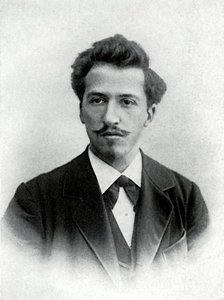
1872 - 1944 , Holland


Hold dig opdateret med de seneste kunstnyheder, eksklusive tilbud og indretningsideer.
Fortæl os om dit projekt, og vores kunsteksperter vil give dig 3 personlige kunstforslag.
Vi kuraterer 3 valgmuligheder kun til dig – Gratis!


 Del
Del


 Se mere


