


x

Giclée- eller lærredstryk i museumskvalitet med hurtig produktion og fleksible muligheder for finish. ( Køb håndlavet maleri Køb billede)





























Vælg mellem vores forudindstillede størrelser, der matcher kunstværkets originale proportioner.

Du kan indtaste dine egne mål for at passe til en specifik ramme eller et bestemt område. Hvis den valgte størrelse ikke stemmer overens med det originale billedes proportioner, vil vi enten beskære kunstværket eller udvide billedet med en spejlet eller ensfarvet kant. En digital mockup vil blive sendt til din godkendelse, før produktionen påbegyndes.
Bemærk venligst, at forhåndsvisningen på skærmen ikke afspejler den faktiske beskæring eller udvidelse. Kun mockuppen vil nøjagtigt vise den endelige komposition.
Selvom specialmål er tilgængelige, anbefaler vi at vælge et mål fra den foruddefinerede liste for at bevare de originale proportioner.
Verdensomspændende levering () på 2 uger i stedet for de sædvanlige 4/5 uger. (21 august)


The window
Størrelse på reproduktion
René Magritte’s “The Window,” completed in 1925, stands as one of the most recognizable images of Surrealism and continues to fascinate viewers with its deceptively simple composition. Painted during a period of intense experimentation within the movement—a reaction against rational thought and championed by André Breton—the artwork transcends mere visual representation, delving into fundamental questions about how we perceive reality.
Symbolism & Interpretation: The window itself serves as a powerful symbol—representing not just an aperture through which light enters but also a barrier separating the figure from the outside world. More subtly, Magritte utilizes geometric shapes—specifically triangles—to create visual tension and disrupt our expectations of spatial harmony. These triangles draw attention to the viewer’s gaze and invite contemplation on the elusive nature of perception.
Emotional Impact: “The Window” evokes a feeling of melancholic solitude and invites viewers to consider what lies beyond the visible surface. Magritte's masterful manipulation of color, form, and composition compels us to confront our own assumptions about reality—leaving behind a lingering impression of mystery and prompting reflection on the limitations of human understanding.
Magritte wasn’t interested in simply depicting what he saw; rather, he sought to challenge viewers’ perceptions of reality. He famously stated, “I want to depict things as they appear to me,” emphasizing the subjective experience at the core of artistic creation.
The triangles incorporated into the composition aren't merely decorative elements; they actively disrupt conventional spatial conventions. Magritte skillfully uses these shapes to create visual tension, mirroring the anxieties inherent in confronting the unknown—a central theme within Surrealist art.

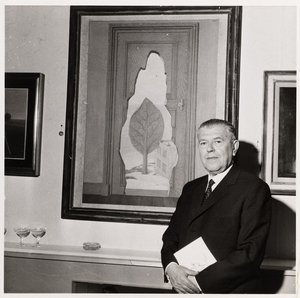
1898 - 1967 , Belgien

Explore the profound mystery of René Magritte’s 'The Treachery of Images.' Dive into an expert analysis of his Surrealist philosophy, the paradox of representation, and how he challenged reality through the interplay of language and visual perception.


Hold dig opdateret med de seneste kunstnyheder, eksklusive tilbud og indretningsideer.
Fortæl os om dit projekt, og vores kunsteksperter vil give dig 3 personlige kunstforslag.
Vi kuraterer 3 valgmuligheder kun til dig – Gratis!


 Se i fuld skala
 Del
Del Del
Del
 Detaljer

 Download
 Lignende værker
 Røntgenundersøgelse
 Diasshow

 Se mere







 Glasmulighed er kun tilgængelig i størrelser under 110 cm


