


x


 Bestil tryk Bestil maleri
 Del
Del
 Detaljer
 Tilføj til favoritter
 Download
 Lignende værker
 Røntgenundersøgelse
 Diasshow
Køb et højopløst, forbedret digitalt billede, der er langt bedre end online-forhåndsvisningen.
Hver fil er omhyggeligt forberedt af vores interne specialister ved hjælp af avancerede værktøjer og ekspertmæssig manuel retuschering. Vi sikrer, at hvert billede har enestående klarhed, præcis farvegengivelse og fine detaljer.
Den endelige fil leveres via e-mail inden for 72 timer og er optimeret til øjeblikkelig brug i professionelle, redaktionelle og trykte miljøer. Det er den samme kvalitet, som førende designstudier, forlag og gallerier har tillid til.
Download en højopløselig fil til personlig fremvisning, print og kreative projekter.
Når du vælger Most-Famous-Paintings.com, får du ikke blot et billede – du modtager et professionelt optimeret digitalt kunstværk, skabt med præcision og sikret med en tilfredshedsgaranti. Her er alt, hvad din ordre automatisk indeholder:

Din højkvalitets digitale billedfil vil blive sendt til din e-mail inden for 72 timer efter bestilling – klar til øjeblikkelig brug.

Dit kunstværk optimeres professionelt ved hjælp af avancerede AI-værktøjer og manuel redigering, hvilket sikrer maksimal detaljegrad, klarhed og farvenøjagtighed.

Har du ved en fejl slettet eller mistet din fil? Ingen bekymring – vi sender den igen til enhver tid, helt gratis.

Nyd dit kunstværk med det samme uden told, afgifter eller leveringsgebyrer – digitale downloads er altid skattefrie.

Vi sikrer, at dit digitale billede gengiver de originale farver så præcist som muligt ved hjælp af professionelle værktøjer og farvestyring.

Hvis du ikke er tilfreds med dit digitale billede, vil vi revidere det eller refundere 100% inden for 60 dage – uden spørgsmål.

Ik tilfreds? Få fuld refusion inden for 60 dage efter modtagelse af din digitale fil – uden spørgsmål.

Køb 3 billeder, spar 10% - Køb 5, spar 15% - Køb 10+, spar 20%. Ideelt til kreative projekter, gallerier og bureauer.
René Magritte’s “Waltz Eclipse,” painted in 1958, isn't merely a depiction of two apples suspended in an ethereal space; it’s a deliberate provocation—a masterful exercise in Surrealist philosophy designed to unsettle the viewer and invite contemplation about the nature of reality itself. Created during Magritte’s prolific Vache Period, this artwork embodies the core tenets of Surrealism: juxtaposing incongruous elements to expose hidden contradictions within our everyday experience.
The central figures—two green apples adorned with masks—immediately capture attention. Magritte’s choice isn't accidental; apples have long been symbols of temptation, knowledge, and innocence, while masks represent concealment and disguise. Their placement side-by-side suggests a duality – the visible versus the hidden, the conscious versus the unconscious – mirroring the Surrealist preoccupation with accessing subconscious desires and anxieties. The masks’ blank faces amplify this sense of mystery, forcing us to confront what lies beneath the surface of appearances.
Dominating the upper right corner is a clock face—also suspended in air—a motif recurrent throughout Magritte’s oeuvre. Like the apples, it defies logic and challenges our understanding of time as linear progression. This element reinforces the Surrealist critique of rational thought, suggesting that time itself is subjective and malleable, much like perception. The clock serves as a visual reminder that what we perceive isn't necessarily what *is*, prompting viewers to question accepted truths.
Executed in gouache on paper, “Waltz Eclipse” showcases Magritte’s meticulous attention to detail within an overall atmospheric haze. Gouache—a pigment binder that creates opaque watercolor effects—allowed Magritte to achieve a luminous quality while maintaining precise tonal control. The muted palette contributes to the painting's dreamlike atmosphere, enhancing its emotional impact and immersing the viewer in a realm of subconscious imagery.
"Waltz Eclipse" stands as a testament to Magritte’s enduring legacy as one of the most influential Surrealist artists. It exemplifies his ability to transform familiar objects into symbols laden with philosophical significance, inviting viewers to engage in an intellectual dialogue about perception and representation. Its quiet grandeur—combined with its unsettling ambiguity—continues to inspire admiration and discussion decades after its creation, cementing its place among the masterpieces of 20th-century art.

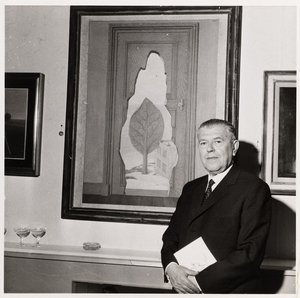
1898 - 1967 , Belgien


Hold dig opdateret med de seneste kunstnyheder, eksklusive tilbud og indretningsideer.
Fortæl os om dit projekt, og vores kunsteksperter vil give dig 3 personlige kunstforslag.
Vi kuraterer 3 valgmuligheder kun til dig – Gratis!


 Del
Del


 Se mere


