


x

 Acrylic On CanvasWallArtEarly Netherlandish Renaissance
 1460
1460 31.0 x 22.0 cm
 Metropolitan Museum of Art
Køb et højopløst, forbedret digitalt billede, der er langt bedre end online-forhåndsvisningen.
Hver fil er omhyggeligt forberedt af vores interne specialister ved hjælp af avancerede værktøjer og ekspertmæssig manuel retuschering. Vi sikrer, at hvert billede har enestående klarhed, præcis farvegengivelse og fine detaljer.
Den endelige fil leveres via e-mail inden for 72 timer og er optimeret til øjeblikkelig brug i professionelle, redaktionelle og trykte miljøer. Det er den samme kvalitet, som førende designstudier, forlag og gallerier har tillid til.
Download en højopløselig fil til personlig fremvisning, print og kreative projekter. ( Køb print Køb håndlavet maleri)
Når du vælger Most-Famous-Paintings.com, får du ikke blot et billede – du modtager et professionelt optimeret digitalt kunstværk, skabt med præcision og sikret med en tilfredshedsgaranti. Her er alt, hvad din ordre automatisk indeholder:

Din højkvalitets digitale billedfil vil blive sendt til din e-mail inden for 72 timer efter bestilling – klar til øjeblikkelig brug.

Dit kunstværk optimeres professionelt ved hjælp af avancerede AI-værktøjer og manuel redigering, hvilket sikrer maksimal detaljegrad, klarhed og farvenøjagtighed.

Har du ved en fejl slettet eller mistet din fil? Ingen bekymring – vi sender den igen til enhver tid, helt gratis.

Nyd dit kunstværk med det samme uden told, afgifter eller leveringsgebyrer – digitale downloads er altid skattefrie.

Vi sikrer, at dit digitale billede gengiver de originale farver så præcist som muligt ved hjælp af professionelle værktøjer og farvestyring.

Hvis du ikke er tilfreds med dit digitale billede, vil vi revidere det eller refundere 100% inden for 60 dage – uden spørgsmål.

Ik tilfreds? Få fuld refusion inden for 60 dage efter modtagelse af din digitale fil – uden spørgsmål.

Køb 3 billeder, spar 10% - Køb 5, spar 15% - Køb 10+, spar 20%. Ideelt til kreative projekter, gallerier og bureauer.
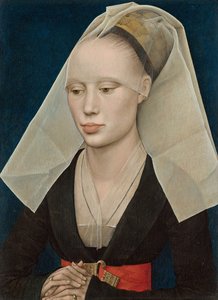
Rogier van der Weyden’s “Francesco d’Este,” completed around 1460, stands as a testament to the artistic fervor of Early Netherlandish painting—a period characterized by profound spiritual contemplation and meticulous realism. This portrait transcends mere likeness; it embodies the ideals of Renaissance nobility intertwined with devout piety, capturing a moment frozen in time with remarkable sensitivity.
The subject is Francesco d’Este, son of Leonello d'Este, Duke of Modena. Commissioned during his formative years, the painting depicts him as a young man embarking on military training—a common practice for aristocratic princes at the time—yet radiating an aura of composure and intellectual curiosity. Van der Weyden skillfully arranges the figure within a richly decorated interior space; Francesco occupies the central position, gazing directly at the viewer with an intense gaze that conveys both confidence and introspection.
Van der Weyden’s signature style—renowned for its unparalleled attention to detail and expressive portrayal of human emotion—is vividly evident in “Francesco d’Este.” Like many of his contemporaries, he adhered to the principles of naturalism championed by Filippo Brunelleschi and Donatello, striving to represent reality with unwavering accuracy. However, unlike purely observational depictions, Van der Weyden infused his canvases with psychological depth, conveying not just what was seen but also what was felt.
The painting’s remarkable luminosity stems from Van der Weyden's masterful use of oil paint—a relatively new medium at the time—allowing for subtle gradations of color and a velvety texture that imbues the scene with palpable warmth. Observe how he renders the folds of Francesco’s shirt with painstaking precision, capturing the interplay of light and shadow to create an illusion of three-dimensionality. The textured wall behind him serves as a counterpoint to the figure's stillness, adding visual interest and reinforcing the painting’s overall sense of grandeur.
Beyond its formal beauty, “Francesco d’Este” carries symbolic significance reflecting the cultural milieu of its time. The inclusion of a ring—a symbol of marital status and social standing—underscores Francesco's noble lineage and aspirations. Furthermore, the serene setting evokes biblical imagery, hinting at the spiritual values upheld by the Este family and highlighting Van der Weyden’s commitment to conveying moral virtue through art.
“Francesco d’Este” remains a cornerstone of Early Netherlandish painting—a masterpiece that continues to inspire admiration for its technical brilliance and emotional resonance. Its enduring appeal lies in Van der Weyden's ability to capture not just the outward appearance of his subject but also the inner spirit, cementing his place as one of the most influential artists of the fifteenth century.

1400 - 1464 , Belgien


Hold dig opdateret med de seneste kunstnyheder, eksklusive tilbud og indretningsideer.
Fortæl os om dit projekt, og vores kunsteksperter vil give dig 3 personlige kunstforslag.
Vi kuraterer 3 valgmuligheder kun til dig – Gratis!


 Se i fuld skala
 Del
Del Del
Del
 Detaljer

 Download
 Lignende værker
 Røntgenundersøgelse
 Diasshow
 Se mere


