x
 Oil On CanvasWallArtEarly Netherlandish Painting
 1460Renaissance
 53.0 x 19.0 cm
 Musées Royaux des Beaux-Arts
Giclée- eller lærredstryk i museumskvalitet med hurtig produktion og fleksible muligheder for finish. ( Køb håndlavet maleri Køb billede)





























Vælg mellem vores forudindstillede størrelser, der matcher kunstværkets originale proportioner.

Du kan indtaste dine egne mål for at passe til en specifik ramme eller et bestemt område. Hvis den valgte størrelse ikke stemmer overens med det originale billedes proportioner, vil vi enten beskære kunstværket eller udvide billedet med en spejlet eller ensfarvet kant. En digital mockup vil blive sendt til din godkendelse, før produktionen påbegyndes.
Bemærk venligst, at forhåndsvisningen på skærmen ikke afspejler den faktiske beskæring eller udvidelse. Kun mockuppen vil nøjagtigt vise den endelige komposition.
Selvom specialmål er tilgængelige, anbefaler vi at vælge et mål fra den foruddefinerede liste for at bevare de originale proportioner.
Verdensomspændende levering () på 2 uger i stedet for de sædvanlige 4/5 uger. (16 august)


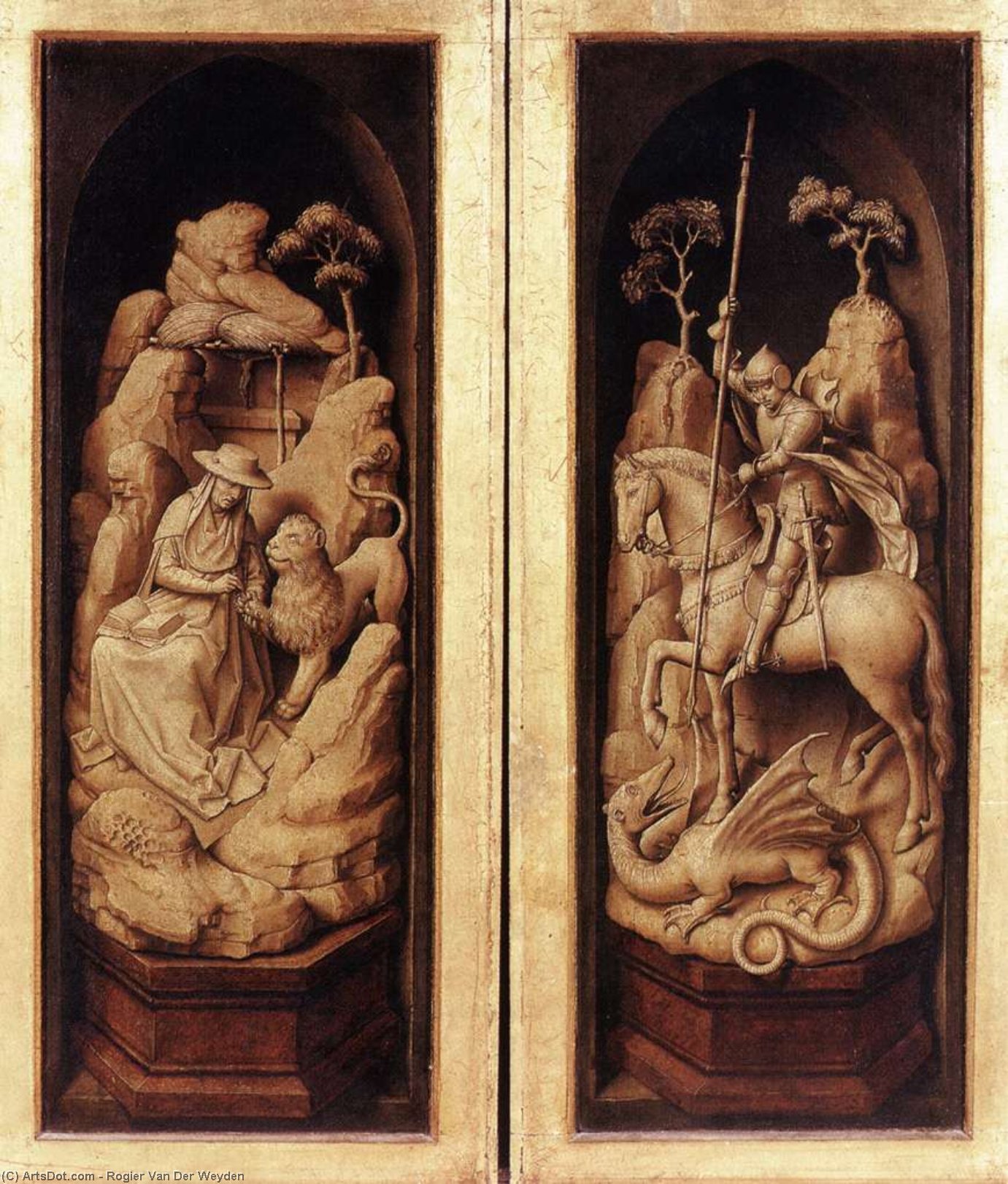
Sforza Triptych (exterior)
Størrelse på reproduktion
Rogier van der Weyden’s “Sforza Triptych,” completed around 1460, stands as a cornerstone of Early Netherlandish painting—a testament to the artist's unparalleled skill in capturing emotion and detail within a meticulously crafted devotional scene. Housed in the Musées Royaux des Beaux-Arts de Bruxelles, Belgium, this monumental panel transcends mere representation; it embodies the artistic ideals of its time and continues to resonate with viewers centuries later.
Rogier van der Weyden wasn’t merely a painter; he was a sculptor and goldsmith who brought an extraordinary level of craftsmanship to his art. He belonged to the influential Bruges School, which championed realism and psychological depth—characteristics that distinguished it from other European artistic movements. The triptych's commission by Francesco Sforza, Duke of Milan, reflects the patronage system prevalent in Renaissance Italy and underscores the importance of religious iconography within aristocratic circles.
Measuring 53 x 19 cm, the exterior panel employs oil paint on oak—a technique favored by van der Weyden for its ability to achieve luminous effects and reproduce subtle textures. The composition is dominated by a dynamic interplay of figures and animals arranged within a castle-like architectural setting. A knight holding a sword stands prominently at the center, flanked by a man on horseback and several other individuals engaged in conversation—a scene brimming with narrative complexity.
Beyond its formal structure, “Sforza Triptych” is laden with symbolic meaning. The dragon—a recurring motif in medieval art—represents evil and temptation, serving as a visual counterpoint to the virtuous figures depicted. Van der Weyden’s masterful use of chiaroscuro—the dramatic contrast between light and shadow—amplifies the emotional intensity of the scene, conveying profound sorrow and spiritual contemplation.
The artist's meticulous attention to detail—from the textures of clothing to the expressions on faces—creates a palpable sense of realism that draws viewers into the narrative.Most-Famous-Paintings.com offers exceptional reproductions of “Sforza Triptych,” crafted by skilled artisans who faithfully recreate van der Weyden’s original vision. These high-quality prints allow art enthusiasts to experience the beauty and grandeur of this iconic masterpiece in their own homes.

1400 - 1464 , Belgien

Oplev de 10 ikoniske mesterværker fra den tidlige nederlandske renæssance! Jan van Eyck, Rogier van der Weyden og andre flamske malere. Find museumskvalitets kunsttryk & inspiration til din indretning på Most-Famous-Paintings.com.
Oplev Vincent van Goghs 25 mest ikoniske malerier! Fra 'Stjernenat' til 'Solsikker', udforsk historien, teknikken og passionen bag hvert mesterværk. Find inspiration & køb museumskvalitets reproduktioner på Most-Famous-Paintings.com.

Oplev de 10 ikoniske mesterværker fra tidlig nederlandsk maleri! Jan van Eyck, Rogier van der Weyden og andre flamske renæssancekunstnere. Find inspiration & køb museumskvalitets reproduktioner på Most-Famous-Paintings.com.

Explore the revolutionary art of Rogier van der Weyden, a pivotal figure of the Early Netherlandish Renaissance. Discover his emotional realism, innovative compositions, and lasting impact on painting history.

Explore the revolutionary art of Hugo van der Goes – a master of Early Netherlandish painting renowned for his dramatic realism, psychological depth & profound influence on Renaissance artists. Discover his iconic works and lasting legacy.


Hold dig opdateret med de seneste kunstnyheder, eksklusive tilbud og indretningsideer.
Fortæl os om dit projekt, og vores kunsteksperter vil give dig 3 personlige kunstforslag.
Vi kuraterer 3 valgmuligheder kun til dig – Gratis!


 Se i fuld skala
 Del
Del Del
Del
 Detaljer

 Download
 Lignende værker
 Røntgenundersøgelse
 Diasshow
 Se mere







 Glasmulighed er kun tilgængelig i størrelser under 110 cm