x

 Acrylic On CanvasWallArtEarly Netherlandish
 1455
1455 77.0 x 48.0 cm
 Staatliche Museen zu Berlin
Håndmalet olie på lærred i din valgte størrelse og ramme, udført efter bestilling af vores kunstnere. ( Køb print Køb billede)





























Vælg mellem vores forudindstillede størrelser, der matcher kunstværkets originale proportioner.

Du kan indtaste dine egne mål for at passe til en bestemt ramme eller plads. Hvis den valgte størrelse ikke stemmer overens med det originale billedes proportioner, vil vi enten beskære kunstværket eller udvide maleriet med yderligere håndmalede elementer. En digital skitse sendes til din godkendelse, før produktionen påbegyndes.
Bemærk venligst, at forhåndsvisningen på skærmen ikke afspejler den faktiske beskæring eller udvidelse. Kun skitsen vil nøjagtigt vise den endelige komposition.
Selvom specialmål er mulige, anbefaler vi at vælge en dimension fra den foruddefinerede liste for at bevare de originale proportioner.
Levering i hele verden () på 3/4 uger i stedet for de standard 5 uger. (20 august). Ingen kompromiser med kvaliteten.


St John Altarpiece (left panel)
Størrelse på reproduktion
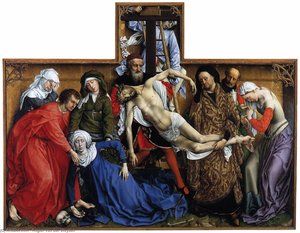
In the quiet, luminous corridors of the Early Netherlandish Renaissance, few moments capture the profound intersection of the human and the divine as exquisitely as Rogier van der Weyden’s St John Altarpiece (left panel). This masterpiece, dating from approximately 1455, serves as a breathtaking window into a sacred narrative, specifically focusing on the birth of Saint John the Baptist. As the viewer gazes upon this panel, they are not merely observing a historical or religious event; they are invited into an intimate, domestic sanctuary where every fold of fabric and every soft shadow whispers of sanctity. The scene is set within a meticulously rendered interior, where the presence of a bed and a simple chair grounds the celestial miracle in a tangible, earthly reality, making the miraculous feel profoundly accessible to the faithful.
The composition is anchored by the tender interaction between the women present, whose medieval attire—richly textured and draped with heavy, sculptural elegance—reflects the artist's unparalleled mastery of form. One woman cradles a newborn with a protective grace, while another stands nearby, her presence adding to the sense of a shared, solemn ceremony. The light in the painting does not merely illuminate; it caresses the skin of the infants and the heavy velvets of the garments, creating a soft, ethereal glow that is characteristic of van der Weyden’s emotive style. This interplay of light and shadow breathes life into the figures, transforming a static religious icon into a living, breathing moment of maternal devotion and spiritual anticipation.
To behold a work by Rogier van der Weyden is to witness the pinnacle of oil painting technique. Having likely trained as a goldsmith, the artist brought an obsessive, reverent attention to detail that revolutionized Northern European art. In this left panel, his ability to render textures—the crispness of linen, the weight of wool, and the delicate smoothness of infant skin—is nothing short of miraculous. This precision serves a higher purpose than mere decoration; it is a vehicle for emotional realism. Unlike the more detached compositions of some of his contemporaries, van der Weyden imbues his subjects with a palpable psychological depth. There is a quiet, contemplative stillness in the room, yet beneath the surface, one can sense the profound weight of the destiny awaiting the child.
For the discerning collector or interior designer, this piece offers more than just historical significance; it provides a focal point of immense character and sophistication. The subtle symbolism embedded within the domestic setting—the clock on the wall marking the passage of mortal time against the eternal nature of the saint's birth—offers layers of intellectual engagement. A high-quality reproduction of this panel brings with it an atmosphere of timelessness and quiet luxury, making it an ideal centerpiece for a space dedicated to reflection, classical elegance, or scholarly pursuit. It is a work that does not shout for attention but commands it through its profound beauty and the silent, powerful storytelling found within its gilded borders.


1400 - 1464 , Belgien

Oplev John Singer Sargents 25 mest ikoniske malerier – fra elegante portrætter til impressionistiske mesterværker. Lær historierne bag kunsten & find inspiration til din indretning med Most-Famous-Paintings.com. Udforsk samlingen online!
Oplev John Constables 25 mest ikoniske værker! Fordyb dig i engelsk romantik, betagende landskaber og tidløs skønhed. Køb museumskvalitets reproduktioner af 'The Hay Wain' & mere på Most-Famous-Paintings.com – inspiration til dit hjem.

Journey through High Medieval Art! Explore 10 iconic masterpieces – from Giotto's frescoes to stunning Gothic cathedrals. Discover the stories behind these timeless paintings, sculptures & illuminated manuscripts. Find museum-quality art reproductions at Most-Famous-Paintings.com.

Oplev El Grecos 25 mest ikoniske malerier! Fordyb dig i spansk renæssancekunst, spirituelle værker og dramatiske kompositioner. Find inspiration til dit hjem & køb museumskvalitets reproduktioner på Most-Famous-Paintings.com.

Journey through 10 defining Late Medieval masterpieces – from Giotto's frescoes to Jan van Eyck’s realism. Explore the stories, techniques & vibrant colors of Gothic art. Find museum-quality reproductions and elevate your home decor with Most-Famous-Paintings.com! Discover all masterpieces on Most-Famous-Paintings.com


Hold dig opdateret med de seneste kunstnyheder, eksklusive tilbud og indretningsideer.
Fortæl os om dit projekt, og vores kunsteksperter vil give dig 3 personlige kunstforslag.
Vi kuraterer 3 valgmuligheder kun til dig – Gratis!


 Se i fuld skala
 Del
Del Del
Del
 Detaljer

 Download
 Lignende værker
 Røntgenundersøgelse
 Diasshow
 Se mere







 Glasmulighed er kun tilgængelig i størrelser under 110 cm


![St. Francis Mourned By St. Clare - [23] - St. Francis Mourned By St. Clare — Giotto Di Bondone, Proto Renaissance](/media/artworks/images/thumbnails/d9/a8/d9a8803f4ecd4b049507cc14e2371b42.jpg)