x

Giclée- eller lærredstryk i museumskvalitet med hurtig produktion og fleksible muligheder for finish. ( Køb håndlavet maleri Køb billede)





























Vælg mellem vores forudindstillede størrelser, der matcher kunstværkets originale proportioner.

Du kan indtaste dine egne mål for at passe til en specifik ramme eller et bestemt område. Hvis den valgte størrelse ikke stemmer overens med det originale billedes proportioner, vil vi enten beskære kunstværket eller udvide billedet med en spejlet eller ensfarvet kant. En digital mockup vil blive sendt til din godkendelse, før produktionen påbegyndes.
Bemærk venligst, at forhåndsvisningen på skærmen ikke afspejler den faktiske beskæring eller udvidelse. Kun mockuppen vil nøjagtigt vise den endelige komposition.
Selvom specialmål er tilgængelige, anbefaler vi at vælge et mål fra den foruddefinerede liste for at bevare de originale proportioner.
Verdensomspændende levering () på 2 uger i stedet for de sædvanlige 4/5 uger. (17 august)


Standing Rib
Størrelse på reproduktion
Roy Lichtenstein’s “Standing Rib,” created in 1962, is more than just a painting of meat; it’s a meticulously crafted statement about consumerism, mass culture, and the very nature of representation. This seemingly simple image – a raw beef rib presented on a stark white plate – embodies the core tenets of Lichtenstein's groundbreaking Pop Art style. The work immediately confronts the viewer with its bold, graphic execution, a deliberate departure from the traditional notions of artistic subject matter and technique that had dominated Western art for centuries.
“Standing Rib” emerged during a pivotal moment in art history: the rise of Pop Art in the 1960s. This movement, spearheaded by artists like Lichtenstein, Andy Warhol, and Claes Oldenburg, reacted against Abstract Expressionism’s emphasis on individual emotion and subjective experience. Instead, Pop Art embraced imagery from popular culture – advertising, comic books, consumer products – reflecting the growing influence of mass media and the burgeoning American economy. The painting's subject matter directly engages with themes prevalent in American society at the time: abundance, consumption, and the idealized image of the ‘American’ meal.
Lichtenstein’s background also played a crucial role. His early training in realistic drawing instilled a technical proficiency that he then deliberately subverted, using his skills to create deliberately artificial representations. This approach was influenced by his exposure to jazz music – a key element of the burgeoning counterculture – which valued improvisation and disruption of established norms.
While seemingly straightforward, “Standing Rib” is rich in symbolic meaning. The stark white plate acts as a stage, isolating the meat and emphasizing its presentation. The vibrant red color of the rib draws attention to its texture and form, almost fetishizing the object. The painting’s impact lies not in depicting beauty but in provoking thought about our relationship with consumer culture and the way we are bombarded with images that shape our desires. It's a deceptively simple work that continues to resonate today, prompting questions about authenticity, representation, and the role of art in society.
The meticulous detail captured in the painting – the sheen of the meat, the subtle variations in color – is a testament to Lichtenstein’s technical skill. It's a powerful reminder that even seemingly banal subjects can be transformed into compelling works of art through careful observation and innovative technique.


1923 - 1997 , USA

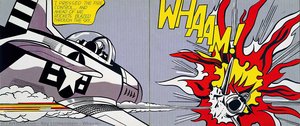
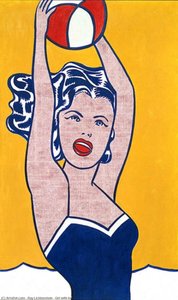
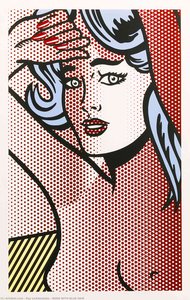
Explore the psychological depth of Roy Lichtenstein's color theory. An expert analysis for art students and collectors on Ben-Day dots, primary palettes, and the intersection of Pop Art with mass media history.

Explore the industrial secrets of 1960s Pop Art. Discover how Ben-Day dots and silk screening transformed mass media into masterpieces by Roy Lichtenstein. An in-depth look at the intersection of mechanical printing and fine art history for students and collectors.


Hold dig opdateret med de seneste kunstnyheder, eksklusive tilbud og indretningsideer.
Fortæl os om dit projekt, og vores kunsteksperter vil give dig 3 personlige kunstforslag.
Vi kuraterer 3 valgmuligheder kun til dig – Gratis!


 Se i fuld skala
 Del
Del Del
Del
 Detaljer

 Download
 Lignende værker
 Røntgenundersøgelse
 Diasshow

 Se mere







 Glasmulighed er kun tilgængelig i størrelser under 110 cm