x

Håndmalet olie på lærred i din valgte størrelse og ramme, udført efter bestilling af vores kunstnere. ( Skift til print Skift til billede)





























Vælg mellem vores forudindstillede størrelser, der matcher kunstværkets originale proportioner.

Du kan indtaste dine egne mål for at passe til en bestemt ramme eller plads. Hvis den valgte størrelse ikke stemmer overens med det originale billedes proportioner, vil vi enten beskære kunstværket eller udvide maleriet med yderligere håndmalede elementer. En digital skitse sendes til din godkendelse, før produktionen påbegyndes.
Bemærk venligst, at forhåndsvisningen på skærmen ikke afspejler den faktiske beskæring eller udvidelse. Kun skitsen vil nøjagtigt vise den endelige komposition.
Selvom specialmål er mulige, anbefaler vi at vælge en dimension fra den foruddefinerede liste for at bevare de originale proportioner.
Levering i hele verden () på 3/4 uger i stedet for de standard 5 uger. (8 august). Ingen kompromiser med kvaliteten.


Salome
Størrelse på reproduktion
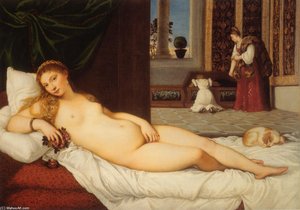
Tiziano Vecellio’s “Salome,” painted in 1515, is more than just a portrait; it's an immersion into the heart of Renaissance Venice – a city pulsating with artistic innovation and a profound fascination with beauty, power, and human emotion. This oil on canvas work, currently residing in the Galleria Doria-Pamphilj in Rome, immediately captivates with its dramatic composition and the palpable sense of melancholy that emanates from the central figure. The painting’s enduring appeal lies not only in Titian's masterful technique but also in its complex narrative – a story whispered through glances, gestures, and the unsettling presence of the decapitated head resting upon Salome’s lap.
To understand “Salome,” one must appreciate the context in which it was created – 16th-century Venice. The city was a crucible of artistic experimentation, fueled by wealth from trade and a fervent patronage system. Titian, as one of the leading artists of his time, benefited immensely from this environment. His work reflects not only his personal genius but also the broader cultural currents of the Renaissance: a renewed interest in classical mythology, a celebration of human beauty, and an exploration of profound psychological themes. The inclusion of the dining table subtly references Venetian aristocratic life, adding another layer to the painting’s narrative.
“Salome” is a profoundly unsettling image, laden with symbolism and emotional weight. The act of decapitation itself is a potent metaphor for violence, betrayal, and the loss of innocence. Salome’s expression – a mixture of sorrow, regret, and perhaps even triumph – invites endless interpretation. The head of John the Baptist, presented as a tangible object, becomes an emblem of power, vulnerability, and ultimately, mortality. The red clothing worn by Salome further intensifies the drama, symbolizing passion, bloodshed, and potentially, divine retribution.
Titian’s “Salome” is not merely a beautiful painting; it's a landmark work that profoundly influenced generations of artists. Its innovative composition, masterful technique, and emotionally charged subject matter established Titian as one of the most important figures in Western art history. The numerous copies made from his workshop underscore the enduring impact of this masterpiece, solidifying its place as a cornerstone of Renaissance art.

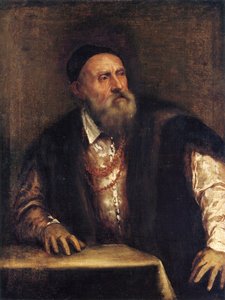
1490 - 1576 , Italien
Oplev renæssancens guldalder! Udforsk top 10 mesterværker fra Leonardo da Vinci, Michelangelo & Botticelli. Lær om kunsthistorie og find museumskvalitets reproduktioner til dit hjem på Most-Famous-Paintings.com. Inspiration & dekoration.
Oplev Alte Pinakotekets 25 mest ikoniske kunstværker! Fordyb dig i renæssancens og barokkens mesterværker af Leonardo da Vinci, Rembrandt & Vermeer. Find inspiration til din indretning og køb museumskvalitets reproduktioner på Most-Famous-Paintings.com.
Oplev Sandro Botticellis 25 mest ikoniske malerier! Fordyb dig i renæssancens skønhed, mytologi og kunstnerisk genialitet. Find museumskvalitets reproduktioner & inspiration til din bolig på Most-Famous-Paintings.com – udforsk samlingen online!

Oplev de 25 mest ikoniske kunstværker fra Metropolitan Museum of Art i New York! Fra Monet til Van Gogh – lær historierne bag mesterværkerne og find inspiration til dit hjem. Køb museumskvalitets reproduktioner på Most-Famous-Paintings.com.
Oplev 10 ikoniske mesterværker malet på træ – fra Van Gogh til Monet! Lær historien bag disse klassiske kunstværker og find inspiration til din indretning. Museumskvalitet reproduktioner hos Most-Famous-Paintings.com. Udforsk samlingen online!


Hold dig opdateret med de seneste kunstnyheder, eksklusive tilbud og indretningsideer.
Fortæl os om dit projekt, og vores kunsteksperter vil give dig 3 personlige kunstforslag.
Vi kuraterer 3 valgmuligheder kun til dig – Gratis!


 Se i fuld skala
 Del
Del Del
Del
 Detaljer

 Download
 Lignende værker
 Røntgenundersøgelse
 Diasshow

 Se mere







 Glasmulighed er kun tilgængelig i størrelser under 110 cm