


x

Håndmalet olie på lærred i din valgte størrelse og ramme, udført efter bestilling af vores kunstnere. ( Køb print Køb billede)





























Vælg mellem vores forudindstillede størrelser, der matcher kunstværkets originale proportioner.

Du kan indtaste dine egne mål for at passe til en bestemt ramme eller plads. Hvis den valgte størrelse ikke stemmer overens med det originale billedes proportioner, vil vi enten beskære kunstværket eller udvide maleriet med yderligere håndmalede elementer. En digital skitse sendes til din godkendelse, før produktionen påbegyndes.
Bemærk venligst, at forhåndsvisningen på skærmen ikke afspejler den faktiske beskæring eller udvidelse. Kun skitsen vil nøjagtigt vise den endelige komposition.
Selvom specialmål er mulige, anbefaler vi at vælge en dimension fra den foruddefinerede liste for at bevare de originale proportioner.
Levering i hele verden () på 3/4 uger i stedet for de standard 5 uger. (22 august). Ingen kompromiser med kvaliteten.


St Ambrose
Størrelse på reproduktion
Titian Ramsay Peale II's circular portrait of St. Ambrose is not merely a depiction of a religious figure; it’s an intimate encounter with faith, authority, and the enduring power of Renaissance artistry. The painting draws the viewer into a close-up world dominated by the serene yet commanding presence of the saint. Against a backdrop of deep shadow—a darkness that seems to both cradle and emphasize his form—St. Ambrose emerges as a beacon of spiritual strength. Peale’s masterful use of oil paint creates a rich tapestry of texture, particularly evident in the folds of Ambrose's robes and the delicate rendering of his beard. The impasto technique lends a tactile quality, inviting us to almost reach out and feel the weight of the fabric, the smoothness of the skin.
Peale II’s artistic lineage is clearly visible in this work. As the son of renowned American portraitist Charles Willson Peale, he inherited a dedication to realistic representation and meticulous detail. However, “St. Ambrose” reveals a distinct leaning towards the High Renaissance aesthetic—a style characterized by its harmonious compositions, idealized forms, and dramatic use of light and shadow. The artist’s skill in modeling forms through subtle gradations of tone creates a remarkable sense of depth within the limited space of the circular format. Light doesn't simply illuminate Ambrose; it sculpts him, highlighting his features and imbuing him with an almost palpable presence. The careful attention to detail—from the intricate design of his mitre (bishop’s hat) to the subtle expression on his face—speaks to Peale’s commitment to capturing not just a likeness, but the very essence of his subject.
The iconography within “St. Ambrose” is steeped in religious significance. St. Ambrose himself was a pivotal figure in early Christianity, known for his intellectual prowess, his defense of orthodox doctrine, and his influence on figures like Augustine of Hippo. His attire—the mitre and staff—are immediately recognizable symbols of his episcopal authority. The gesture of his hand, though subtle, likely conveys a blessing or a teaching pose, reinforcing his role as a spiritual leader. Beyond these explicit symbols, the circular format itself carries weight. Throughout art history, circles have often represented eternity, wholeness, and divine perfection – qualities perfectly suited to a depiction of a saint whose life was dedicated to faith. The painting isn’t simply *about* St. Ambrose; it aims to evoke the reverence and contemplation associated with his legacy.
Titian Ramsay Peale II remains somewhat overshadowed by his father's fame, but works like “St. Ambrose” are bringing renewed attention to his unique artistic contributions. While he also excelled as a naturalist and scientific illustrator—skills honed through expeditions across the American landscape and beyond—his paintings demonstrate a profound understanding of Renaissance principles and a refined aesthetic sensibility. He wasn’t merely replicating styles; he was internalizing them, adapting them to his own vision, and creating works that resonate with both technical mastery and emotional depth. This portrait stands as a testament to Peale II's ability to blend artistic tradition with personal expression, offering a compelling glimpse into the spiritual world of its subject and the artistic sensibilities of 19th-century America.


1799 - 1885 , USA

Explore the life & art of Titian Ramsay Peale II, a master of botanical precision and wildlife painting. Discover his legacy bridging art & natural history at Most-Famous-Paintings.

Oplev El Grecos 25 mest ikoniske malerier! Fordyb dig i spansk renæssancekunst, spirituelle værker og dramatiske kompositioner. Find inspiration til dit hjem & køb museumskvalitets reproduktioner på Most-Famous-Paintings.com.

Explore the life & art of Charles Willson Peale – Revolutionary portraitist, scientist, and founder of America’s first museum. Discover his iconic paintings of Washington & the Enlightenment ideals that shaped a nation.
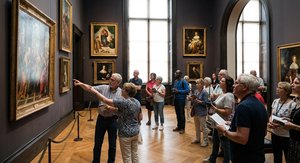
Oplev Alte Pinakotekets 25 mest ikoniske kunstværker! Fordyb dig i renæssancens og barokkens mesterværker af Leonardo da Vinci, Rembrandt & Vermeer. Find inspiration til din indretning og køb museumskvalitets reproduktioner på Most-Famous-Paintings.com.

Explore the revolutionary techniques & enduring legacy of Titian, the master of Venetian Renaissance portraiture. Discover insights for collectors & appreciate his impact on art history.


Hold dig opdateret med de seneste kunstnyheder, eksklusive tilbud og indretningsideer.
Fortæl os om dit projekt, og vores kunsteksperter vil give dig 3 personlige kunstforslag.
Vi kuraterer 3 valgmuligheder kun til dig – Gratis!


 Se i fuld skala
 Del
Del Del
Del
 Detaljer

 Download
 Lignende værker
 Røntgenundersøgelse
 Diasshow


 Se mere







 Glasmulighed er kun tilgængelig i størrelser under 110 cm


