


x

 Oil On PanelMannerism (Late Renaissance)
 1545
1545 38.0 x 31.0 cm
 Fundación Colección Thyssen-Bornemisza
Køb et højopløst, forbedret digitalt billede, der er langt bedre end online-forhåndsvisningen.
Hver fil er omhyggeligt forberedt af vores interne specialister ved hjælp af avancerede værktøjer og ekspertmæssig manuel retuschering. Vi sikrer, at hvert billede har enestående klarhed, præcis farvegengivelse og fine detaljer.
Den endelige fil leveres via e-mail inden for 72 timer og er optimeret til øjeblikkelig brug i professionelle, redaktionelle og trykte miljøer. Det er den samme kvalitet, som førende designstudier, forlag og gallerier har tillid til.
Download en højopløselig fil til personlig fremvisning, print og kreative projekter. ( Køb print Køb håndlavet maleri)
Når du vælger Most-Famous-Paintings.com, får du ikke blot et billede – du modtager et professionelt optimeret digitalt kunstværk, skabt med præcision og sikret med en tilfredshedsgaranti. Her er alt, hvad din ordre automatisk indeholder:

Din højkvalitets digitale billedfil vil blive sendt til din e-mail inden for 72 timer efter bestilling – klar til øjeblikkelig brug.

Dit kunstværk optimeres professionelt ved hjælp af avancerede AI-værktøjer og manuel redigering, hvilket sikrer maksimal detaljegrad, klarhed og farvenøjagtighed.

Har du ved en fejl slettet eller mistet din fil? Ingen bekymring – vi sender den igen til enhver tid, helt gratis.

Nyd dit kunstværk med det samme uden told, afgifter eller leveringsgebyrer – digitale downloads er altid skattefrie.

Vi sikrer, at dit digitale billede gengiver de originale farver så præcist som muligt ved hjælp af professionelle værktøjer og farvestyring.

Hvis du ikke er tilfreds med dit digitale billede, vil vi revidere det eller refundere 100% inden for 60 dage – uden spørgsmål.

Ik tilfreds? Få fuld refusion inden for 60 dage efter modtagelse af din digitale fil – uden spørgsmål.

Køb 3 billeder, spar 10% - Køb 5, spar 15% - Køb 10+, spar 20%. Ideelt til kreative projekter, gallerier og bureauer.
Tiziano Vecellio, universally known as Titian, stands not merely as an artist of the Venetian Renaissance but as its very soul. Born around 1488 in the rugged foothills of the Dolomites – a landscape that would forever inform his vibrant palette – he was a revolutionary who redefined painting through sheer mastery of color and a profound understanding of human emotion. His ‘Virgin and Child,’ painted circa 1545, is more than just a devotional image; it’s a distillation of Titian's artistic philosophy, a testament to the power of light, texture, and the deeply felt connection between mother and child. The painting resides within the hallowed halls of the Fundación Colección Thyssen-Bornemisza in Pedralbes, Barcelona, a location that allows viewers to appreciate its scale and detail amidst a collection of equally magnificent works.
‘Virgin and Child’ firmly establishes Titian within the burgeoning realm of Mannerism, a style that emerged in Italy during the late 15th and early 16th centuries. Unlike the idealized perfection of High Renaissance art, Mannerism embraced dynamism, asymmetry, and an almost unsettling intensity of emotion. Titian doesn't shy away from this; his brushstrokes are loose and expressive, creating a sense of movement and immediacy that draws the viewer into the scene. The composition itself is deliberately unbalanced – the Virgin’s figure dominates slightly to the right, while Christ leans towards her, fostering a palpable intimacy. This isn’t a static depiction but a moment captured in time, brimming with tenderness and quiet contemplation. The painting's foundation is built upon oil on panel, a medium that allowed Titian to layer colors with remarkable subtlety and achieve an astonishing level of luminosity. He employed a technique known as ‘impasto,’ applying thick layers of paint to create textural richness, particularly evident in the folds of Mary’s robe and the delicate details of Christ's garments.
The subject matter itself is deeply rooted in Christian iconography. The Virgin Mary, cradling her infant son Jesus, embodies both divine grace and maternal love. The blue of her dress – a color traditionally associated with purity and the heavens – immediately establishes her sacred status. Adding to this symbolism is the presence of Saint Anne, Mary’s mother, depicted behind them, offering a visual representation of lineage and familial devotion. The inclusion of two figures flanking the central scene adds depth and context, suggesting a broader narrative of faith and heritage. The curtain in the background, a recurring motif in Titian's work, serves as more than just a decorative element; it acts as a veil, separating the earthly realm from the divine, hinting at the mysteries of faith.
Titian’s influence extended far beyond Venice. He was a sought-after portraitist for European royalty and nobility, capturing the power and prestige of figures like Charles V and Philip II of Spain. His work reflects the changing tastes of his patrons, moving from the more restrained style of the High Renaissance to a richer, more opulent aesthetic. The ‘Virgin and Child’ exemplifies this evolution, showcasing Titian's ability to synthesize classical ideals with Venetian sensuality. It’s important to note that the painting was created during a period of intense religious and political upheaval in Europe, marked by the Reformation and the rise of powerful centralized states. Titian’s art served as both a reflection of these turbulent times and a means of asserting Venetian identity and artistic dominance. The painting's journey through various collections—from the Sciarra-Colonna family in Rome to the Thyssen-Bornemisza collection—testifies to its enduring appeal and historical significance.

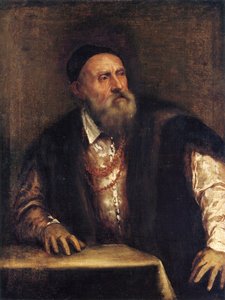
1490 - 1576 , Italien


Hold dig opdateret med de seneste kunstnyheder, eksklusive tilbud og indretningsideer.
Fortæl os om dit projekt, og vores kunsteksperter vil give dig 3 personlige kunstforslag.
Vi kuraterer 3 valgmuligheder kun til dig – Gratis!


 Se i fuld skala
 Del
Del Del
Del
 Detaljer

 Download
 Lignende værker
 Røntgenundersøgelse
 Diasshow
 Se mere


