x

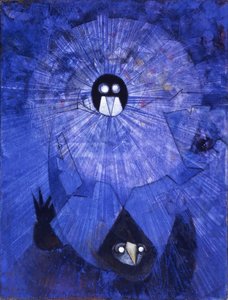
 39.0 x 55.0 cm
 Northumbria University Gallery
Køb et højopløst, forbedret digitalt billede, der er langt bedre end online-forhåndsvisningen.
Hver fil er omhyggeligt forberedt af vores interne specialister ved hjælp af avancerede værktøjer og ekspertmæssig manuel retuschering. Vi sikrer, at hvert billede har enestående klarhed, præcis farvegengivelse og fine detaljer.
Den endelige fil leveres via e-mail inden for 72 timer og er optimeret til øjeblikkelig brug i professionelle, redaktionelle og trykte miljøer. Det er den samme kvalitet, som førende designstudier, forlag og gallerier har tillid til.
Download en højopløselig fil til personlig fremvisning, print og kreative projekter. ( Køb print Køb håndlavet maleri)
Når du vælger Most-Famous-Paintings.com, får du ikke blot et billede – du modtager et professionelt optimeret digitalt kunstværk, skabt med præcision og sikret med en tilfredshedsgaranti. Her er alt, hvad din ordre automatisk indeholder:

Din højkvalitets digitale billedfil vil blive sendt til din e-mail inden for 72 timer efter bestilling – klar til øjeblikkelig brug.

Dit kunstværk optimeres professionelt ved hjælp af avancerede AI-værktøjer og manuel redigering, hvilket sikrer maksimal detaljegrad, klarhed og farvenøjagtighed.

Har du ved en fejl slettet eller mistet din fil? Ingen bekymring – vi sender den igen til enhver tid, helt gratis.

Nyd dit kunstværk med det samme uden told, afgifter eller leveringsgebyrer – digitale downloads er altid skattefrie.

Vi sikrer, at dit digitale billede gengiver de originale farver så præcist som muligt ved hjælp af professionelle værktøjer og farvestyring.

Hvis du ikke er tilfreds med dit digitale billede, vil vi revidere det eller refundere 100% inden for 60 dage – uden spørgsmål.

Ik tilfreds? Få fuld refusion inden for 60 dage efter modtagelse af din digitale fil – uden spørgsmål.

Køb 3 billeder, spar 10% - Køb 5, spar 15% - Køb 10+, spar 20%. Ideelt til kreative projekter, gallerier og bureauer.

In the vast, often turbulent landscape of postwar American art, few figures cast a shadow as profound or as geometrically precise as Tony Smith. Born in South Orange, New Jersey, in 1912, Smith’s journey toward becoming a cornerstone of Minimalist sculpture was not a linear ascent through academic halls, but rather a complex weaving of architectural discipline, industrial fascination, and an intuitive connection to the unconscious. His early life was shaped by a profound encounter with physical fragility; a bout of tuberculosis in his youth instilled in him a deep reverence for the transformative power of structure and the way built environments can respond to human limitations. This early exposure to innovative building techniques—witnessed through his family’s use of prefabricated housing—planted the seeds for an artistic language that would eventually bridge the gap between the organic spirit and the industrial machine.
Smith’s path to creative mastery was marked by a restless, experiential intellect. Eschewing the rigid confines of traditional academia, he sought knowledge through direct engagement with the masters of his era. At the Art Students League of New York, he immersed himself in the meticulous disciplines of anatomy and drawing under figures such as George Bridgman and George Groszek. His pursuit of architectural truth led him to the New Bauhaus in Chicago and, most pivotally, to an apprenticeship with the legendary Frank Lloyd Wright. Working on the Ardmore Project and spending time at Taliesin, Smith absorbed a philosophy where form and function were inseparable. Yet, as he matured, a certain disillusionment began to take root. The domestic restrictions of client-driven architecture—the demand for comfort over pure form—began to feel like a cage, prompting him to seek a medium that offered the permanence and monumental presence he craved.
The transition from architect to sculptor in the early 1960s represented one of the most radical shifts in modern art history. Smith did not merely abandon architecture; he translated its principles into a new, sculptural vocabulary. He began to view his works not as mere objects, but as presences—entities that occupied space with a spiritual and physical weight. This period saw the birth of his iconic large-scale, modular works, characterized by their geometric abstraction and industrial rigor. One of his most revolutionary innovations was the decision to have his sculptures industrially fabricated. By utilizing steel and other industrial materials, Smith stripped away the "hand of the artist" in the traditional sense, allowing the raw, unyielding power of the material to speak for itself.
His work during this era was a masterful synthesis of seemingly contradictory forces:
The legacy of Tony Smith extends far beyond the steel monoliths that bear his name. He was a bridge-builder between generations, a teacher at institutions like NYU and Cooper Union who mentored future icons of the New York School. His influence can be traced through the lineage of contemporary art, even reaching into the work of his daughter, the renowned artist Kiki Smith, whose sensitivity to the human form carries a different, yet equally profound, resonance. Smith’s ability to infuse industrial geometry with an almost primordial sense of mystery ensured that his work would never be dismissed as mere mathematical exercise.
Today, the significance of Smith’s oeuvre is recognized through major retrospectives at The Museum of Modern Art, the Menil Collection, and the Los Angeles County Museum of Art. He remains a vital figure for anyone studying the intersection of art and architecture, reminding us that even within the most rigid structures, there exists a profound capacity for human expression and spiritual depth. His sculptures remain as they were intended: powerful, silent presences that continue to challenge our perception of space, weight, and the very essence of existence.

1912 - 1980 , United States of America


Hold dig opdateret med de seneste kunstnyheder, eksklusive tilbud og indretningsideer.
Fortæl os om dit projekt, og vores kunsteksperter vil give dig 3 personlige kunstforslag.
Vi kuraterer 3 valgmuligheder kun til dig – Gratis!


 Se i fuld skala
 Del
Del Del
Del
 Detaljer

 Download
 Lignende værker
 Røntgenundersøgelse
 Diasshow
 Se mere